. 2016 Dec 1;80(11):878-887.
doi: 10.1016/j.biopsych.2016.02.031. Epub 2016 Mar 8.

Gamma-Aminobutyric Acidergic Projections From the Dorsal Raphe to the Nucleus Accumbens Are Regulated by Neuromedin U

Affiliations

Gamma-Aminobutyric Acidergic Projections From the Dorsal Raphe to the Nucleus Accumbens Are Regulated by Neuromedin U

James M Kasper et al. Biol Psychiatry. .

Abstract

Background: Neuromedin U (NMU) is a neuropeptide enriched in the nucleus accumbens shell (NAcSh), a brain region associated with reward. While NMU and its receptor, NMU receptor 2 (NMUR2), have been studied for the ability to regulate food reward, NMU has not been studied in the context of drugs of abuse (e.g., cocaine). Furthermore, the neuroanatomical pathways that express NMUR2 and its ultrastructural localization are unknown.

Methods: Immunohistochemistry was used to determine the synaptic localization of NMUR2 in the NAcSh and characterize which neurons express this receptor (n = 17). The functional outcome of NMU on NMUR2 was examined using microdialysis (n = 16). The behavioral effects of NMU microinjection directly to the NAcSh were investigated using cocaine-evoked locomotion (n = 93). The specific effects of NMUR2 knockdown on cocaine-evoked locomotion were evaluated using viral-mediated RNA interference (n = 40).

Results: NMUR2 is localized to presynaptic gamma-aminobutyric acidergic nerve terminals in the NAcSh originating from the dorsal raphe nucleus. Furthermore, NMU microinjection to the NAcSh decreased local gamma-aminobutyric acid concentrations. Next, we evaluated the effects of NMU microinjection on behavioral sensitization to cocaine. When repeatedly administered throughout the sensitization regimen, NMU attenuated cocaine-evoked hyperactivity. Additionally, small hairpin RNA-mediated knockdown of presynaptic NMUR2 in the NAcSh using a retrograde viral vector potentiated cocaine sensitization.

Conclusions: Together, these data reveal that NMUR2 modulates a novel gamma-aminobutyric acidergic pathway from the dorsal raphe nucleus to the NAcSh to influence behavioral responses to cocaine.

Keywords: AAV6; Cocaine; GABA; Neuropeptide; Nonserotonergic; RNAi.


Conflict of interest statement

The authors report no biomedical financial interests or potential conflicts of interest.

Figures
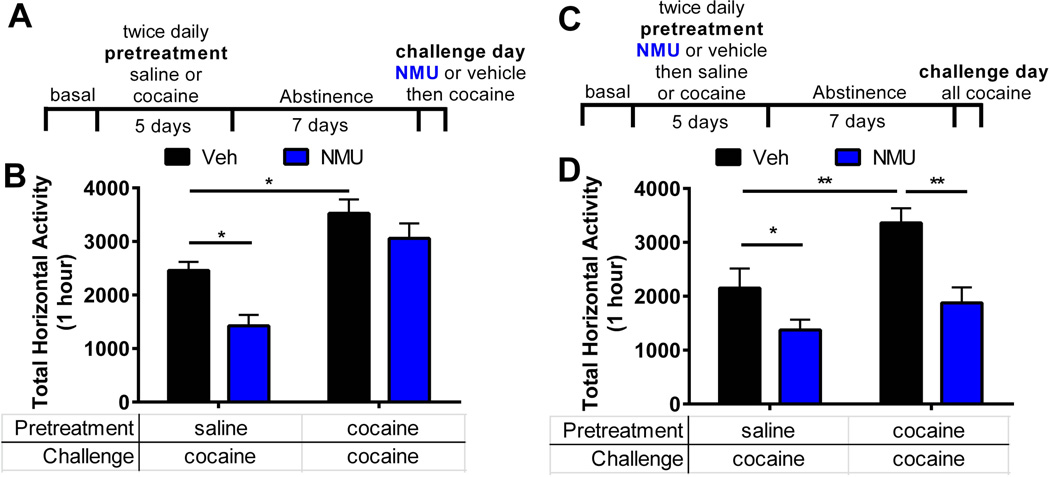
Figure 1
Figure 1
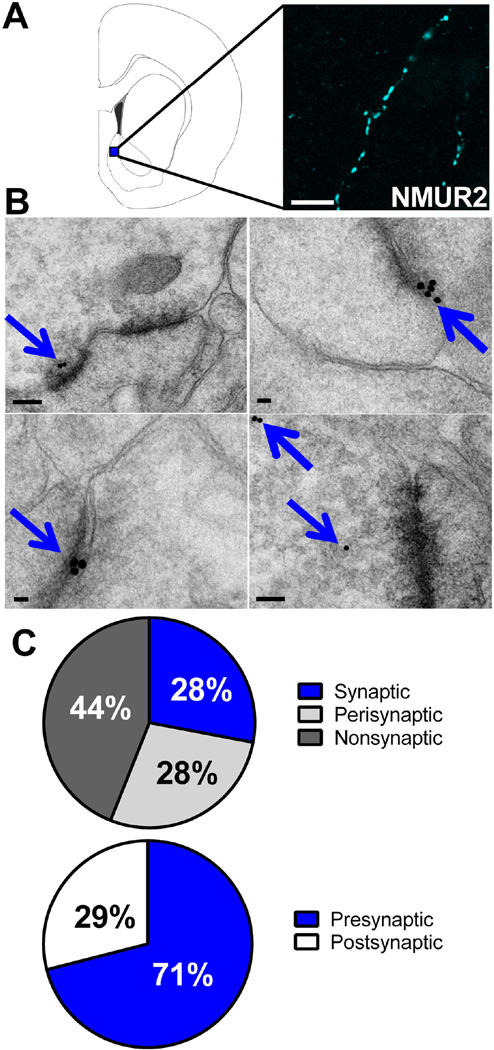
NMUR2 is expressed synaptically in the NAcSh. (a) Brain slice illustration (left) showing the site in the NAcSh where confocal microscopy images (63×) of NMUR2 immunofluorescence (right) were taken. Scale bar 5 µm. (b) Representative images of electron microscopy in the NAcSh with NMUR2 immunogold staining highlighted by blue arrows. Synapses can be seen as the dark lines of electron density. Scale bar 100 nm. (c) Summary of the synaptic localization of NMUR2 from 166 electron microscopy images. Proximity of a gold piece to a synapse was defined as follows: synaptic is < 50 nm from synapse, perisynaptic is 50 to 150 nm from synapse, and nonsynaptic is > 150 nm. Presynaptic and postsynaptic localization was determined by identification of clear vesicles and the postsynaptic density, respectively.
Figure 2
Figure 2
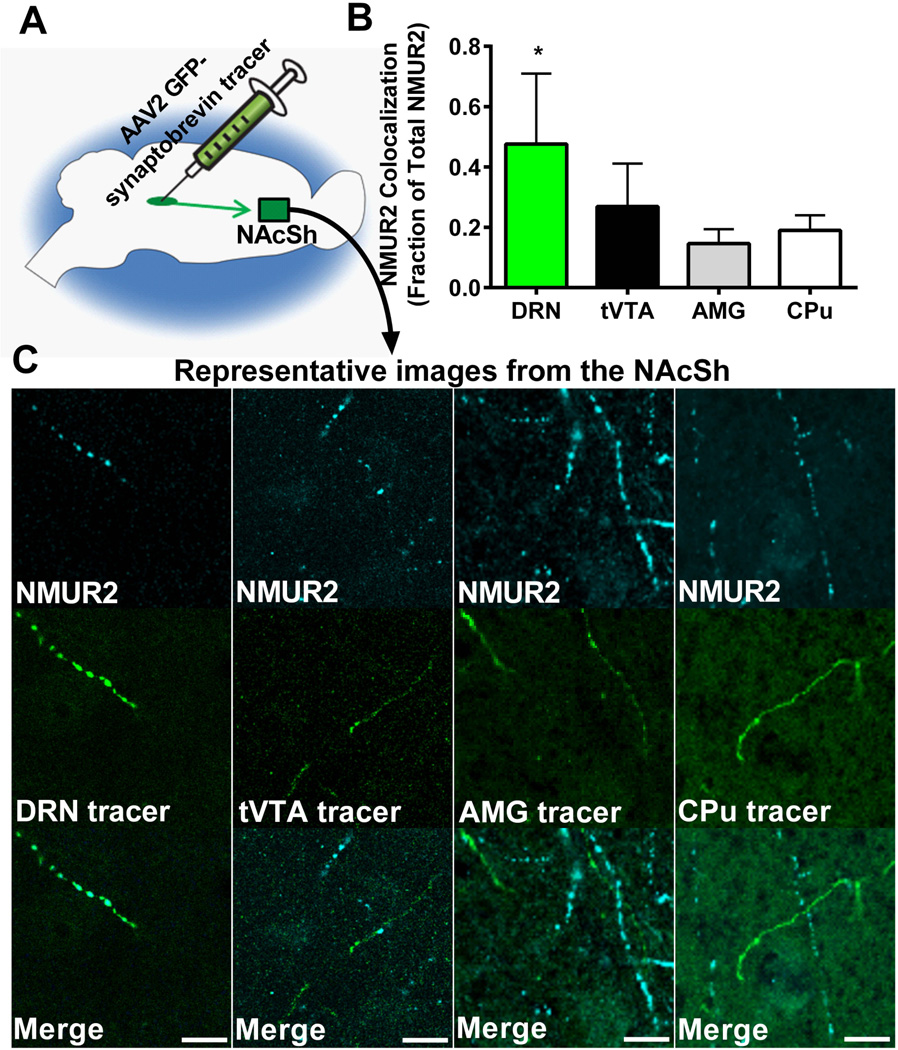
Accumbal NMUR2 is primarily expressed on DRN projections compared to tVTA, AMG or CPu projections. (a) Illustration depicting the microinjection of viral vector tracer into a brain region (DRN, tVTA, AMG, or CPu) and confocal images with 63× objective in the NAcSh (green square). (b) Quantification of the colocalization of NMUR2 with the tracer from the various brain regions (n = 4 per group). Bar graph shows mean ± s.e.m. *p < 0.05 compared to all other groups. (c) Representative confocal images that were quantified in (b). NMUR2 is shown in cyan and tracer in green. Scale bar = 5 µm.
Figure 3
Figure 3
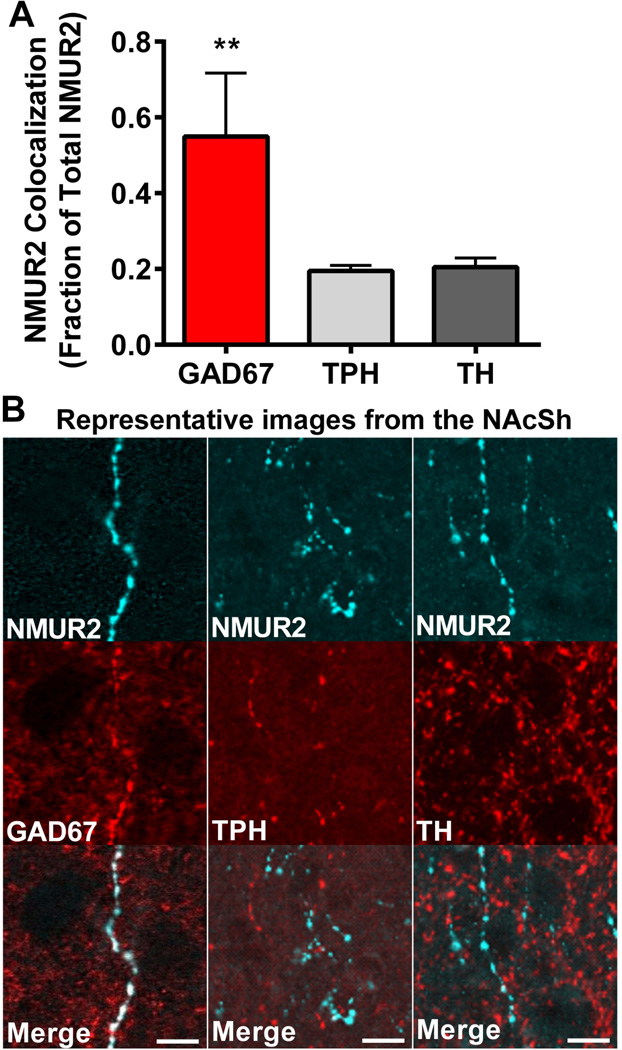
Accumbal NMUR2 is expressed predominantly on GABAergic neurons. (a) Quantification of NMUR2 colocalization with the neuronal markers GAD67, TPH, and TH (n = 4 per group). Bar graph shows mean ± s.e.m. **p < 0.05 compared to all other groups. (b) Representative confocal images that were quantified in (a). NMUR2 is shown in cyan and neuronal markers in red. Scale bar = 5 µm.
Figure 4
Figure 4
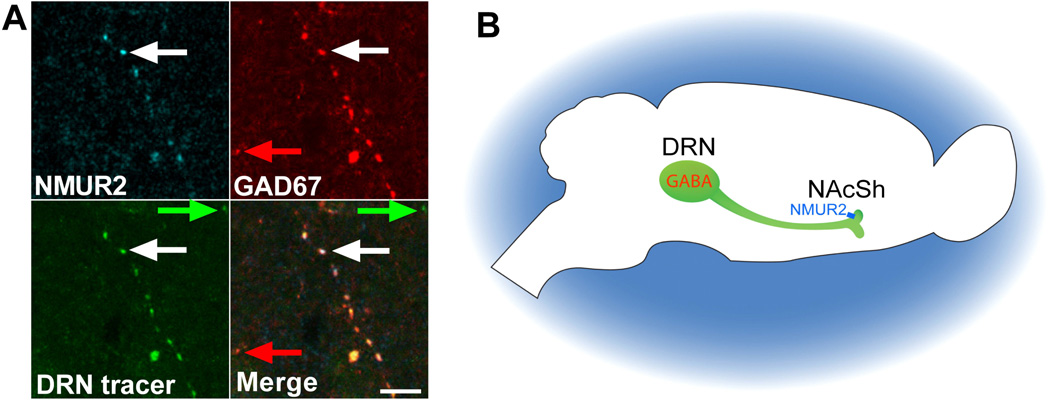
NMUR2 in the NAcSh is expressed on GABAergic neurons projecting from the DRN. (a) Confocal microscopy image with 63× objective showing accumbal NMUR2 (cyan), viral tracer from the DRN (green), and GAD67 (red) colocalizing in the merge. Example of colocalization is in white arrows and examples of noncolocalization are in red and green arrows. Scale bar = 5 µm. (b) Illustration summarizing the proposed pathway.
Figure 5
Figure 5
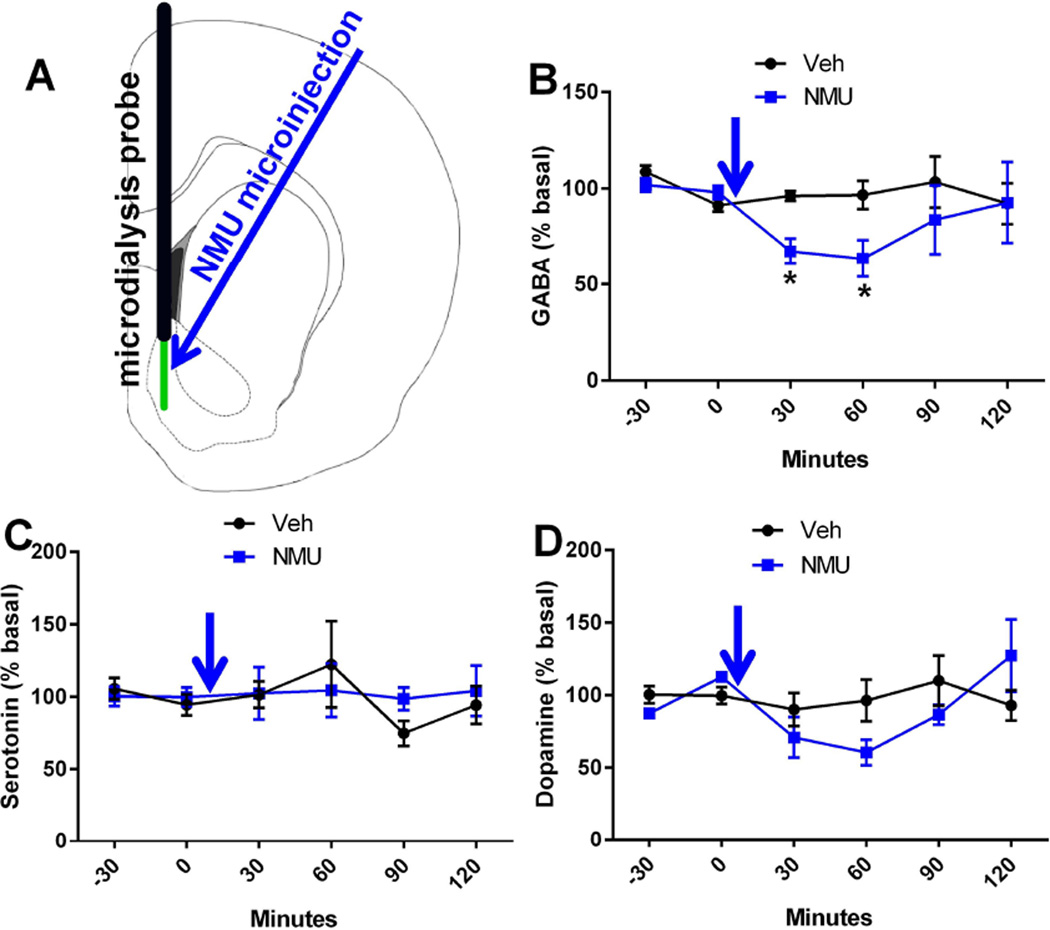
NMU attenuates GABA but not serotonin or dopamine release. (a) Diagram depicting the placement of the microdialysis probe active length (green) and the microinjection site (blue arrow). (b–d) Concentrations of extracellular neurotransmitters expressed as a percentile of the basal (time points - 30 and 0) concentration over time. Blue arrow represents when the microinjection of NMU or vehicle was administered. GABA concentrations were significantly different (n = 6–7 per group) while there was no significant main effects in either serotonin or dopamine. Line graphs show mean ± s.e.m.*p < 0.05 compared to control group.
Figure 6
Figure 6
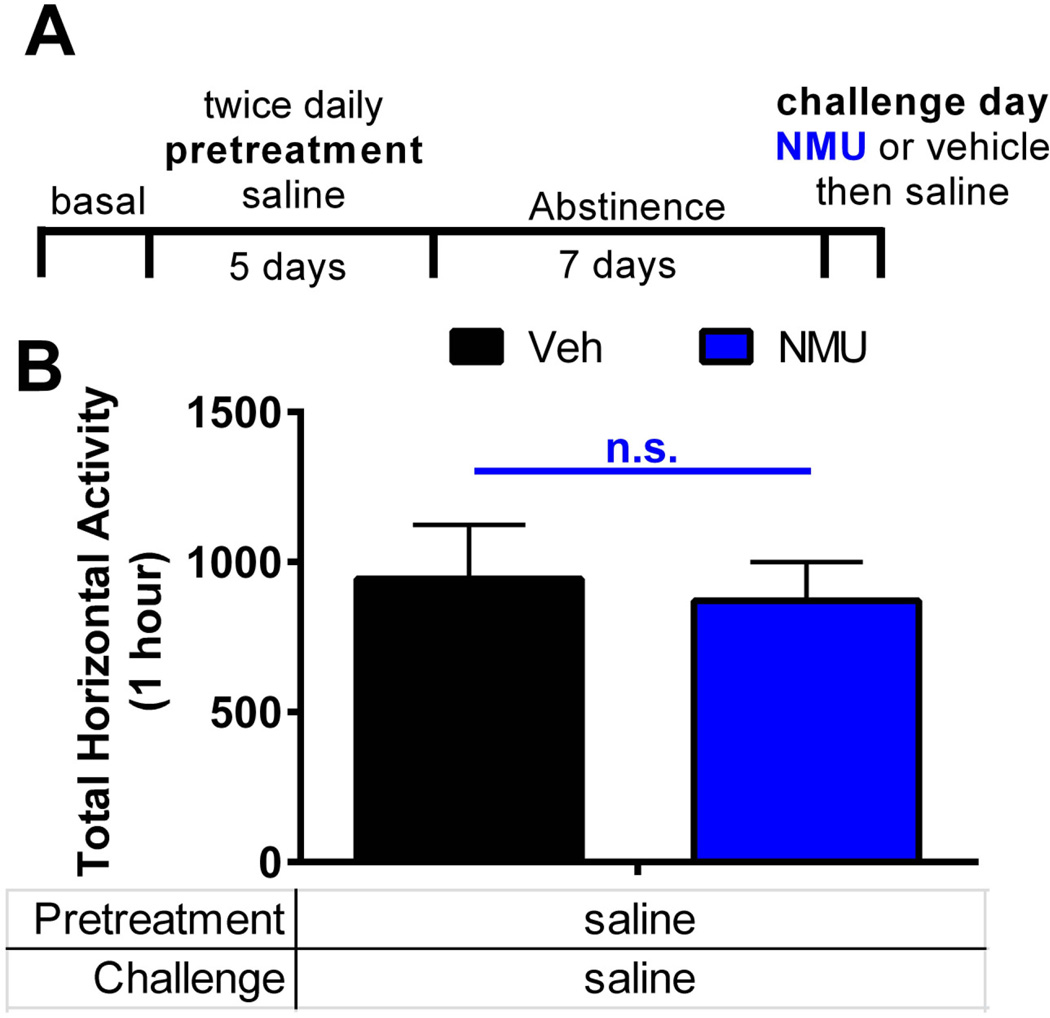
NMU in the NAcSh does not alter basal locomotor activity. (a) Schematic of experimental timeline. Saline was injected (i.p.) twice per day for 5 days during pretreatment. Rats received no treatments for 7 days. On challenge day, rats received a bilateral microinjection of NMU (0.3 nmol per side) or vehicle directly into the NAcSh. Following the microinjection, rats received saline and locomotor activity was measured. (b) Challenge day locomotor activity measured by total horizontal beam breaks immediately following saline injection (n = 7–8 per group). Bar graphs show mean ± s.e.m. * p < 0.05 by t-test.
Figure 7
Figure 7
NMU administered during initiation but not expression blocks sensitization. (a) Schematic of experimental timeline for the expression of cocaine sensitization. Cocaine or saline was injected (i.p.) twice per day for 5 days during pretreatment. Rats received no treatments for 7 days. On challenge day, rats received a bilateral microinjection of NMU (0.3 nmol per side) or vehicle directly into the NAcSh. Following the microinjection, all rats received cocaine and locomotor activity was measured. (b) Challenge day locomotor activity measured by total horizontal beam breaks immediately following cocaine injection (n = 7–8 per group). (c) Schematic of experimental timeline for initiation of cocaine sensitization. NMU or vehicle is administered throughout pretreatment and not on challenge day. (d) Challenge day locomotor activity (n = 7–10 per group). Bar graphs show mean ± s.e.m. * p < 0.05 and **p < 0.01 between groups.
Figure 8
Figure 8
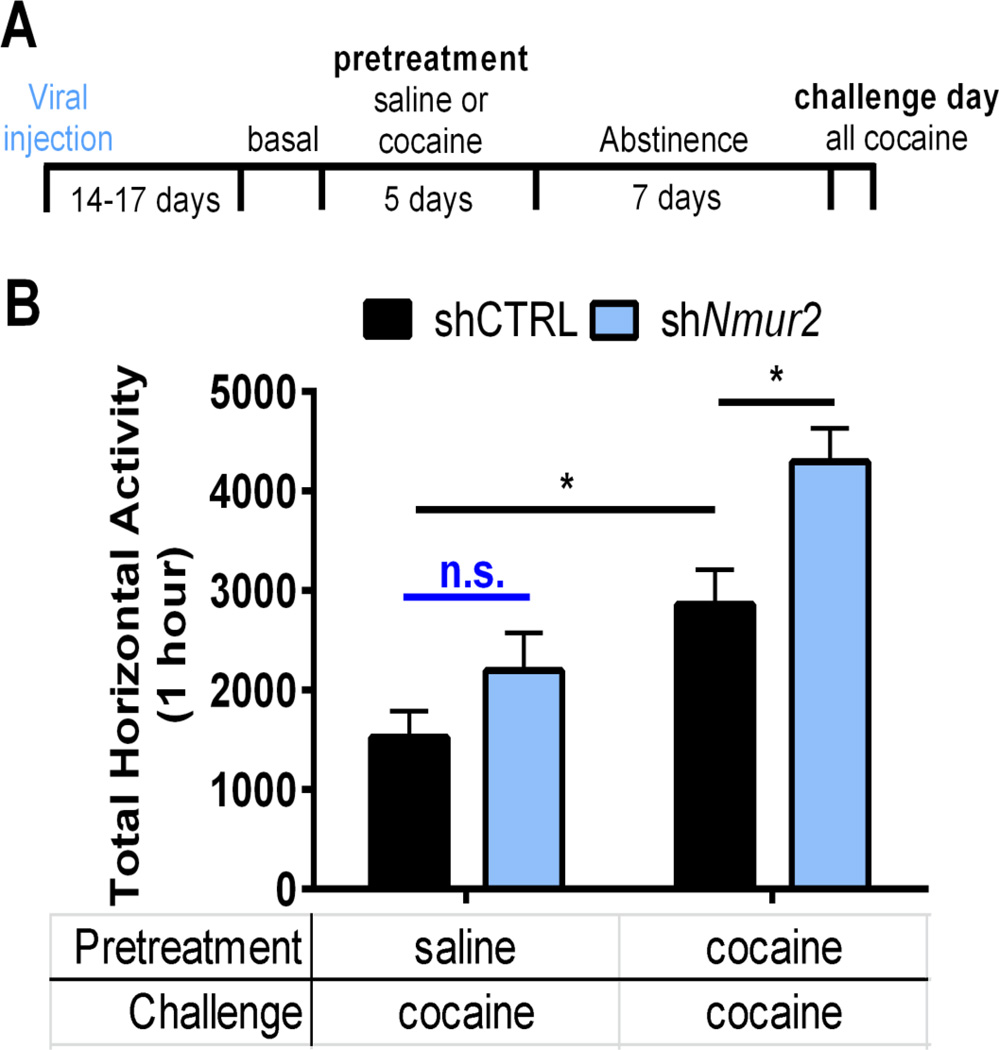
Knockdown of presynaptic NMUR2 in the NAcSh augments cocaine sensitization. (a) Schematic of experimental timeline for cocaine sensitization after virus was allowed to reach maximal expression. (b) Challenge day locomotor activity measured by total horizontal beam breaks immediately following cocaine injection (n = 8–10 per group). Bar graph shows mean ± s.e.m. *p < 0.05 between groups.

References

    1. Brighton PJ, Szekeres PG, Wise A, Willars GB. Signaling and ligand binding by recombinant neuromedin U receptors: evidence for dual coupling to Galphaq/11 and Galphai and an irreversible ligand-receptor interaction. Mol Pharmacol. 2004;66:1544–1556. - PubMed
    1. Brighton PJ, Szekeres PG, Willars GB. Neuromedin U and its receptors: structure, function, and physiological roles. Pharmacol Rev. 2004;56:231–248. - PubMed
    1. Gartlon J, Szekeres P, Pullen M, Sarau HM, Aiyar N, Shabon U, et al. Localisation of NMU1R and NMU2R in human and rat central nervous system and effects of neuromedin-U following central administration in rats. Psychopharmacology (Berl) 2004;177:1–14. - PubMed
    1. Guan XM, Yu H, Jiang Q, Van Der Ploeg LH, Liu Q. Distribution of neuromedin U receptor subtype 2 mRNA in the rat brain. Brain Res Gene Expr Patterns. 2001;1:1–4. - PubMed
    1. Howard AD, Wang R, Pong SS, Mellin TN, Strack A, Guan XM, et al. Identification of receptors for neuromedin U and its role in feeding. Nature. 2000;406:70–74. - PubMed

Publication types

LinkOut - more resources