


Effect of Etomidate Versus Combination of Propofol-Ketamine and Thiopental-Ketamine on Hemodynamic Response to Laryngoscopy and Intubation: A Randomized Double Blind Clinical Trial
- PMID: 27110526
- PMCID: PMC4834424
- DOI: 10.5812/aapm.30071
Effect of Etomidate Versus Combination of Propofol-Ketamine and Thiopental-Ketamine on Hemodynamic Response to Laryngoscopy and Intubation: A Randomized Double Blind Clinical Trial
Abstract
Background: Laryngoscopy and intubation frequently used for airway management during general anesthesia, is frequently associated with undesirable hemodynamic disturbances.
Objectives: The aim of this study was to compare the effects of etomidate, combination of propofol-ketamine and thiopental-ketamine as induction agents on hemodynamic response to laryngoscopy and intubation.
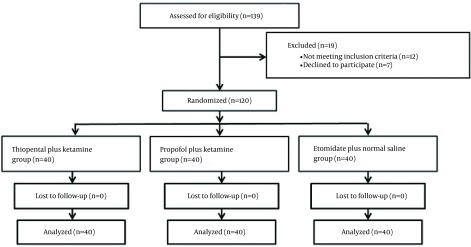
Patients and methods: In a double blind, randomized clinical trial a total of 120 adult patients of both sexes, aged 18 - 45 years, scheduled for elective surgery under general anesthesia were randomly assigned into three equally sized groups. Patients in group A received etomidate (0.3 mg/kg) plus normal saline as placebo. Patients in group B and C received propofol (1.5 mg/kg) plus ketamine (0.5 mg/kg) and thiopental sodium (3 mg/kg) plus ketamine (0.5 mg/kg), respectively for anesthesia induction. Before laryngoscopy and tracheal intubation, immediately after, and also one and three minutes after the procedures, hemodynamic values (SBP, DBP, MAP and HR) were measured.
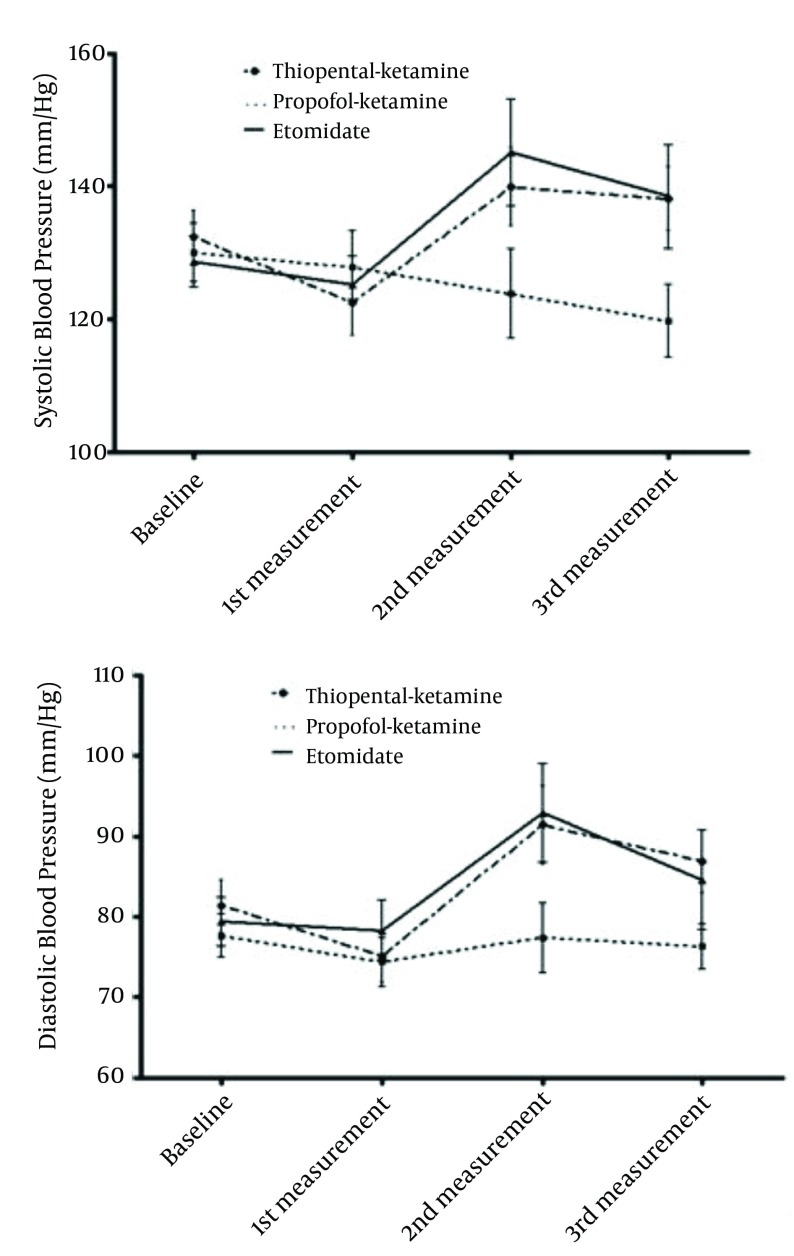
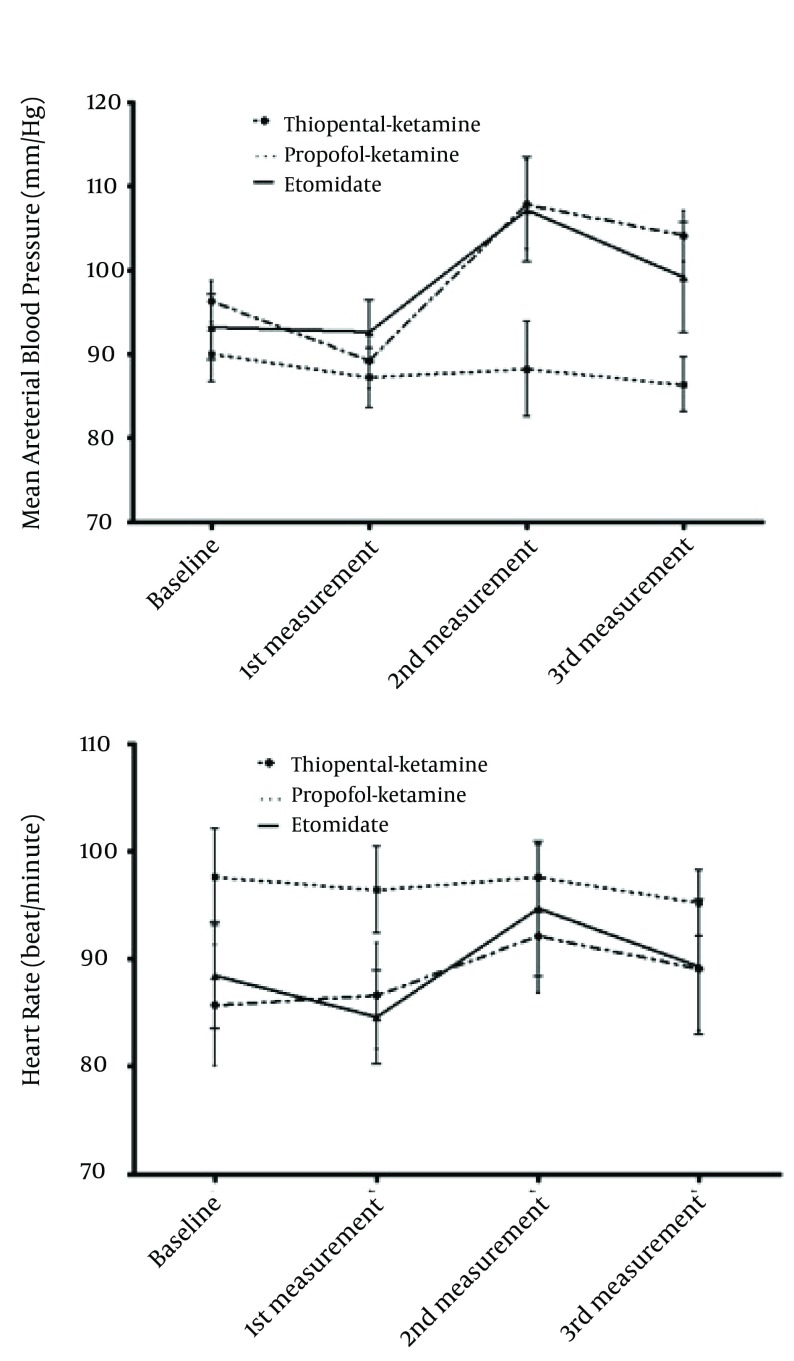
Results: A repeated measurement ANOVA showed significant changes in mean SBP and DBP between the time points (P < 0.05). In addition, the main effect of MAP and HR were statistically significant during the course of study (P < 0.05). Furthermore, after induction of anesthesia, the three study groups had significantly different SBP, DBP and MAP changes overtime (P < 0.05). However, HR changes over time were not statistically significant (P > 0.05). Combination of propofol-ketamine had superior hemodynamic stability compared to other induction agents.
Conclusions: Combination of propofol-ketamine may be recommended as an effective and safe induction agent for attenuating hemodynamic responses to laryngoscopy and intubation with better hemodynamic stability. Although, further well-designed randomized clinical trials to confirm the safety and efficacy of this combination, especially in critically ill patients or patients with cardiovascular disease, are warranted.
Keywords: Etomidate; Hemodynamics; Ketamine; Laryngoscopy; Propofol; Thiopental.
Figures
References
-
- Habibi MR, Baradari AG, Soleimani A, Emami Zeydi A, Nia HS, Habibi A, et al. Hemodynamic responses to etomidate versus ketamine-thiopental sodium combination for anesthetic induction in coronary artery bypass graft surgery patients with low ejection fraction: a double-blind, randomized, clinical trial. J Clin Diagn Res. 2014;8(10):GC01–5. doi: 10.7860/JCDR/2014/10237.5006. - DOI - PMC - PubMed
-
- Kord Valeshabad A, Nabavian O, Nourijelyani K, Kord H, Vafainejad H, Kord Valeshabad R, et al. Attenuation of Hemodynamic Responses to Laryngoscopy and Tracheal Intubation: Propacetamol versus Lidocaine-A Randomized Clinical Trial. Anesthesiol Res Pract. 2014;2014:170247. doi: 10.1155/2014/170247. - DOI - PMC - PubMed
-
- Forbes AM, Dally FG. Acute hypertension during induction of anaesthesia and endotracheal intubation in normotensive man. Br J Anaesth. 1970;42(7):618–24. - PubMed
LinkOut - more resources
Full Text Sources
Other Literature Sources
Molecular Biology Databases