


Anxiety Patients Show Reduced Working Memory Related dlPFC Activation During Safety and Threat
- PMID: 27110997
- PMCID: PMC5079837
- DOI: 10.1002/da.22518
Anxiety Patients Show Reduced Working Memory Related dlPFC Activation During Safety and Threat
Abstract
Background: Anxiety patients exhibit deficits in cognitive tasks that require prefrontal control of attention, including those that tap working memory (WM). However, it is unclear whether these deficits reflect threat-related processes or symptoms of the disorder. Here, we distinguish between these hypotheses by determining the effect of shock threat versus safety on the neural substrates of WM performance in anxiety patients and healthy controls.
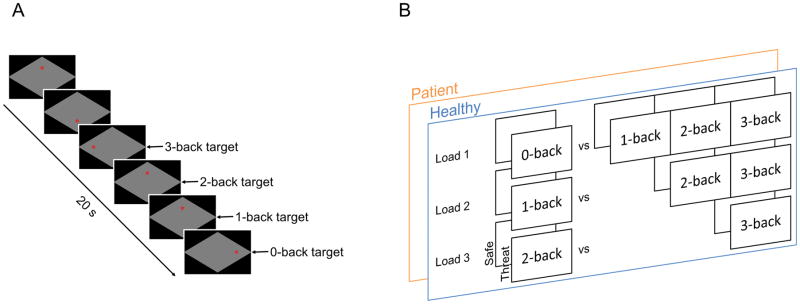
Methods: Patients, diagnosed with generalized and/or social anxiety disorder, and controls performed blocks of an N-back WM task during periods of safety and threat of shock. We recorded blood-oxygen-level dependent (BOLD) activity during the task, and investigated the effect of clinical anxiety (patients vs. controls) and threat on WM load-related BOLD activation.
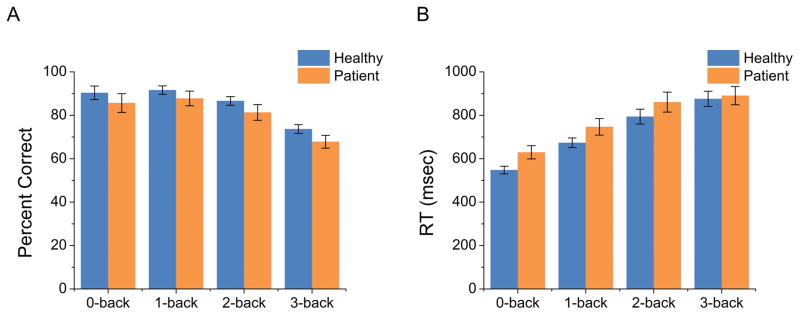
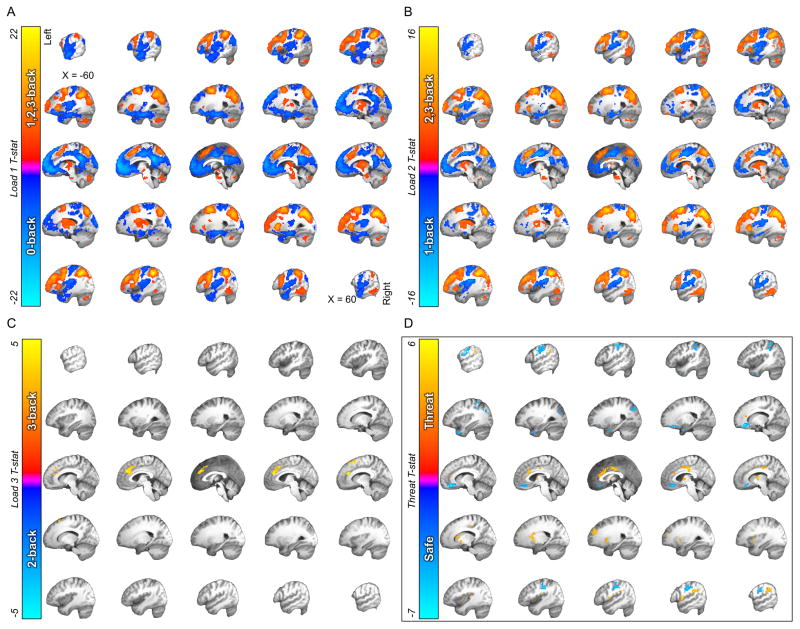
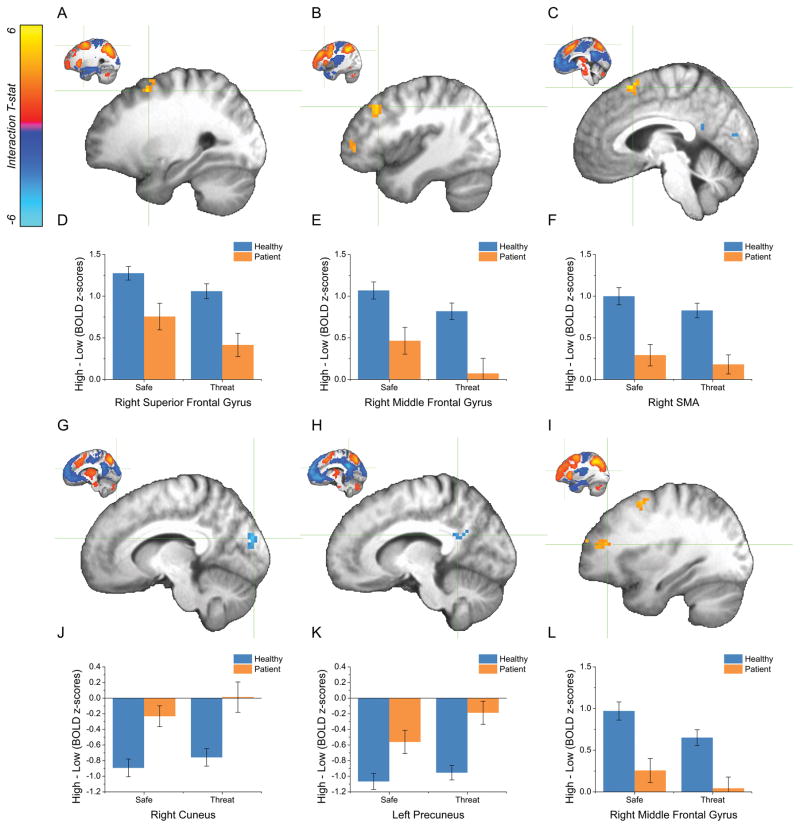
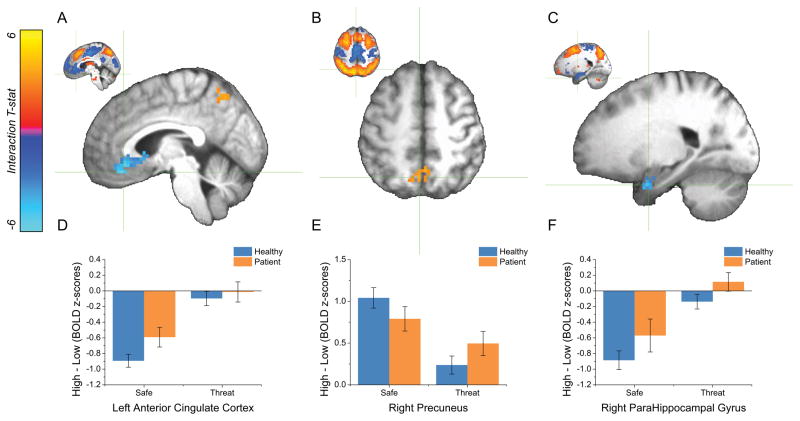
Results: Behaviorally, patients showed an overall impairment in both accuracy and reaction time compared to controls, independent of threat. At the neural level, patients showed less WM load-related activation in the dorsolateral prefrontal cortex, a region critical for cognitive control. In addition, patients showed less WM load-related deactivation in the ventromedial prefrontal cortex and posterior cingulate cortex, which are regions of the default mode network. Most importantly, these effects were not modulated by threat.
Conclusions: This work suggests that the cognitive deficits seen in anxiety patients may represent a key component of clinical anxiety, rather than a consequence of threat.
Trial registration: ClinicalTrials.gov NCT00047853.
Keywords: GAD/generalized anxiety disorder; anxiety/anxiety disorders; cognition; functional MRI; stress.
© 2016 Wiley Periodicals, Inc.
Conflict of interest statement
The authors report no conflicts of interest.
Figures
References
-
- American Psychiatric Association. Diagnostic and Statistical Manual of Mental Disorders: Dsm-5. Arlington, VA: Amer Psychiatric Pub Incorporated; 2013.
-
- Eysenck MW, Derakshan N, Santos R, et al. Anxiety and cognitive performance: attentional control theory. Emotion. 2007;7:336–53. - PubMed
MeSH terms
Associated data
Grants and funding
LinkOut - more resources
Full Text Sources
Other Literature Sources
Medical
Miscellaneous
