


When is it MODY? Challenges in the Interpretation of Sequence Variants in MODY Genes
- PMID: 27111119
- PMCID: PMC5275758
- DOI: 10.1900/RDS.2015.12.330
When is it MODY? Challenges in the Interpretation of Sequence Variants in MODY Genes
Abstract
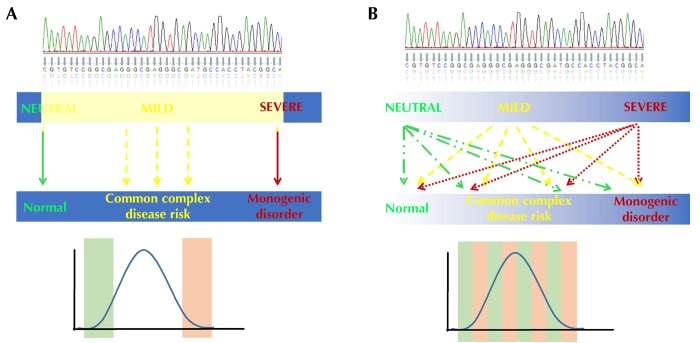
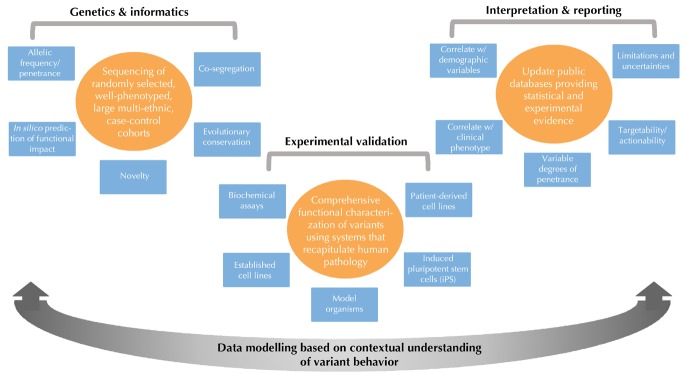
The genomics revolution has raised more questions than it has provided answers. Big data from large population-scale resequencing studies are increasingly deconstructing classic notions of Mendelian disease genetics, which support a simplistic correlation between mutational severity and phenotypic outcome. The boundaries are being blurred as the body of evidence showing monogenic disease-causing alleles in healthy genomes, and in the genomes of individu-als with increased common complex disease risk, continues to grow. In this review, we focus on the newly emerging challenges which pertain to the interpretation of sequence variants in genes implicated in the pathogenesis of maturity-onset diabetes of the young (MODY), a presumed mono-genic form of diabetes characterized by Mendelian inheritance. These challenges highlight the complexities surrounding the assignments of pathogenicity, in particular to rare protein-alerting variants, and bring to the forefront some profound clinical diagnostic implications. As MODY is both genetically and clinically heterogeneous, an accurate molecular diagnosis and cautious extrapolation of sequence data are critical to effective disease management and treatment. The biological and translational value of sequence information can only be attained by adopting a multitude of confirmatory analyses, which interrogate variant implication in disease from every possible angle. Indeed, studies which have effectively detected rare damaging variants in known MODY genes in normoglycemic individuals question the existence of a sin-gle gene mutation scenario: does monogenic diabetes exist when the genetic culprits of MODY have been systematical-ly identified in individuals without MODY?
Conflict of interest statement
The authors report no conflict of interests.
Figures
References
-
- Tattersall RB. Mild familial diabetes with dominant inheritance. Q J Med. 1974;43(170):339–357. - PubMed
-
- Tattersall RB, Fajans SS. A difference between the inheritance of classical juvenile-onset and maturity-onset type diabetes of young people. Diabetes. 1975;24(1):44–53. - PubMed
-
- Ledermann HM. Is maturity onset diabetes at young age (MODY) more common in Europe than previously assumed? Lancet. 1995;345(8950):648. - PubMed
-
- Thanabalasingham G, Owen KR. Diagnosis and management of maturity onset diabetes of the young (MODY) BMJ. 2011;343:d6044. - PubMed
-
- Shields BM, Hicks S, Shepherd MH, Colclough K, Hattersley AT, Ellard S. Maturity-onset diabetes of the young (MODY): how many cases are we missing? Diabetologia. 2010;53(12):2504–2508. - PubMed
Publication types
MeSH terms
Grants and funding
LinkOut - more resources
Full Text Sources
Medical
Research Materials
Miscellaneous