


SGLT2 Inhibition and cardiovascular events: why did EMPA-REG Outcomes surprise and what were the likely mechanisms?
- PMID: 27112340
- PMCID: PMC4901113
- DOI: 10.1007/s00125-016-3956-x
SGLT2 Inhibition and cardiovascular events: why did EMPA-REG Outcomes surprise and what were the likely mechanisms?
Erratum in
-
Erratum to: SGLT2 Inhibition and cardiovascular events: why did EMPA-REG Outcomes surprise and what were the likely mechanisms?Diabetologia. 2016 Jul;59(7):1573-1574. doi: 10.1007/s00125-016-3987-3. Diabetologia. 2016. PMID: 27174369 Free PMC article. No abstract available.
Abstract
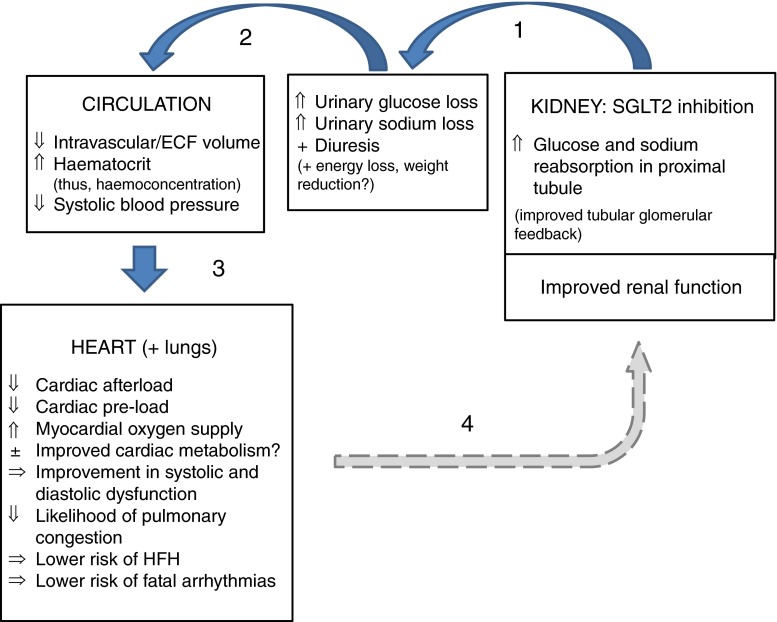
While the modest reduction in the primary composite outcome of myocardial infarction, stroke or cardiovascular death in the EMPA-REG Outcomes trial was welcome, the 30-40% reductions in heart failure hospitalisation (HFH) and cardiovascular and all-cause deaths in patients treated with empagliflozin were highly impressive and unexpected. In this review, we discuss briefly why cardiovascular endpoint trials for new diabetes agents are required and describe the results of the first four such trials to have reported, as a precursor to understanding why the EMPA-REG Outcomes results came as a surprise. Thereafter, we discuss potential mechanisms that could explain the EMPA-REG Outcomes results, concentrating on non-atherothrombotic effects. We suggest that the main driver of benefit may derive from the specific effects of sodium-glucose linked transporter-2 (SGLT2) inhibition on renal sodium and glucose handling, leading to both diuresis and improvements in diabetes-related maladaptive renal arteriolar responses. These haemodynamic and renal effects are likely to be beneficial in patients with clinical or subclinical cardiac dysfunction. The net result of these processes, we argue, is an improvement in cardiac systolic and diastolic function and, thereby, a lower risk of HFH and sudden cardiac death. We also discuss whether other drugs in this class are likely to show similar cardiovascular benefits. Finally, areas for future research are suggested to better understand the relevant mechanisms and to identify other groups who may benefit from SGLT2 inhibitor therapy.
Keywords: Blood pressure; Cardiovascular mortality; Empagliflozin; Haemodynamic; Heart failure; Renal dysfunction; Review; Sodium-glucose linked transporter-2; Type 2 diabetes.
Figures
References
Publication types
MeSH terms
Substances
Grants and funding
LinkOut - more resources
Full Text Sources
Other Literature Sources
Medical
