


Alterations in locomotor activity of feeding zebrafish larvae as a consequence of exposure to different environmental factors
- PMID: 27117258
- PMCID: PMC5846991
- DOI: 10.1007/s11356-016-6704-3
Alterations in locomotor activity of feeding zebrafish larvae as a consequence of exposure to different environmental factors
Abstract
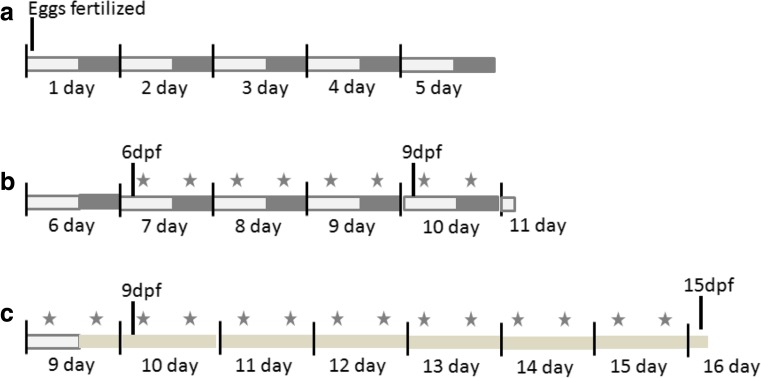
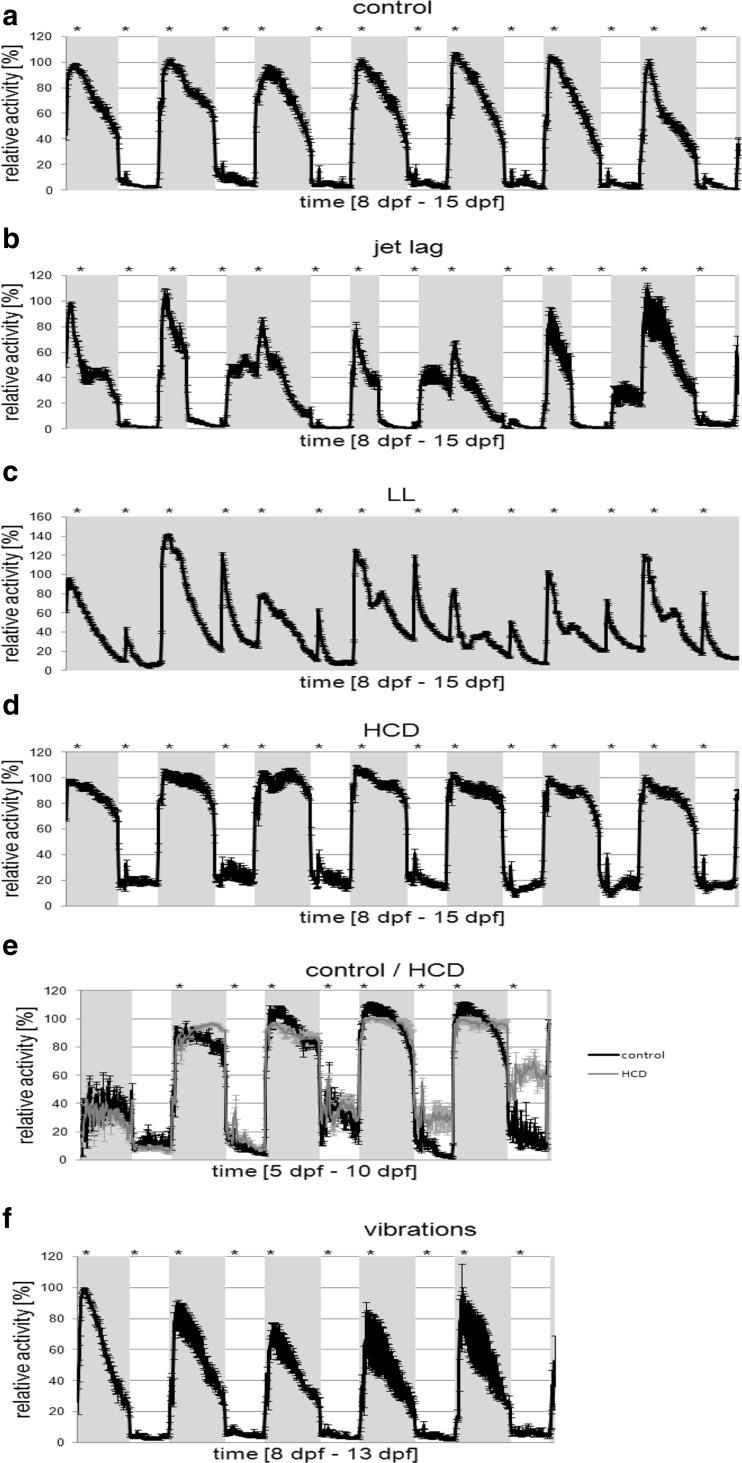
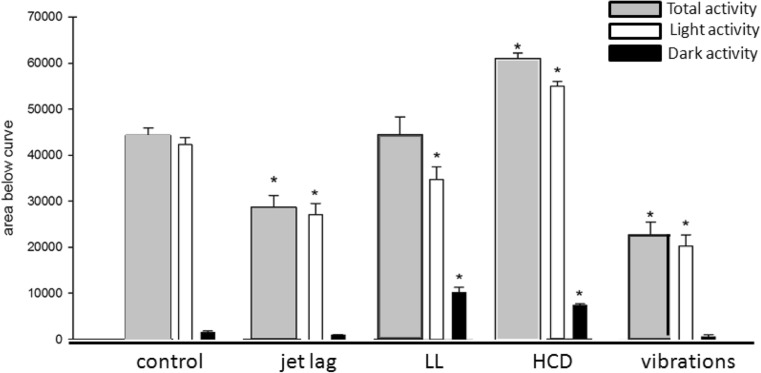
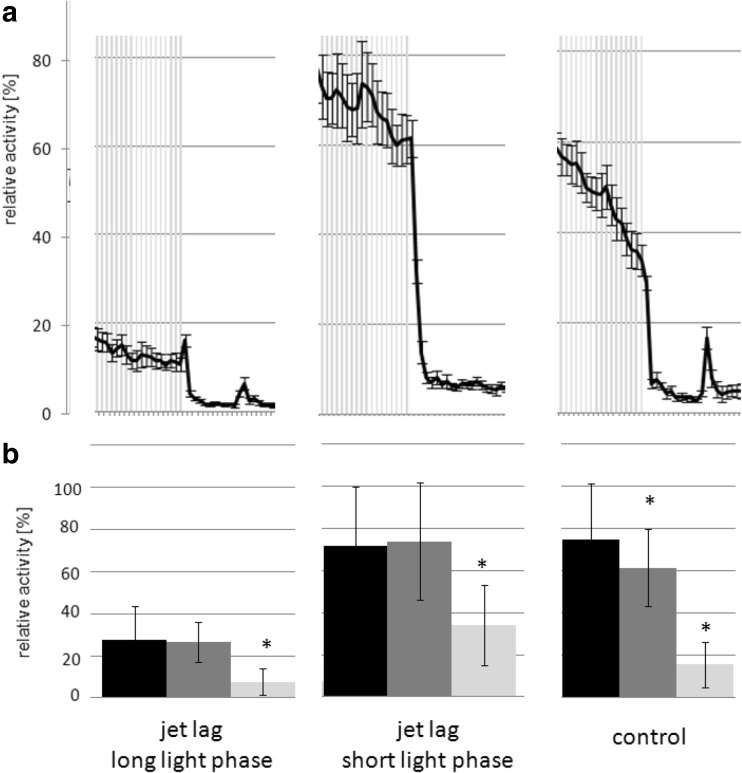
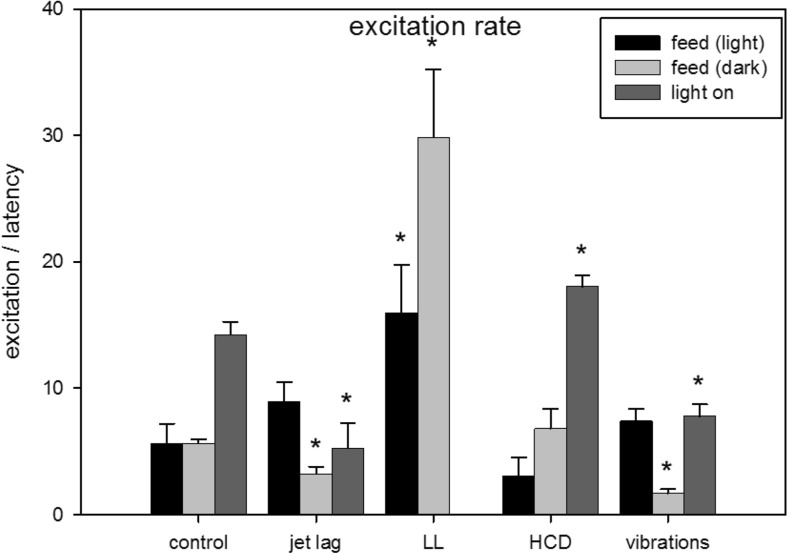
Behavioral studies are important tools for understanding the development and pathology of neurological diseases. Zebrafish are an emerging alternative model in behavioral and neurological studies as the behavioral repertoire of zebrafish (Danio rerio) is similar to humans, and nervous system structures and functions are highly conserved. In this study, we investigated alterations in day/night locomotor activity of free swimming, feeding wild-type zebrafish larvae (8-15dpf) due to changes in the rhythm of light/dark cycles or caloric content of food. We furthermore exposed zebrafish larvae to continuous stress by applying alternated minor vibrations. Under altered rhythms of light/dark cycle's zebrafish larvae still expressed a distinct light/dark activity pattern but the total activity was reduced compared to control animals. When the larvae were exposed to continuous light, they still had coordinated resting cycles but maximal activity and excitation rates after feeding were increased, indicating that food became the new zeitgeber. Feeding food of high caloric content induced continuously high activity levels during light cycles and significantly elevated activity levels during the dark. Exposure to continuous vibrations lowered total activity levels. We showed previously that changes in environmental factors like light/dark cycles or changes in caloric content of food can affect adipogenesis, lipid composition, and circadian rhythm of free swimming, feeding larvae but this is the first time showing how theses factor alter behavior.
Keywords: Diet; Environmental stimuli; Light; Locomotor activity; Sound/vibrations; Zebrafish.
Figures
References
-
- Budick SA, O’Malley DM. Locomotor repertoire of the larval zebrafish: swimming, turning and prey capture. J Exp Biol. 2000;203:2565–2579. - PubMed
-
- Cachat J, Stewart A, Grossman L, Gaikwad S, Kadri F, Chung KM, Wu N, Wong K, Roy S, Suciu C, Goodspeed J, Elegante M, Bartels B, Elkhayat S, Tien D, Tan J, Denmark A, Gilder T, Kyzar E, Dileo J, Frank K, Chang K, Utterback E, Hart P, Kalueff AV. Measuring behavioral and endocrine responses to novelty stress in adult zebrafish. Nat Protoc. 2010;5:1786–1799. doi: 10.1038/nprot.2010.140. - DOI - PubMed
MeSH terms
Grants and funding
LinkOut - more resources
Full Text Sources
Other Literature Sources
