


Quality of Life in Children with Hearing Impairment: Systematic Review and Meta-analysis
- PMID: 27118820
- PMCID: PMC5293136
- DOI: 10.1177/0194599816640485
Quality of Life in Children with Hearing Impairment: Systematic Review and Meta-analysis
Abstract
Objective: To determine the impact of pediatric hearing loss (HL) on quality of life (QOL).
Data sources: A qualified medical librarian conducted a literature search for relevant publications that evaluate QOL in school-aged children with HL.
Review methods: Studies were assessed independently by 2 reviewers for inclusion in the systematic review and meta-analysis.
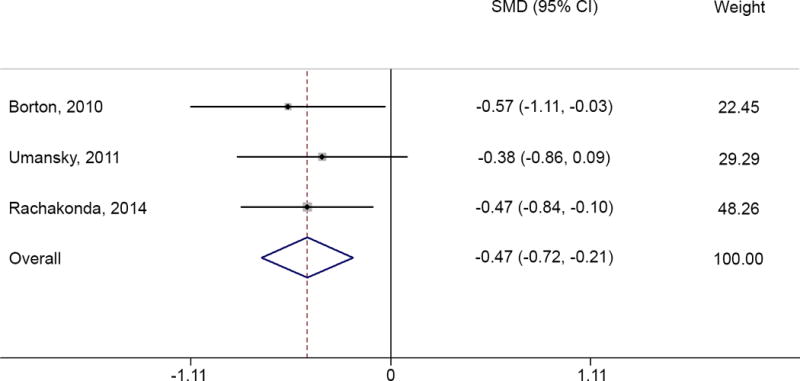
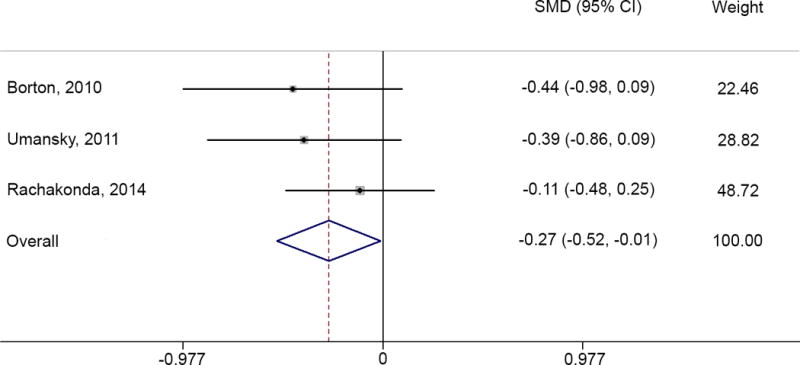
Results: From 979 abstracts, 69 were identified as relevant; ultimately, 40 articles were included in the systematic review. This review revealed that children with HL generally report a lower QOL than their normal-hearing peers and that QOL improves after interventions. The extent of these differences is variable among studies and depends on the QOL measure. Four studies using the Pediatric Quality of Life Inventory (PedsQL) had sufficient data for inclusion in a meta-analysis. After studies were pooled, statistically and clinically significant differences in PedsQL scores were found between children with normal hearing and those with HL, specifically in the social and school domains. Statistically significant differences were also noted in total scores for children with unilateral HL and in the physical domain for children with bilateral HL as compared with those having normal hearing; however, these differences were not clinically meaningful.
Conclusions: Our analysis reveals that decreased QOL in children with HL is detected in distinct domains of the PedsQL. These domains-school activities and social interactions-are especially important for development and learning. Future work should focus on these aspects of QOL when assessing HL in the pediatric population.
Keywords: pediatric hearing loss; quality of life.
© American Academy of Otolaryngology—Head and Neck Surgery Foundation 2016.
Conflict of interest statement
none
Figures





References
-
- Mehra S, Eavey RD, Keamy DG. The epidemiology of hearing impairment in the United States: newborns, children, and adolescents. Otolaryngology-Head and Neck Surgery. 2009;140(4):461–472. - PubMed
-
- Woodcock K, Pole JD. Educational attainment, labour force status and injury: a comparison of Canadians with and without deafness and hearing loss. International Journal of Rehabilitation Research. 2008;31(4):297–304. - PubMed
-
- The World Health Organization quality of life assessment (WHOQOL): Position paper from the World Health Organization. Soc Sci Med. 1995;41(10):1403–1409. - PubMed
-
- Moher D, Liberati A, Tetzlaff J, Altman DG. Preferred reporting items for systematic reviews and meta-analyses: the PRISMA statement. Annals of internal medicine. 2009;151(4):264–269. - PubMed
-
- Wells G, Shea B, O’connell D, et al. The Newcastle-Ottawa Scale (NOS) for assessing the quality of nonrandomised studies in meta-analyses. 2000
Publication types
MeSH terms
Grants and funding
LinkOut - more resources
Full Text Sources
Other Literature Sources
