


Alcohol consumption and corresponding factors: A novel perspective on the risk factors of esophageal cancer
- PMID: 27123096
- PMCID: PMC4840924
- DOI: 10.3892/ol.2016.4401
Alcohol consumption and corresponding factors: A novel perspective on the risk factors of esophageal cancer
Abstract
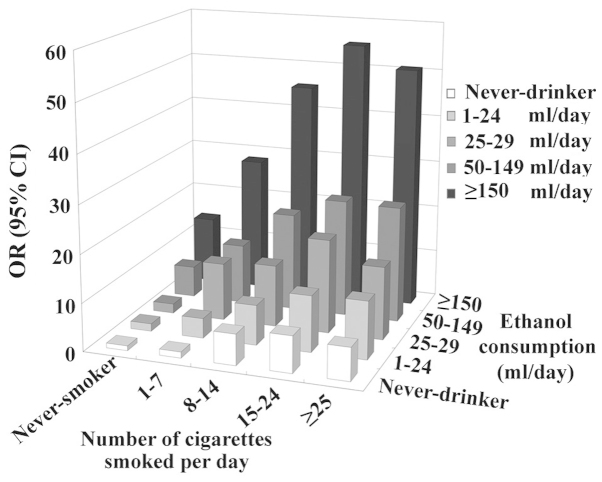
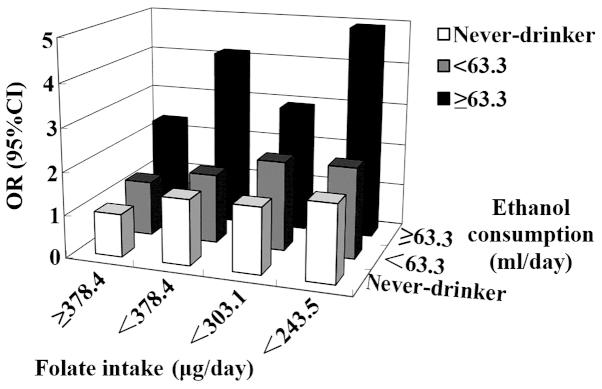
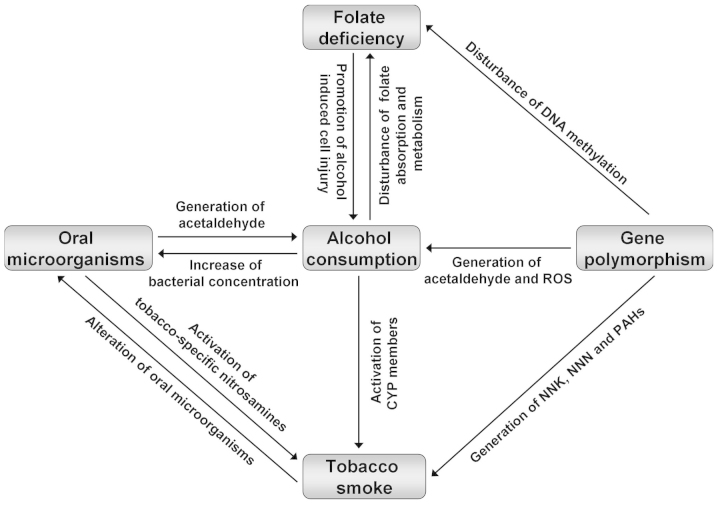
Esophageal cancer is the eighth most common type of cancer in the world, and the sixth most common cause of mortality from cancer. Alcohol consumption is the major risk factor for esophageal cancer, due to the worldwide prevalence and high carcinogenicity of the ethanol metabolite. In epidemiological studies, the efficiency of alcohol intake to enhance the risk of esophageal cancer is altered by daily ethanol consumption, type of alcoholic beverages ingested, time since quitting drinking, age of drinking initiation, differences in population and subtypes of esophageal cancer. Corresponding factors, including gene polymorphisms, tobacco smoking, oral microorganisms and folate deficiency, reveal a synergistic effect in concurrent alcohol users that may lead to an increased risk of developing esophageal cancer. Consequently, esophageal cancer prevention involves multiple aspects, including quitting drinking and smoking, maintaining an adequate oral health and ingesting adequate quantities of folate, particularly in genetically high-risk populations.
Keywords: alcohol; corresponding factors; epidemiology; esophageal cancer; risk factors.
Figures
References
-
- Danaei G, Vander Hoorn S, Lopez AD, Murray CJ, Ezzati M. Comparative Risk Assessment collaborating group (Cancers): Causes of cancer in the world: Comparative risk assessment of nine behavioural and environmental risk factors. Lancet. 2005;366:1784–1793. doi: 10.1016/S0140-6736(05)67725-2. - DOI - PubMed
LinkOut - more resources
Full Text Sources
Other Literature Sources