


Changes in the composition of brain interstitial ions control the sleep-wake cycle
- PMID: 27126038
- PMCID: PMC5441687
- DOI: 10.1126/science.aad4821
Changes in the composition of brain interstitial ions control the sleep-wake cycle
Abstract
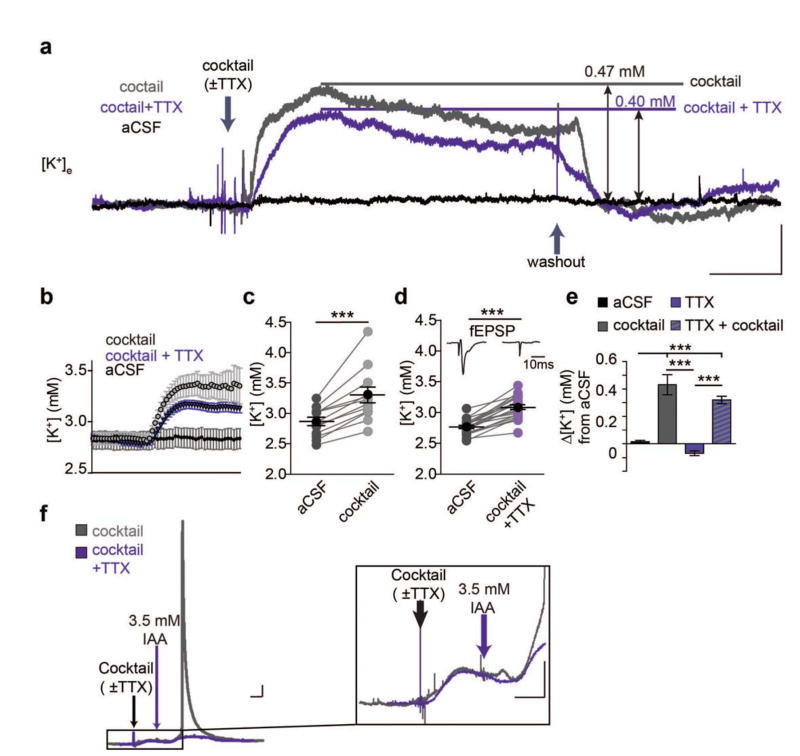
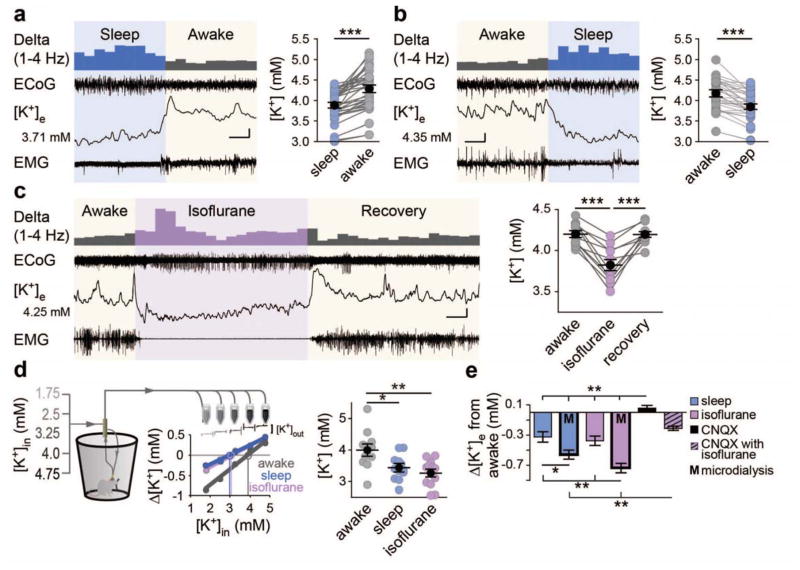
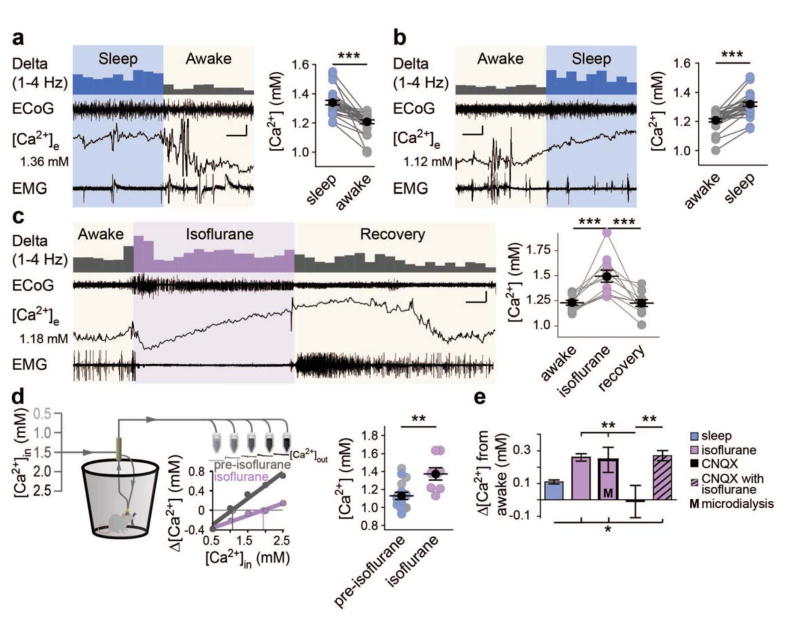
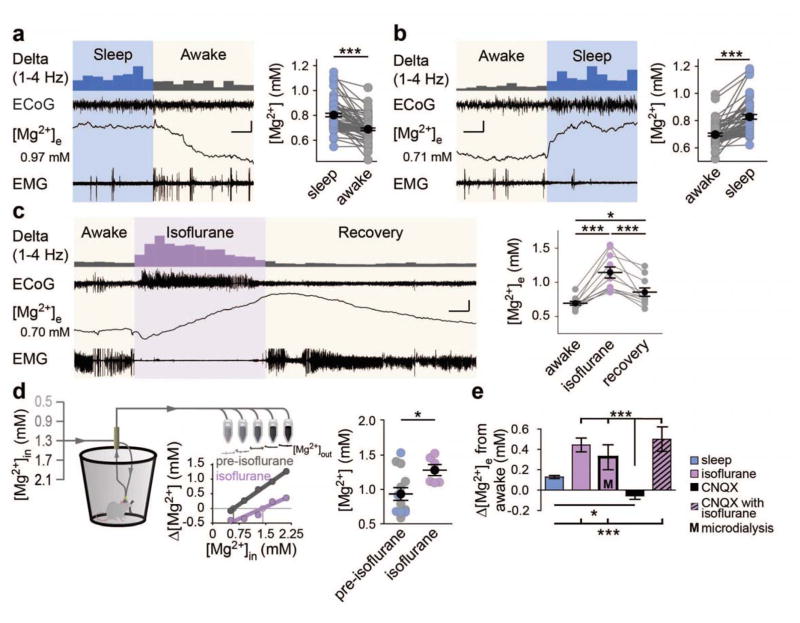
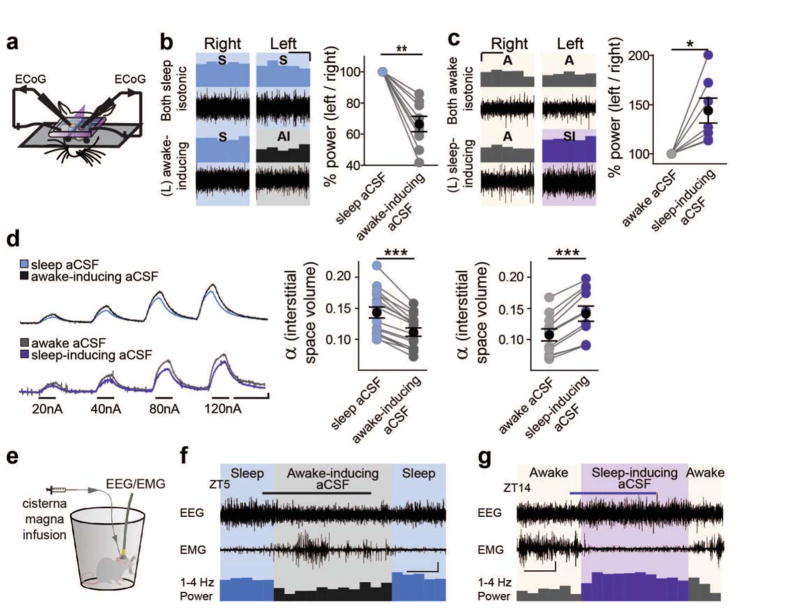
Wakefulness is driven by the widespread release of neuromodulators by the ascending arousal system. Yet, it is unclear how these substances orchestrate state-dependent, global changes in neuronal activity. Here, we show that neuromodulators induce increases in the extracellular K(+) concentration ([K(+)]e) in cortical slices electrically silenced by tetrodotoxin. In vivo, arousal was linked to AMPA receptor-independent elevations of [K(+)]e concomitant with decreases in [Ca(2+)]e, [Mg(2+)]e, [H(+)]e, and the extracellular volume. Opposite, natural sleep and anesthesia reduced [K(+)]e while increasing [Ca(2+)]e, [Mg(2+)]e, and [H(+)]e as well as the extracellular volume. Local cortical activity of sleeping mice could be readily converted to the stereotypical electroencephalography pattern of wakefulness by simply imposing a change in the extracellular ion composition. Thus, extracellular ions control the state-dependent patterns of neural activity.
Copyright © 2016, American Association for the Advancement of Science.
Figures
Comment in
-
NEUROSCIENCE. Ionic control of sleep and wakefulness.Science. 2016 Apr 29;352(6285):517-8. doi: 10.1126/science.aaf8178. Science. 2016. PMID: 27126024 No abstract available.
References
Publication types
MeSH terms
Substances
Grants and funding
LinkOut - more resources
Full Text Sources
Other Literature Sources
Medical
Miscellaneous
