


Metronidazole-Induced Cerebellar Toxicity
- PMID: 27127600
- PMCID: PMC4830366
- DOI: 10.4081/ni.2016.6365
Metronidazole-Induced Cerebellar Toxicity
Abstract
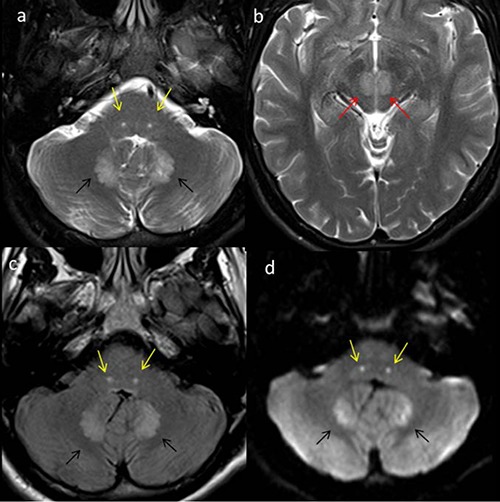
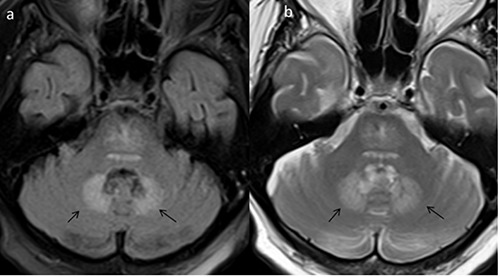
Metronidazole is a very common antibacterial and antiprotozoal with wide usage across the globe, including the least developed countries. It is generally well-tolerated with a low incidence of serious side-effects. Neurological toxicity is fairly common with this drug, however majority of these are peripheral neuropathy with very few cases of central nervous toxicity reported. We report the imaging findings in two patients with cerebellar dysfunction after Metronidazole usage. Signal changes in the dentate and red nucleus were seen on magnetic resonance imaging in these patients. Most of the cases reported in literature reported similar findings, suggesting high predilection for the dentate nucleus in metronidazole induced encephalopathy.
Keywords: Metronidazole; dentate; magnetic resonance imaging; toxicity.
Conflict of interest statement
Conflict of interest: the authors declare no potential conflict of interest.
Figures
References
-
- Patel K, Green-Hopkins Lu S, Tunkel AR. Cerebellar ataxia following prolonged use of metronidazole: case report and literature review. Int J Infect Dis 2008;12:e111-4. - PubMed
-
- Woodruff BK, Wijdicks EF, Marshall WF. Reversible metronidazole-induced lesions of the cerebellar dentate nuclei. N Engl J Med 2002;346:68-9. - PubMed
-
- Graves TD, Condon M, Loucaidou M, Perry RJ. Reversible metronidazole-induced cerebellar toxicity in a multiple transplant recipient. J Neurol Sci 2009;285:238-40. - PubMed
Publication types
LinkOut - more resources
Full Text Sources
Other Literature Sources