Prehospital and in-hospital use of healthcare resources in patients surviving acute coronary syndromes: an analysis of the EPICOR registry
- PMID: 27127635
- PMCID: PMC4847130
- DOI: 10.1136/openhrt-2015-000347
Prehospital and in-hospital use of healthcare resources in patients surviving acute coronary syndromes: an analysis of the EPICOR registry
Abstract
Objective: The aim of this report is to provide insight into real-world healthcare resource use (HCRU) during the critical management of patients surviving acute coronary syndromes (ACS), using data from EPICOR (long-tErm follow-up of antithrombotic management Patterns In acute CORonary syndrome patients) (NCT01171404).
Methods: EPICOR was a prospective, multinational, observational study that enrolled 10 568 ACS survivors from 555 hospitals in 20 countries in Europe and Latin America, between September 2010 and March 2011. HCRU was evaluated in patients with ST-segment elevation myocardial infarction (STEMI) or non-ST-segment elevation ACS (NSTE-ACS), with or without a history of cardiovascular disease (CVD). Multivariable analysis was performed to determine factors that affected resource use.
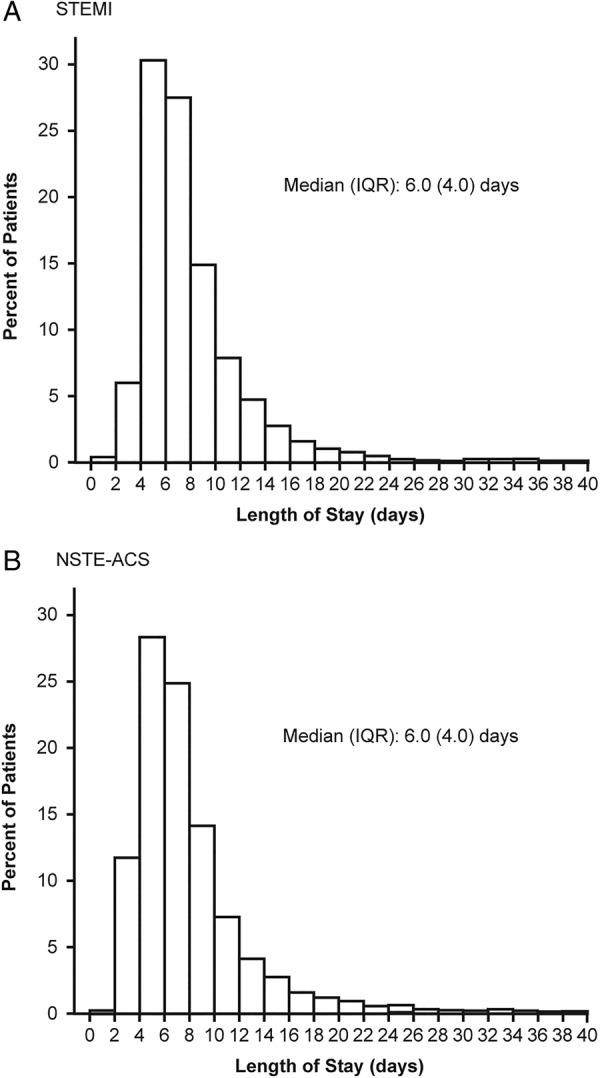
Results: Before hospitalisation, more patients with STEMI than with NSTE-ACS had their first ECG (44.1% vs 36.4%, p<0.0001) and received antithrombotic medication (26.6% vs 15.2%, p<0.0001). Patients with NSTE-ACS with prior CVD were less likely than those without to be catheterised (73.1% vs 82.8%, p<0.0001). More patients with STEMI than with NSTE-ACS had percutaneous coronary intervention (77.1% vs 54.9%, p<0.0001), but fewer underwent coronary artery bypass grafting (1.2% vs 3.7%, p<0.0001). Multivariable analysis showed that resource use, including length of hospital stay and coronary revascularisation, was significantly influenced by multiple factors, including ACS type, site characteristics and region (all p≤0.05).
Conclusions: In this large-scale, real-life study, findings were generally in line with clinical logic, although site characteristics and region still significantly affected resource use. Moreover, and unexpectedly, resource use tended to be slightly higher in patients without a history of CVD.
Trial registration number: NCT01171404 (ClinicalTrials.gov).
Figures
References
-
- World Health Organization. Cardiovascular diseases (CVDs). Fact sheet No. 317 2013. http://www.who.int/mediacentre/factsheets/fs317/en/# (accessed 22 Jul 2013).
-
- Hamm CW, Bassand JP, Agewall S et al. ESC Guidelines for the management of acute coronary syndromes in patients presenting without persistent ST-segment elevation: the Task Force for the management of acute coronary syndromes (ACS) in patients presenting without persistent ST-segment elevation of the European Society of Cardiology (ESC). Eur Heart J 2011;32:2999–3054. 10.1093/eurheartj/ehr236 - DOI - PubMed
-
- O'Gara PT, Kushner FG, Ascheim DD et al. 2013 ACCF/AHA guideline for the management of ST-elevation myocardial infarction: a report of the American College of Cardiology Foundation/American Heart Association Task Force on Practice Guidelines. Circulation 2013;127:e362–425. 10.1161/CIR.0b013e3182742cf6 - DOI - PubMed
Publication types
Associated data
LinkOut - more resources
Full Text Sources
Other Literature Sources
Medical