


Exposure to Fine Particulate Air Pollution Causes Vascular Insulin Resistance by Inducing Pulmonary Oxidative Stress
- PMID: 27128347
- PMCID: PMC5132639
- DOI: 10.1289/EHP212
Exposure to Fine Particulate Air Pollution Causes Vascular Insulin Resistance by Inducing Pulmonary Oxidative Stress
Abstract
Background: Epidemiological evidence suggests that exposure to ambient air fine particulate matter (PM2.5) increases the risk of developing type 2 diabetes and cardiovascular disease. However, the mechanisms underlying these effects of PM2.5 remain unclear.
Objectives: We tested the hypothesis that PM2.5 exposure decreases vascular insulin sensitivity by inducing pulmonary oxidative stress.
Methods: Mice fed control (10-13% kcal fat) and high-fat (60% kcal fat, HFD) diets, treated with 4-hydroxy-2,2,6,6-tetramethylpiperidine-1-oxyl (TEMPOL) or mice overexpressing lung-specific extracellular superoxide dismutase (ecSOD) were exposed to HEPA-filtered air or to concentrated PM2.5 (CAP) for 9 or 30 days, and changes in systemic and organ-specific insulin sensitivity and inflammation were measured.
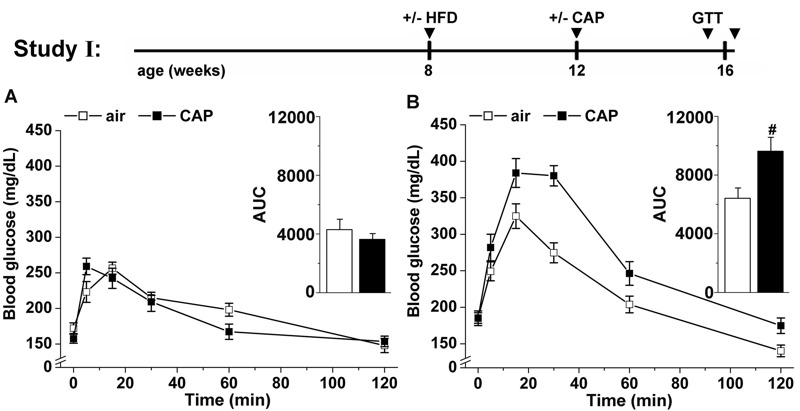
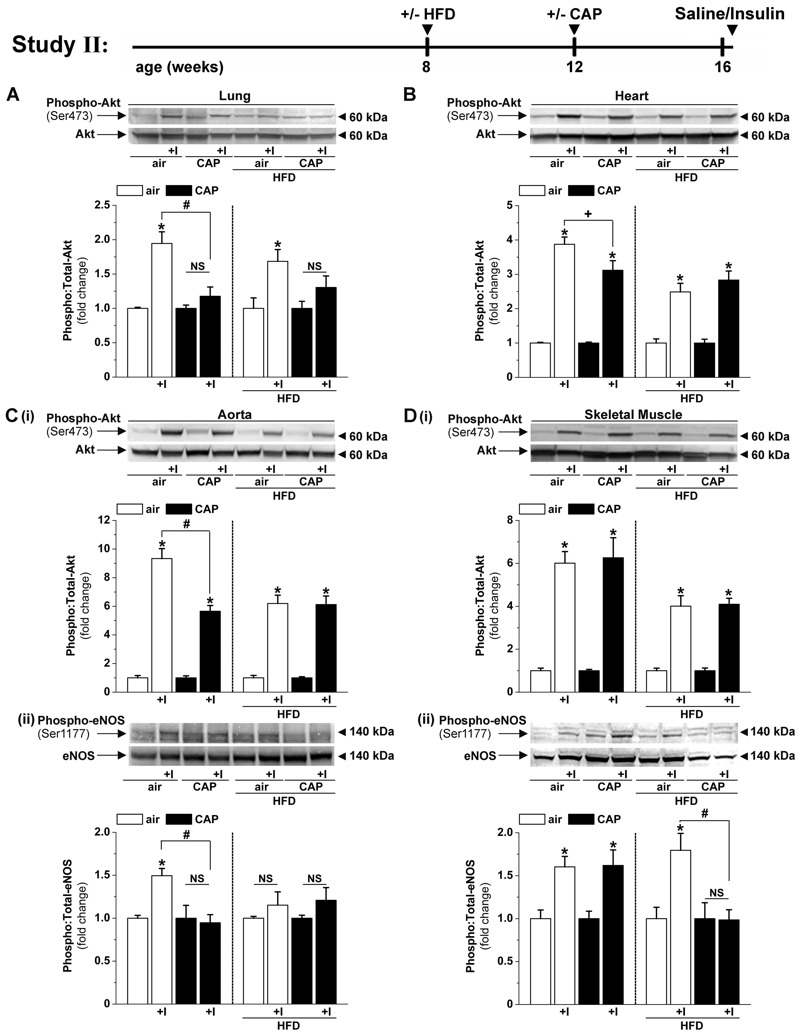
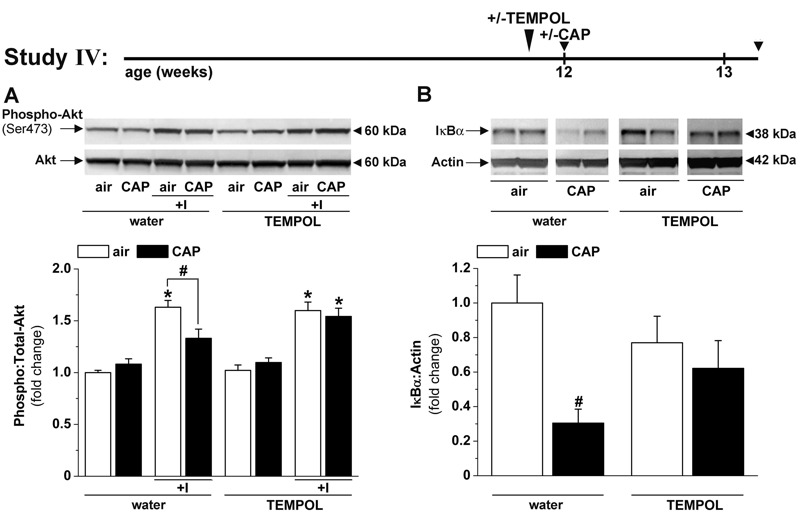
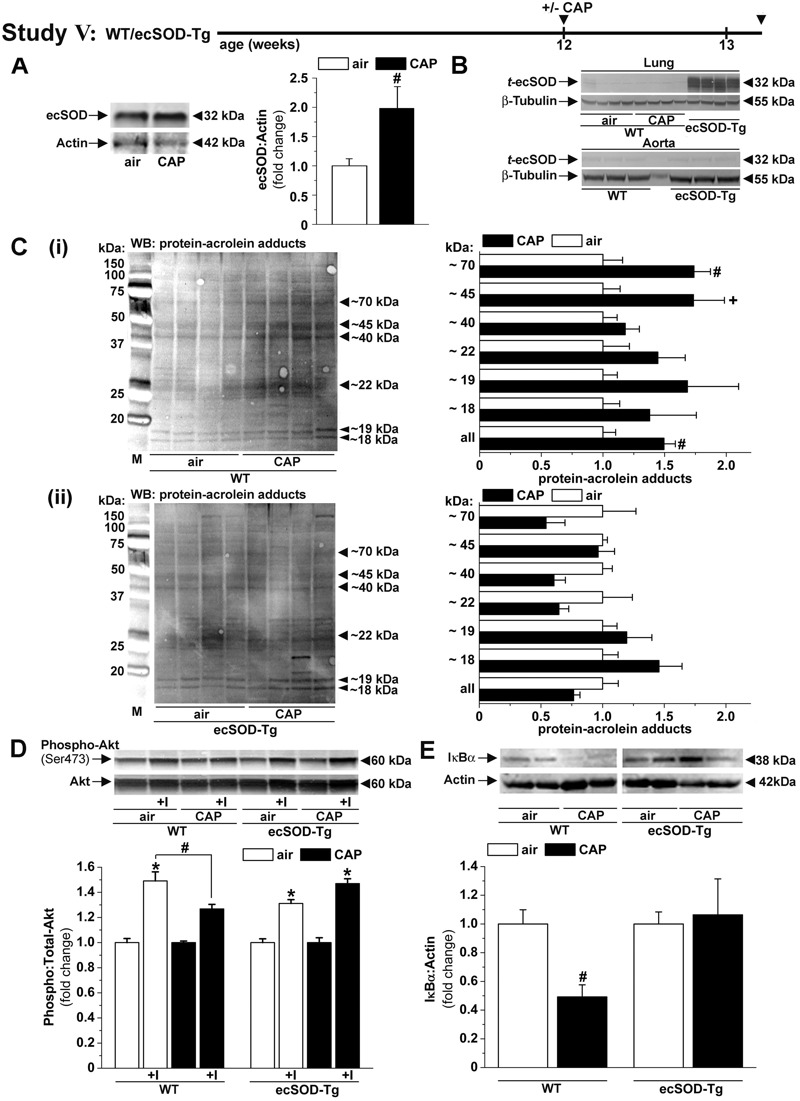
Results: In control diet-fed mice, exposure to CAP for 30 days decreased insulin-stimulated Akt phosphorylation in lung, heart, and aorta but not in skeletal muscle, adipose tissue, and liver and did not affect adiposity or systemic glucose tolerance. In HFD-fed mice, 30-day CAP exposure suppressed insulin-stimulated endothelial nitric oxide synthase (eNOS) phosphorylation in skeletal muscle and increased adipose tissue inflammation and systemic glucose intolerance. In control diet-fed mice, a 9-day CAP exposure was sufficient to suppress insulin-stimulated Akt and eNOS phosphorylation and to decrease IκBα (inhibitor of the transcription factor NF-κB levels in the aorta. Treatment with the antioxidant TEMPOL or lung-specific overexpression of ecSOD prevented CAP-induced vascular insulin resistance and inflammation.
Conclusions: Short-term exposure to PM2.5 induces vascular insulin resistance and inflammation triggered by a mechanism involving pulmonary oxidative stress. Suppression of vascular insulin signaling by PM2.5 may accelerate the progression to systemic insulin resistance, particularly in the context of diet-induced obesity. Citation: Haberzettl P, O'Toole TE, Bhatnagar A, Conklin DJ. 2016. Exposure to fine particulate air pollution causes vascular insulin resistance by inducing pulmonary oxidative stress. Environ Health Perspect 124:1830-1839; http://dx.doi.org/10.1289/EHP212.
Conflict of interest statement
The authors declare they have no actual or potential competing financial interests.
Figures

Comment in
-
Connecting PM2.5 Exposure to Insulin Resistance: Oxidative Stress May Be an Intermediate Step.Environ Health Perspect. 2016 Dec 1;124(12):A236. doi: 10.1289/ehp.124-A236. Environ Health Perspect. 2016. PMID: 27905277 Free PMC article. No abstract available.
References
-
- Andersen ZJ, Wahlin P, Raaschou-Nielsen O, Ketzel M, Scheike T, Loft S. Size distribution and total number concentration of ultrafine and accumulation mode particles and hospital admissions in children and the elderly in Copenhagen, Denmark. Occup Environ Med. 2008;65:458–466. - PubMed
-
- Bhatnagar A. Could dirty air cause diabetes? [Editorial]. Circulation. 2009;119:492–494. - PubMed
-
- Brook RD, Rajagopalan S, Pope CA, III, Brook JR, Bhatnagar A, Diez-Roux AV, et al. Particulate matter air pollution and cardiovascular disease: an update to the scientific statement from the American Heart Association. Circulation. 2010;121:2331–2378. - PubMed
Publication types
MeSH terms
Substances
Grants and funding
LinkOut - more resources
Full Text Sources
Other Literature Sources
Miscellaneous