


White matter integrity as a mediator in the relationship between dietary nutrients and cognition in the elderly
- PMID: 27129740
- PMCID: PMC4884180
- DOI: 10.1002/ana.24674
White matter integrity as a mediator in the relationship between dietary nutrients and cognition in the elderly
Abstract
Objective: We examined the association of nutrient intake with microstructural white matter integrity, and the role of white matter integrity in the association between nutrient consumption and cognition.
Methods: This cross-sectional analysis included 239 elderly (age ≥ 65 years) participants of a multiethnic cohort. White matter integrity was measured with fractional anisotropy (FA) from diffusion tensor magnetic resonance imaging. Nutrient patterns were derived from principal component analysis based on energy-adjusted intake of 24 selected nutrients. Generalized linear models were used to assess the association between nutrient patterns and mean FA of 26 white matter tracts. Mediation analysis was used to determine whether FA mediates the nutrient-cognition relationship. All models were adjusted for age at time of scan, gender, ethnicity, education, caloric intake, and apolipoprotein genotype.
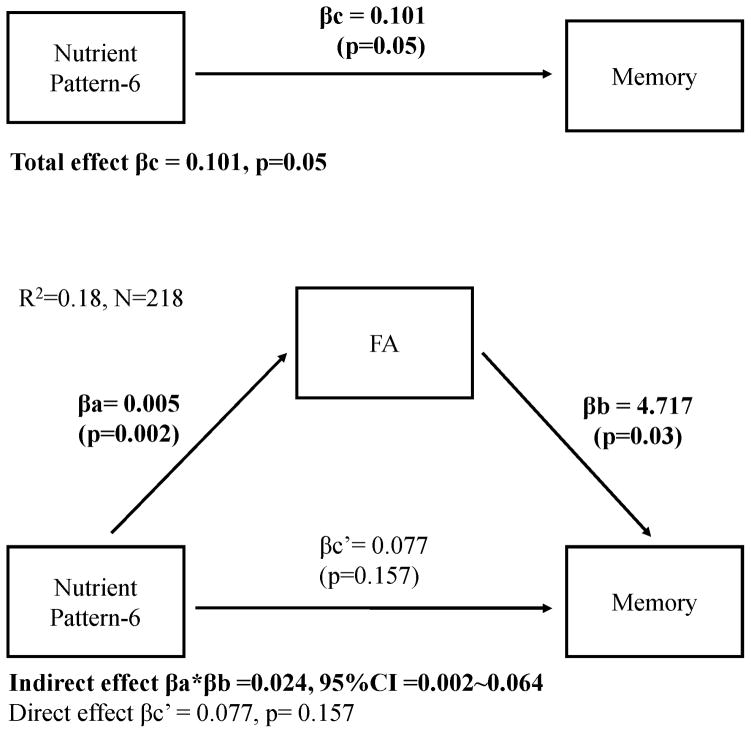
Results: Among the identified 6 nutrient patterns, 1 (nutrient pattern 6, characterized by high intakes of Ω-3 and Ω-6 polyunsaturated fatty acids and vitamin E) was positively associated with FA. Those with the highest tertile of nutrient pattern 6 score had a mean of 0.01 (p = 0.01) higher FA value than those with the lowest tertile, similar to the effect of a 10-year decrease in age (b for age = -0.001, p = 0.01). FA mediated the relationship between nutrient pattern 6 and memory, language, visuospatial and speed/executive function, and mean cognitive scores.
Interpretation: Our study suggests that older adults consuming more polyunsaturated fatty acids and vitamin E rich foods had better white matter integrity, and that maintaining white matter microstructural integrity might be a mechanism for the beneficial role of diet on cognition. Ann Neurol 2016;79:1014-1025.
© 2016 American Neurological Association.
Conflict of interest statement
Dr. Gu reports grants from National Institute of Health R00 AG042483, during the conduct of the study. Other authors have nothing to disclose; Dr. Manly reports grants from NIH/NIA R01 AG037212, during the conduct of the study; Dr. Brickman reports grants from National Institutes of Health, personal fees from Keystone Heart, personal fees from ProPhase LLC, outside the submitted work.
References
Publication types
MeSH terms
Grants and funding
LinkOut - more resources
Full Text Sources
Other Literature Sources
