Determinants of return to work 12 months after total hip and knee arthroplasty
- PMID: 27138849
- PMCID: PMC5209980
- DOI: 10.1308/rcsann.2016.0158
Determinants of return to work 12 months after total hip and knee arthroplasty
Abstract
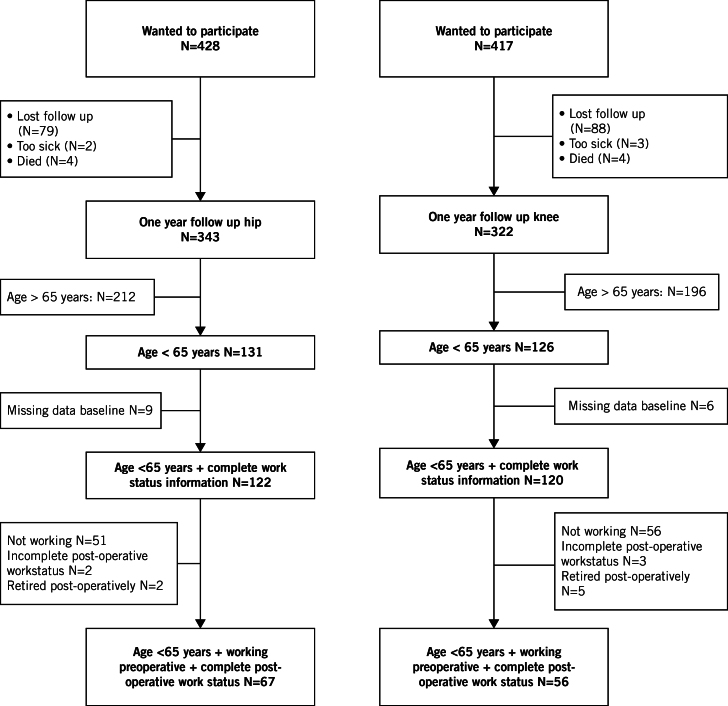
Introduction A substantial number of patients undergoing total hip or knee arthroplasty (THA or TKA) do not or only partially return to work. This study aimed to identify differences in determinants of return to work in THA and TKA. Methods We conducted a prospective, observational study of working patients aged <65 years undergoing THA or TKA for osteoarthritis. The primary outcome was full versus partial or no return to work 12 months postoperatively. Factors analysed included preoperative sociodemographic and work characteristics, alongside the Hip Disability and Osteoarthritis Outcome Score (HOOS)/Knee Injury and Osteoarthritis Outcome Score (KOOS), and Oxford Hip and Knee Scores. Results Of 67 THA and 56 TKA patients, 9 (13%) and 10 (19%), respectively, returned partially and 5 (7%) and 6 (11%), respectively, did not return to work 1 year postoperatively. Preoperative factors associated with partial or no return to work in THA patients were self-employment, absence from work and a better HOOS Activities of Daily Living (ADL) subscale score, whereas only work absence was relevant in TKA patients. Type of surgery modified the impact of ADL scores on return to work. Conclusions In both THA and TKA, absence from work affected return to work, whereas self-employment and better preoperative ADL subscale scores were also associated in THA patients. The impact of ADL scores on return to work was modified by type of surgery. These results suggest that strategies aiming to influence modifiable factors should consider THA and TKA separately.
Keywords: Arthroplasty; Return to work; Total hip or total knee replacement; Work limitations.
References
-
- Kurtz S, Ong K, Lau E et al. . Projections of primary and revision hip and knee arthroplasty in the United States from 2005 to 2030. J Bone Joint Surg Am 2007; : 780–785. - PubMed
-
- Kurtz S, Mowat F, Ong K et al. . Prevalence of primary and revision total hip and knee arthroplasty in the United States from 1990 through 2002. J Bone Joint Surg [Am] 2005; : 1,487–1,497. - PubMed
-
- Tilbury C, Schaasberg W, Plevier JW et al. . Return to work after total hip and knee arthroplasty: a systematic review. Rheumatology (Oxford) 2014; : 512–525. - PubMed
Publication types
MeSH terms
LinkOut - more resources
Full Text Sources
Other Literature Sources
Medical