Observational Study
. 2016 May;103(5):1291-300.
doi: 10.3945/ajcn.115.126375.

Alterations in human milk leptin and insulin are associated with early changes in the infant intestinal microbiome

Affiliations
Observational Study

Alterations in human milk leptin and insulin are associated with early changes in the infant intestinal microbiome

Dominick J Lemas et al. Am J Clin Nutr. 2016 May.

Abstract

Background: Increased maternal body mass index (BMI) is a robust risk factor for later pediatric obesity. Accumulating evidence suggests that human milk (HM) may attenuate the transfer of obesity from mother to offspring, potentially through its effects on early development of the infant microbiome.

Objectives: Our objective was to identify early differences in intestinal microbiota in a cohort of breastfeeding infants born to obese compared with normal-weight (NW) mothers. We also investigated relations between HM hormones (leptin and insulin) and both the taxonomic and functional potentials of the infant microbiome.

Design: Clinical data and infant stool and fasting HM samples were collected from 18 NW [prepregnancy BMI (in kg/m(2)) <24.0] and 12 obese (prepregnancy BMI >30.0) mothers and their exclusively breastfed infants at 2 wk postpartum. Infant body composition at 2 wk was determined by air-displacement plethysmography. Infant gastrointestinal microbes were estimated by using 16S amplicon and whole-genome sequencing. HM insulin and leptin were determined by ELISA; short-chain fatty acids (SCFAs) were measured in stool samples by using gas chromatography. Power was set at 80%.

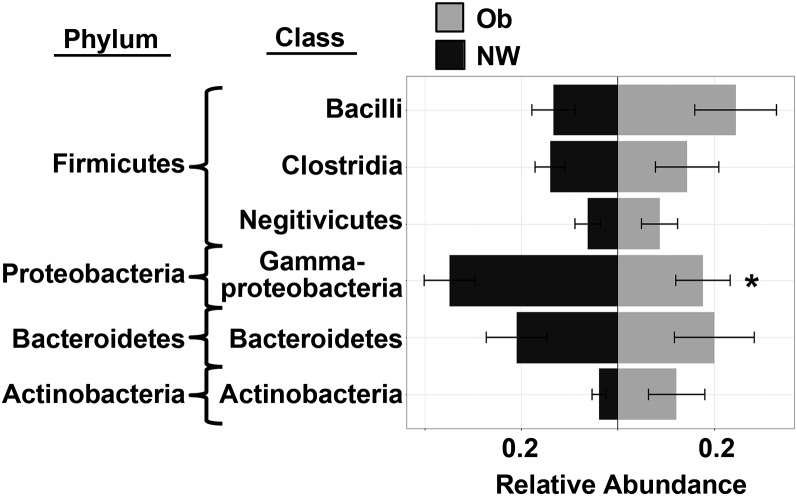
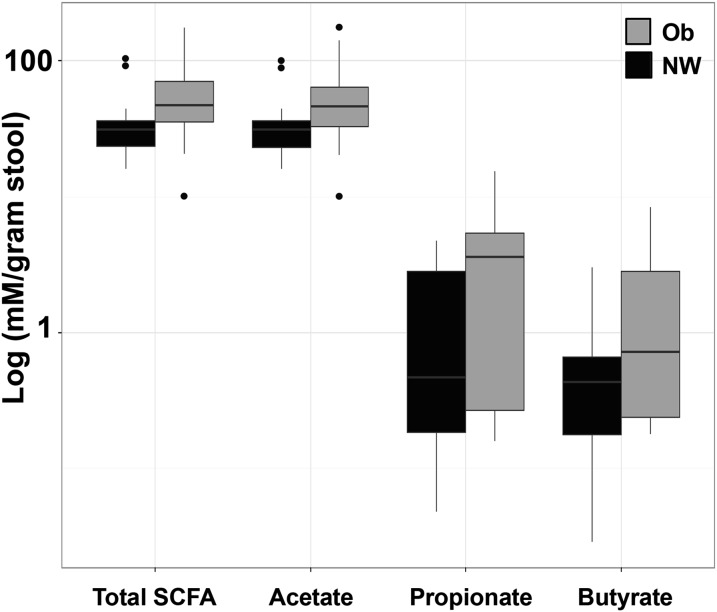
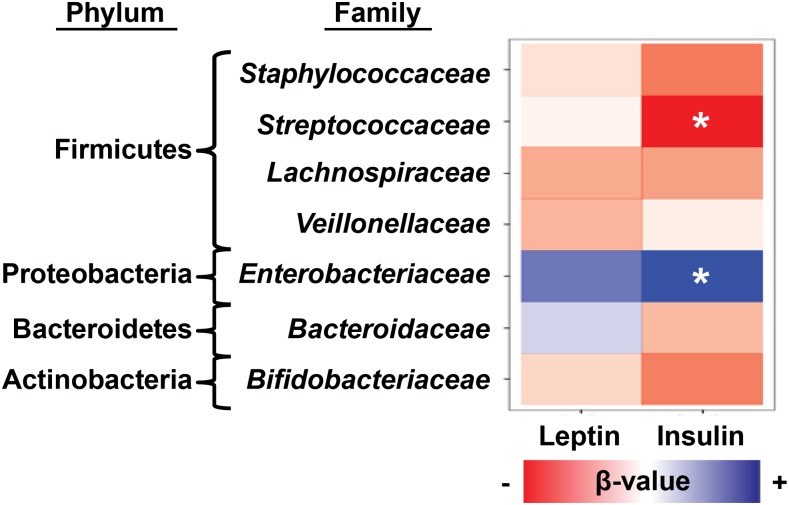
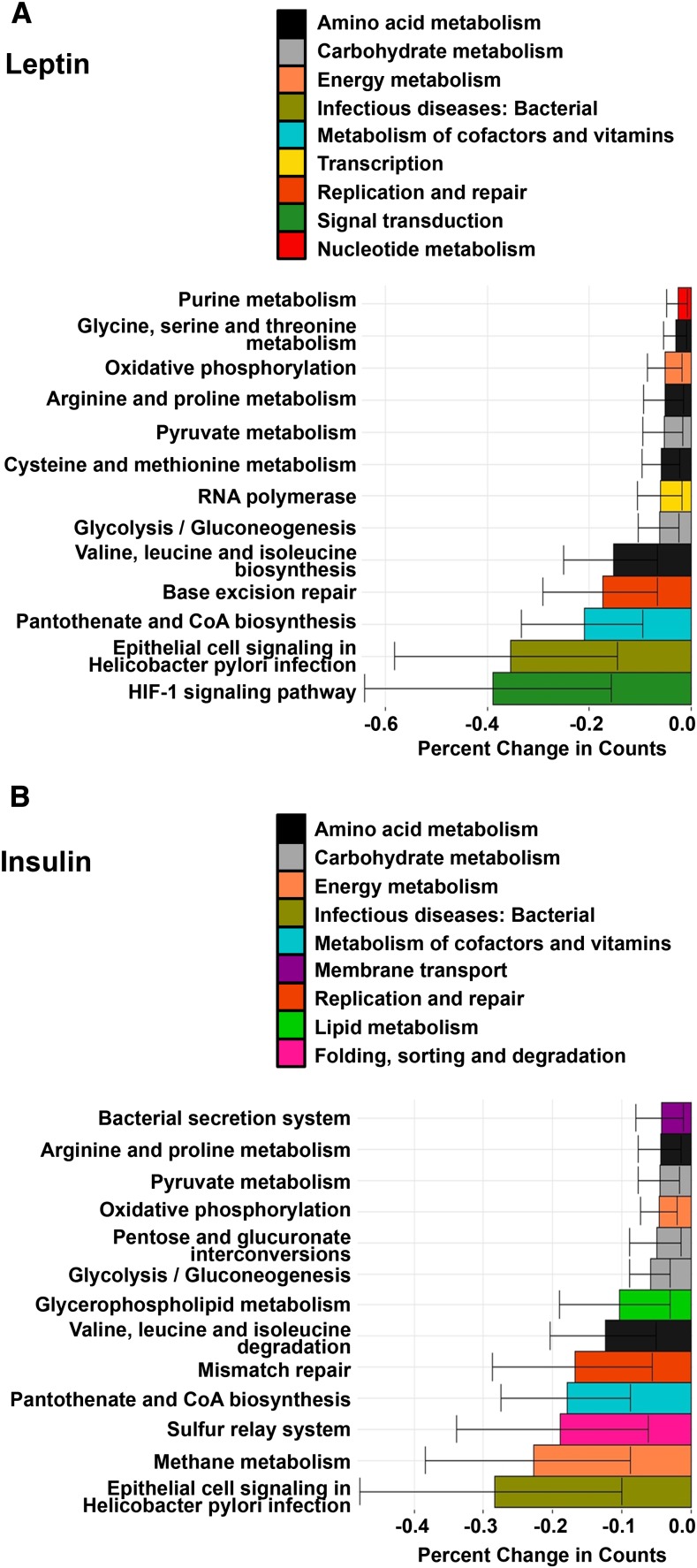
Results: Infants born to obese mothers were exposed to 2-fold higher HM insulin and leptin concentrations (P < 0.01) and showed a significant reduction in the early pioneering bacteria Gammaproteobacteria (P = 0.03) and exhibited a trend for elevated total SCFA content (P < 0.06). Independent of maternal prepregnancy BMI, HM insulin was positively associated with both microbial taxonomic diversity (P = 0.03) and Gammaproteobacteria (e.g., Enterobacteriaceae; P = 0.04) and was negatively associated with Lactobacillales (e.g., Streptococcaceae; P = 0.05). Metagenomic analysis showed that HM leptin and insulin were associated with decreased bacterial proteases, which are implicated in intestinal permeability, and reduced concentrations of pyruvate kinase, a biomarker of pediatric gastrointestinal inflammation.

Conclusion: Our results indicate that, although maternal obesity may adversely affect the early infant intestinal microbiome, HM insulin and leptin are independently associated with beneficial microbial metabolic pathways predicted to increase intestinal barrier function and reduce intestinal inflammation. This trial was registered at clinicaltrials.gov as NCT01693406.

Keywords: Gammaproteobacteria; breastfed; maternal obesity; metagenomics; pyruvate kinase.


Figures

FIGURE 1
FIGURE 1
Taxonomic composition of infant intestinal microbiome at 2 wk according to maternal BMI. The relative abundance of intestinal microbes from infants born to NW (n = 18) and obese (n = 12) mothers is shown, with distance from the center line representing increased abundance. Maternal BMI in the obese range is associated with a significantly lower relative abundances of Proteobacteria at the phylum level and Gammaproteobacteria at the class level (P = 0.03). Relative abundance was measured by 16S sequencing including only taxa present in >20% of participants with a total relative abundance ≥5% at the family level. Results were derived by using Wilcoxon’s rank-sum test and are shown as means ± SDs. *P < 0.05. NW, normal-weight; Ob, obese.
FIGURE 2
FIGURE 2
Infant fecal SCFA profile at 2 wk according to maternal BMI. SCFAs, markers of colonic fermentation, in infants born to NW (n = 18) and obese (n = 12) women are shown (total SCFAs, P = 0.06; acetate, P = 0.07; propionate, P = 0.53; and butyrate, P = 0.82). In stool samples from infants born to obese women, concentrations of SCFA metabolites were 2-fold higher than those from NW mothers. SCFAs are represented as log (mmol/L per gram of stool) as measured by gas chromatography. Results were derived by using Wilcoxon’s rank-sum test and are presented as a box-and-whiskers plot with outliers indicated by individual points. NW, normal-weight; Ob, obese; SCFA, short-chain fatty acid.
FIGURE 3
FIGURE 3
Influence of HM hormones on composition of the infant microbiome at 2 wk postpartum. When controlled for maternal BMI (n = 30), infant microbiome composition at the phylum and family levels correlated with insulin, but not leptin, concentrations in maternal milk. HM insulin was positively correlated (in blue) with Proteobacteria/Enterobacteriaceae (P = 0.04) and negatively correlated (in red) with Firmicutes/Streptococcaceae (P = 0.05) at the family level. Multivariable linear regression models with permutation were used to test for associations in which the degree of coloration indicates the strength of association as measured by β-value. *P ≤ 0.05. HM, human milk.
FIGURE 4
FIGURE 4
HM leptin and insulin associated with changes in infant microbiome metagenome expression at the L2-level ontology. After adjustment for maternal BMI (n = 30), HM leptin (A) and insulin (B) were negatively associated with functional KO annotations from 2-wk infant microbiome composition representing pathways involved in bacterial amino acid, carbohydrate, vitamin, and energy metabolism, as well as with genes involved in cellular homeostasis and host intestinal barrier function. Outcomes presented are KO pathways from the L2 level with a total relative abundance ≥1% in all of the participants with the use of quasi-Poisson regression analysis (P < 0.01). Values are means ± SEs. HM, human milk; KO, KEGG Ortholog.
FIGURE 5
FIGURE 5
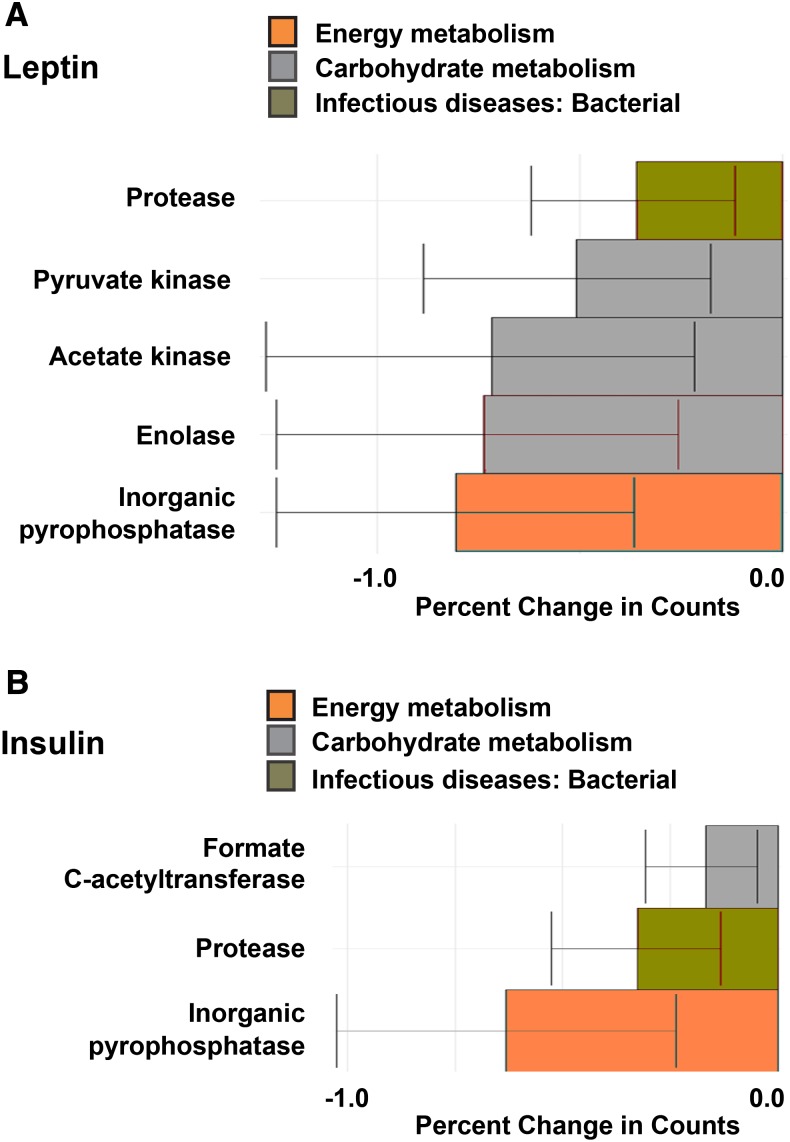
HM bioactive components associated with changes in infant microbiome metagenome expression at the L4-level ontology. After adjustment for maternal BMI (n = 30), HM leptin and insulin were tested for associations with functional KO annotations at the L4 level from 2-wk infant microbiome composition. (A) HM leptin was negatively associated with a protease of unknown catalytic function (K08303), inorganic pyrophosphatase (K01507), pyruvate kinase (K00873), acetate kinase (K00925), and enolase (K01689). (B) HM insulin was negatively associated with a protease of unknown catalytic function (K08303), inorganic pyrophosphatase (K01507), and formate C-acetyltransferase (K00656). Outcomes presented are KO pathways from the L4 level with a total relative abundance ≥1% in all of the participants with the use of quasi-Poisson regression analysis (P < 0.01). Values are means ± SEs. HM, human milk; KO, KEGG Ortholog.
FIGURE 6
FIGURE 6
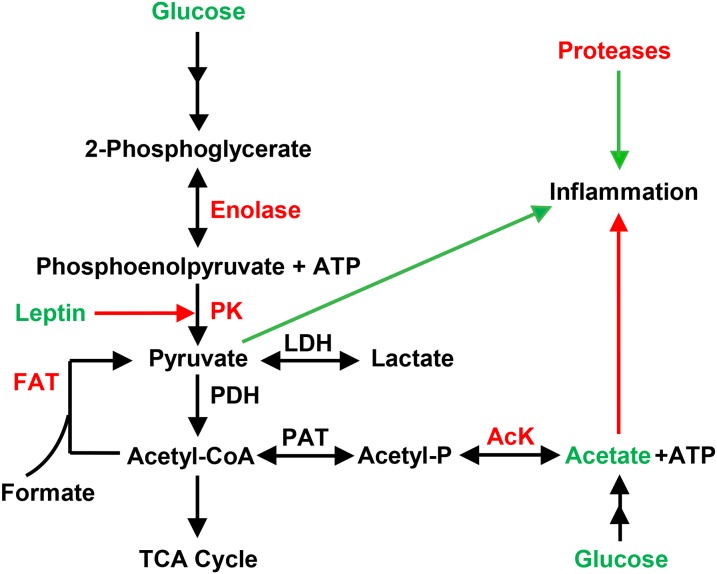
Hypothesized model relating HM leptin and insulin to the suppression of intestinal microbial pathways associated with intestinal inflammation. Increased acetate production, reduced host pyruvate metabolism, and suppressed bacterial protease activity may suppress intestinal inflammation. Our results support a hypothesized mechanism whereby exposure to HM leptin and insulin during the first 2 wk of life is associated with improved intestinal barrier function and reduces intestinal inflammation by reducing the relative abundance of bacterial protease and pyruvate metabolism encoded by the infant intestinal microbiome. HM leptin and insulin are associated with reduced concentrations of enolase, PK, FAT, AcK, and bacterial proteases in breastfed offspring of normal-weight and obese mothers. Pyruvate metabolism in prokaryotic organisms [adapted and simplified from the KEGG pyruvate metabolism pathway in Enterobacter spp. (ent638)]. Red signifies underrepresented DNA or known inhibitory effect; green signifies overrepresentation or stimulatory effect. Acetyl-P, acetyl phosphate; AcK, acetate kinase; FAT, formate C-acetyltransferase; HM, human milk; LDH, lactate dehydrogenase; PAT, phosphoacetyl transferase; PDH, pyruvate dehydrogenase; PK, pyruvate kinase.

Comment in

References

    1. Dattilo AM, Birch L, Krebs NF, Lake A, Taveras EM, Saavedra JM. Need for early interventions in the prevention of pediatric overweight: a review and upcoming directions. J Obes 2012;2012:1–18. - PMC - PubMed
    1. Ogden CL, Carroll MD, Kit BK, Flegal KM. Prevalence of childhood and adult obesity in the united states, 2011-2012. JAMA 2014;311:806–14. - PMC - PubMed
    1. Poston L, Harthoorn LF, Van Der Beek EM; Contributors to the ILSI Europe Workshop. Obesity in pregnancy: implications for the mother and lifelong health of the child—a consensus statement. Pediatr Res 2011;69:175–80. - PubMed
    1. Verdam FJ, Fuentes S, De Jonge C, Zoetendal EG, Erbil R, Greve JW, Buurman WA, de Vos WM, Rensen SS. Human intestinal microbiota composition is associated with local and systemic inflammation in obesity. Obesity (Silver Spring) 2013;21:E607–15. - PubMed
    1. Lathrop SK, Bloom SM, Rao SM, Nutsch K, Lio C-W, Santacruz N, Peterson DA, Stappenbeck TS, Hsieh C-S. Peripheral education of the immune system by the colonic commensal microbiota. Nature 2011;478:250–4. - PMC - PubMed

Publication types

MeSH terms

Associated data