


Extensive graft-derived dopaminergic innervation is maintained 24 years after transplantation in the degenerating parkinsonian brain
- PMID: 27140603
- PMCID: PMC4988567
- DOI: 10.1073/pnas.1605245113
Extensive graft-derived dopaminergic innervation is maintained 24 years after transplantation in the degenerating parkinsonian brain
Abstract
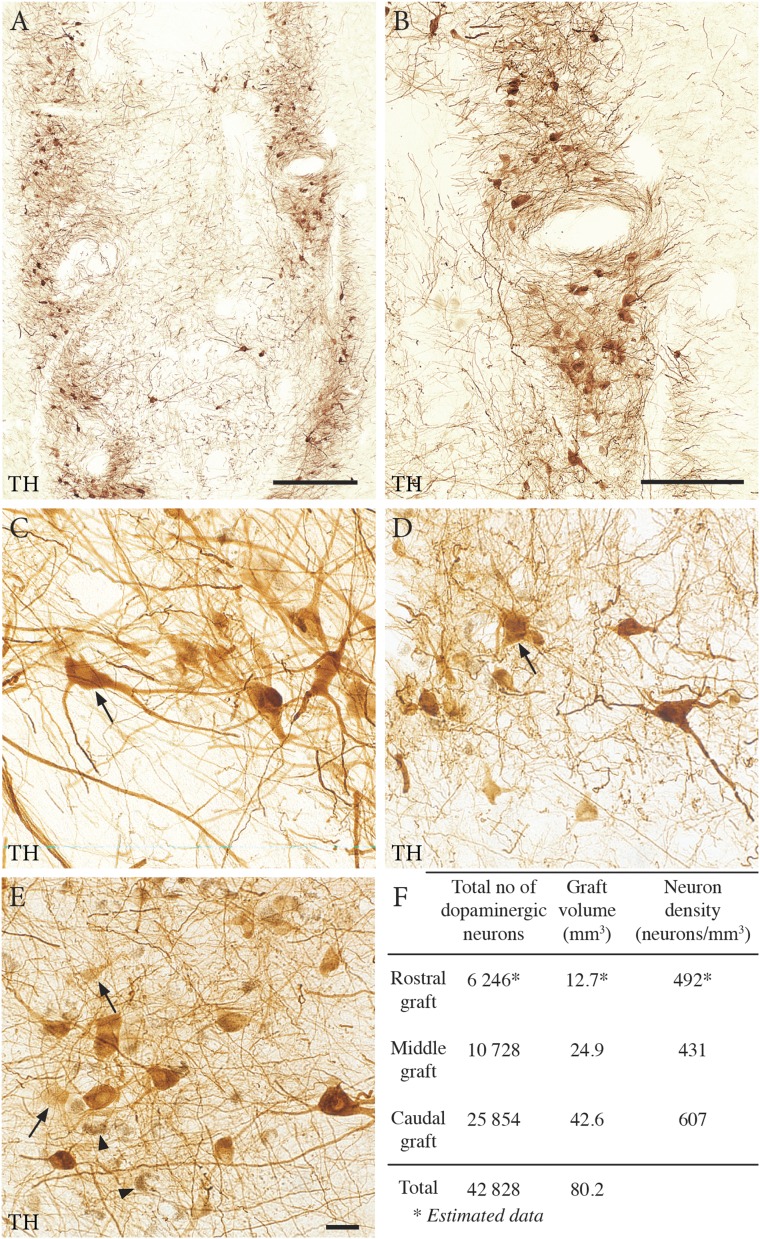
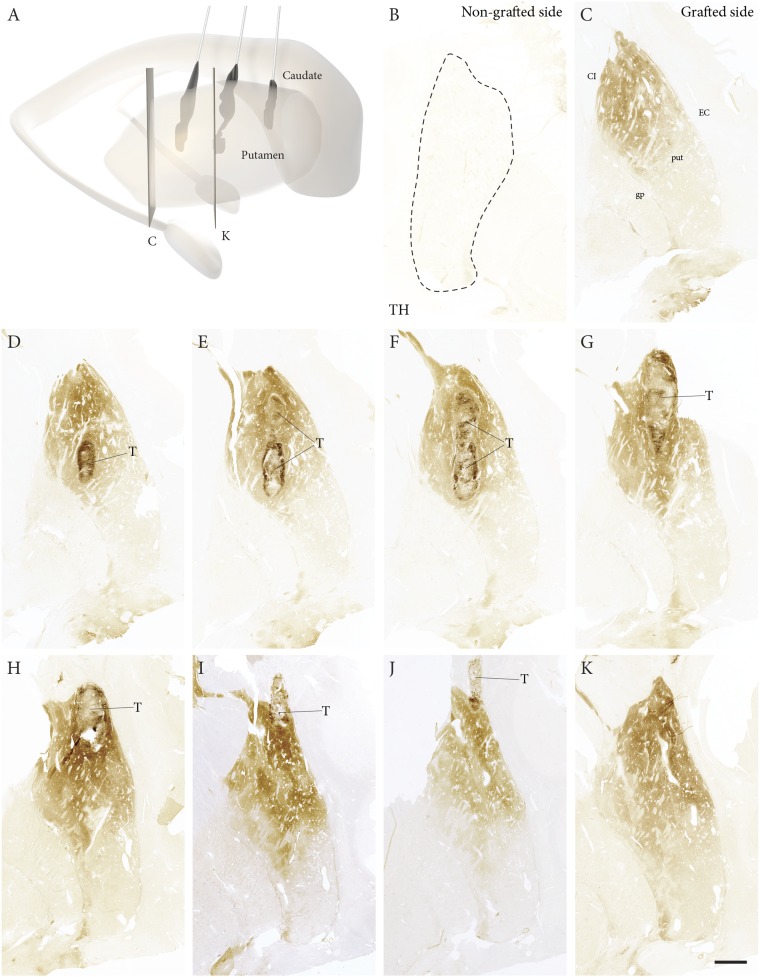
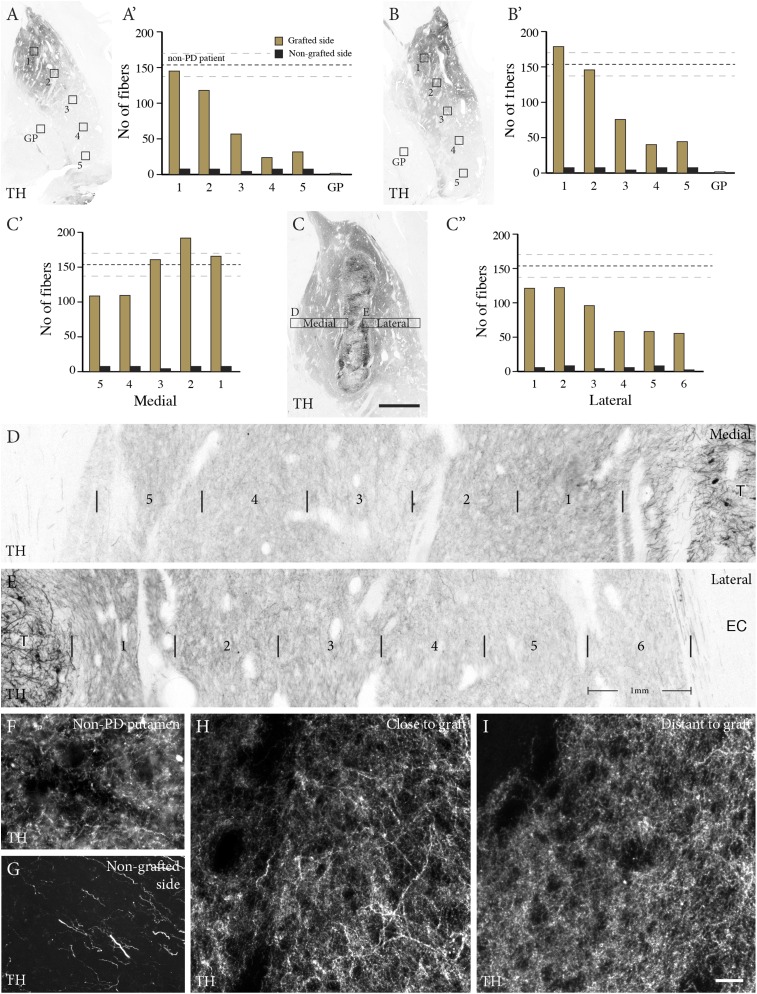
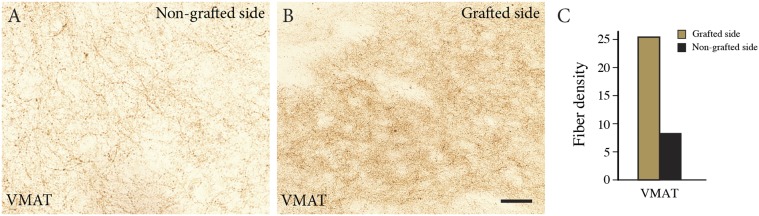
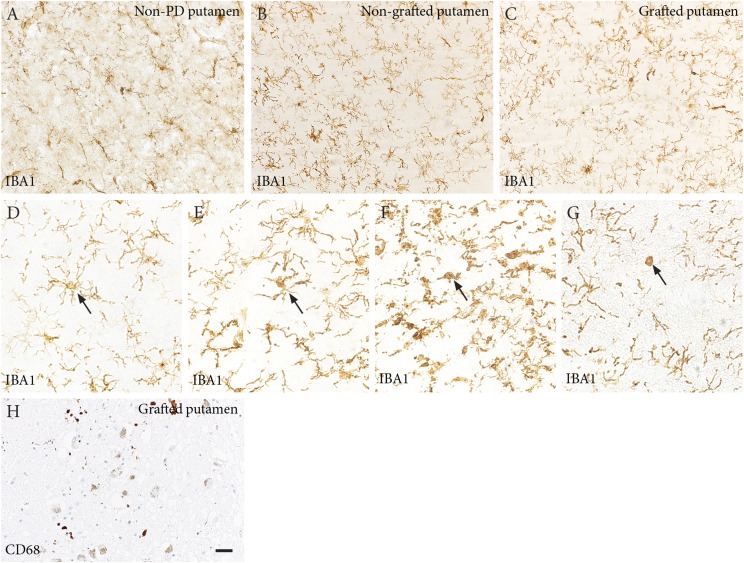
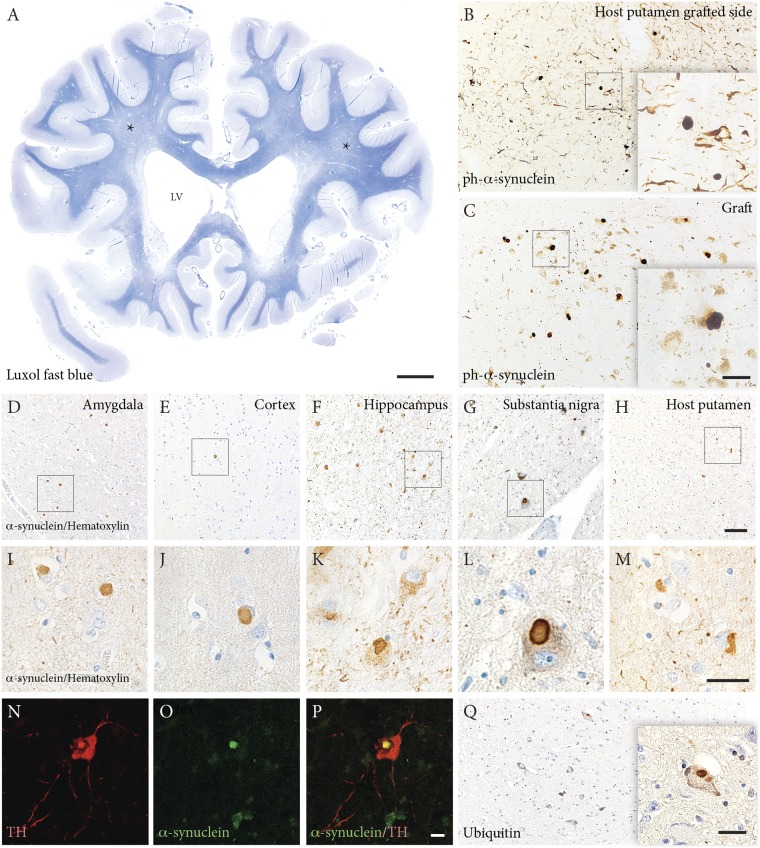
Clinical trials using cells derived from embryonic ventral mesencephalon have shown that transplanted dopaminergic neurons can survive and function in the long term, as demonstrated by in vivo brain imaging using (18)F-fluorodopa and (11)C-raclopride positron emission tomography. Here we report the postmortem analysis of a patient with Parkinson's disease who 24 y earlier underwent unilateral transplantation of embryonic dopaminergic neurons in the putamen and subsequently exhibited major motor improvement and recovery of striatal dopaminergic function. Histopathological analysis showed that a dense, near-normal graft-derived dopaminergic reinnervation of the putamen can be maintained for a quarter of a century despite severe host brain pathology and with no evidence of immune response. In addition, ubiquitin- and α-synuclein-positive inclusions were seen, some with the appearance of typical Lewy bodies, in 11-12% of the grafted dopaminergic neurons, reflecting the spread of pathology from the host brain to the transplants. Because the clinical benefits induced by transplantation in this patient were gradually lost after 14 y posttransplantation, our findings provide the first reported evidence, to our knowledge, that even a viable dopaminergic graft giving rise to extensive striatal reinnervation may lose its efficacy if widespread degenerative changes develop in the host brain.
Keywords: Parkinson’s disease; autopsy; reinnervation; synucleinopathy; transplantation.
Conflict of interest statement
The authors declare no conflict of interest.
Figures
Comment in
-
Fetal grafts for Parkinson's disease: Decades in the making.Proc Natl Acad Sci U S A. 2016 Jun 7;113(23):6332-4. doi: 10.1073/pnas.1606342113. Epub 2016 May 31. Proc Natl Acad Sci U S A. 2016. PMID: 27247420 Free PMC article. No abstract available.
Comment on
-
Fetal grafts for Parkinson's disease: Decades in the making.Proc Natl Acad Sci U S A. 2016 Jun 7;113(23):6332-4. doi: 10.1073/pnas.1606342113. Epub 2016 May 31. Proc Natl Acad Sci U S A. 2016. PMID: 27247420 Free PMC article. No abstract available.
References
-
- Kurowska Z, et al. Signs of degeneration in 12- to 22-year old grafts of mesencephalic dopamine neurons in patients with Parkinson’s disease. J Parkinsons Dis. 2011;1(1):83–92. - PubMed
-
- Kordower JH, Chu Y, Hauser RA, Freeman TB, Olanow CW. Lewy body-like pathology in long-term embryonic nigral transplants in Parkinson’s disease. Nat Med. 2008;14(5):504–506. - PubMed
-
- Li JY, et al. Lewy bodies in grafted neurons in subjects with Parkinson’s disease suggest host-to-graft disease propagation. Nat Med. 2008;14(5):501–503. - PubMed
-
- Li JY, et al. Characterization of Lewy body pathology in 12- and 16-year-old intrastriatal mesencephalic grafts surviving in a patient with Parkinson’s disease. Mov Disord. 2010;25(8):1091–1096. - PubMed
Publication types
MeSH terms
Substances
LinkOut - more resources
Full Text Sources
Other Literature Sources
Medical
