


Effectiveness of the blended care self-management program "Partner in Balance" for early-stage dementia caregivers: study protocol for a randomized controlled trial
- PMID: 27142676
- PMCID: PMC4855318
- DOI: 10.1186/s13063-016-1351-z
Effectiveness of the blended care self-management program "Partner in Balance" for early-stage dementia caregivers: study protocol for a randomized controlled trial
Abstract
Background: The benefits of e-health support for dementia caregivers are becoming increasingly recognized. Reaching early-stage dementia caregivers could prevent high levels of burden and psychological problems in them in the later stages of dementia. An iterative step-wise approach was employed to develop the blended care self-management program "Partner in Balance" for early-stage dementia caregivers. The design of a study evaluating the process characteristics and effects is presented.
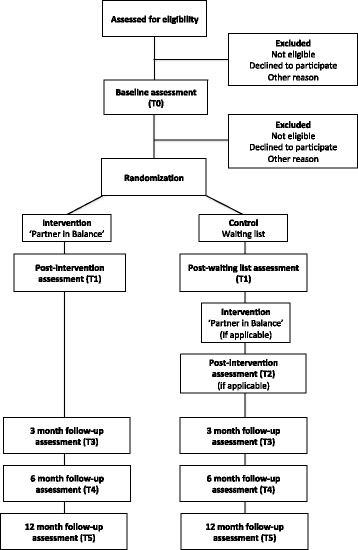
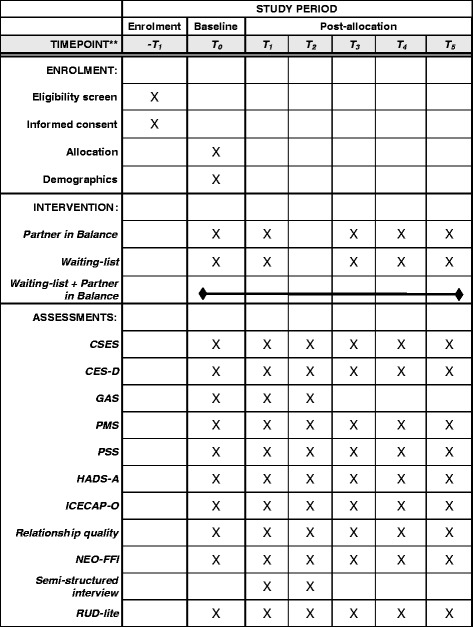
Methods/design: A mixed-method, single-blind, randomized controlled trial with 80 family caregivers of community-dwelling people with (very) mild dementia will be conducted. Participants will be randomly assigned to either the 8-week blended care self-management program "Partner in Balance" or a waiting-list control group. Data will be collected pre intervention and post intervention and at 3-, 6- and 12-month follow-ups. Semi-structured interviews will be conducted post intervention. A process evaluation will investigate the internal and external validity of the intervention. Primary outcomes will include self-efficacy and symptoms of depression. Secondary outcomes will include goal attainment, mastery, psychological complaints (feelings of anxiety and perceived stress), and quality of life. Possible modifying variables such as caregiver characteristics (quality of the relationship, neurotic personality) and interventional aspects (coach) on the intervention effect will also be evaluated. A cost-consequence analysis will describe the costs and health outcomes.
Discussion: We expect to find a significant increase in self-efficacy, goal attainment and quality of life and lower levels of psychological complaints (depression, anxiety and stress) in the intervention group, compared with the control group. If such effects are found, the program could provide accessible care to future generations of early-stage dementia caregivers and increase dementia care efficiency.
Trial registration: Dutch trial register NTR4748 .
Keywords: Family; Online intervention; RCT; Timely; Web-based.
Figures
References
Publication types
MeSH terms
Associated data
LinkOut - more resources
Full Text Sources
Other Literature Sources
Medical
