


High rate of drug resistance among tuberculous meningitis cases in Shaanxi province, China
- PMID: 27143630
- PMCID: PMC4855176
- DOI: 10.1038/srep25251
High rate of drug resistance among tuberculous meningitis cases in Shaanxi province, China
Abstract
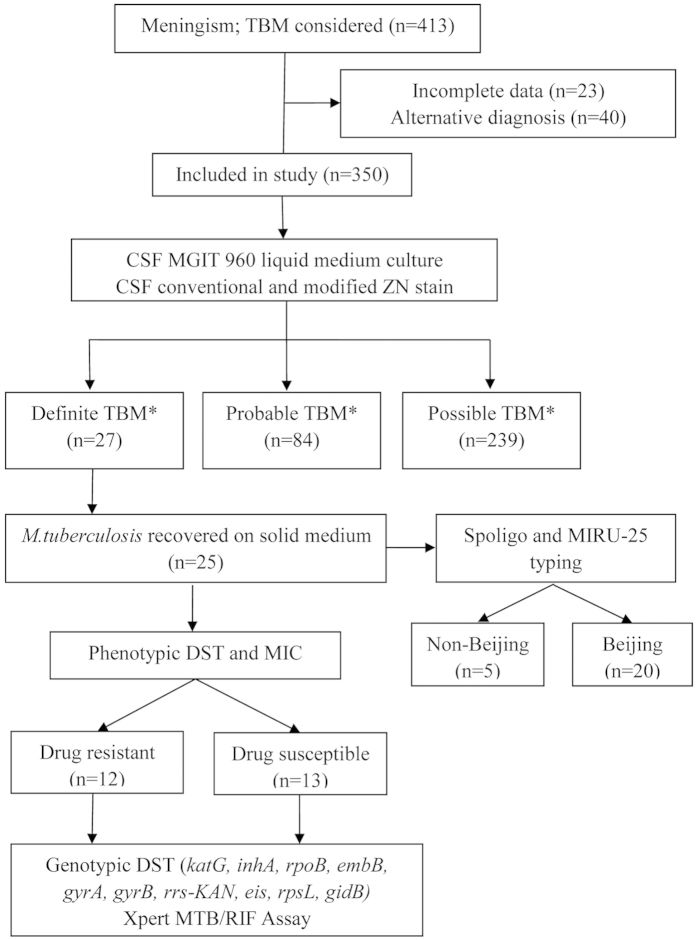
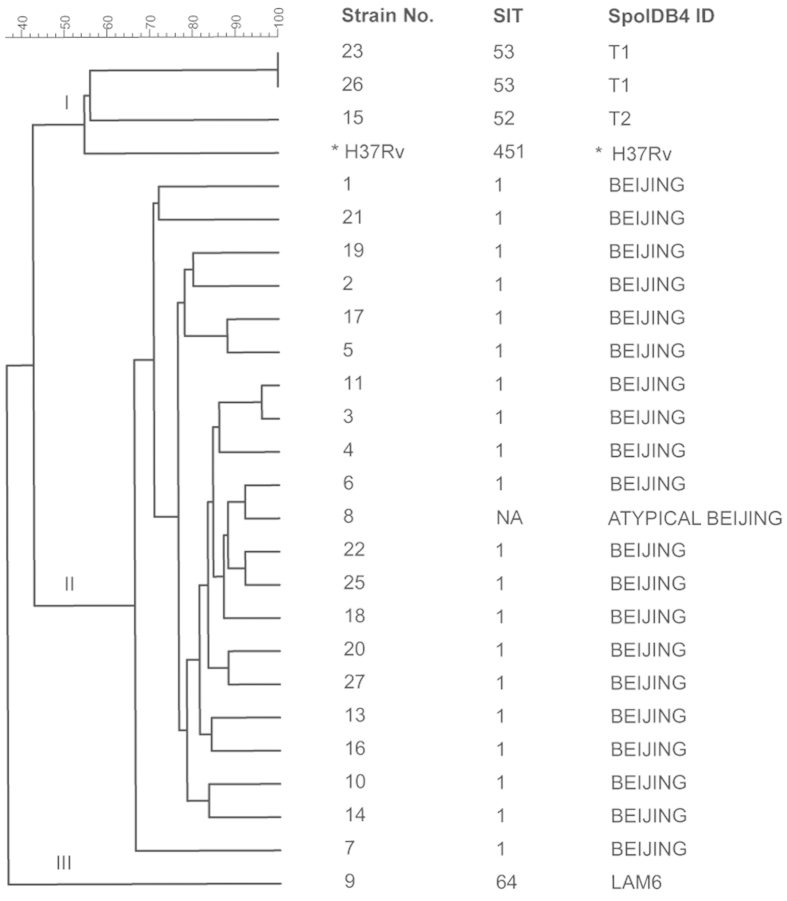
The clinical and mycobacterial features of tuberculous meningitis (TBM) cases in China are not well described; especially in western provinces with poor tuberculosis control. We prospectively enrolled patients in whom TBM was considered in Shaanxi Province, northwestern China, over a 2-year period (September 2010 to December 2012). Cerebrospinal fluid specimens were cultured for Mycobacterium tuberculosis; with phenotypic and genotypic drug susceptibility testing (DST), as well as genotyping of all positive cultures. Among 350 patients included in the study, 27 (7.7%) had culture-confirmed TBM; 84 (24.0%) had probable and 239 (68.3%) had possible TBM. DST was performed on 25/27 (92.3%) culture positive specimens; 12/25 (48.0%) had "any resistance" detected and 3 (12.0%) were multi-drug resistant (MDR). Demographic and clinical features of drug resistant and drug susceptible TBM cases were similar. Beijing was the most common genotype (20/25; 80.0%) with 9/20 (45%) of the Beijing strains exhibiting drug resistance; including all 3 MDR strains. All (4/4) isoniazid resistant strains had mutations in the katG gene; 75% (3/4) of strains with phenotypic rifampicin resistance had mutations in the rpoB gene detected by Xpert MTB/RIF®. High rates of drug resistance were found among culture-confirmed TBM cases; most were Beijing strains.
Figures
References
-
- Brancusi F., Farrar J. & Heemskerk D. Tuberculous meningitis in adults: a review of a decade of developments focusing on prognostic factors for outcome. Future Microbiol. 7, 1101–1116 (2012). - PubMed
-
- Thwaites G. E., van Toorn R. & Schoeman J. Tuberculous meningitis: more questions, still too few answers. Lancet Neurol. 12, 999–1010 (2013). - PubMed
-
- WHO Global tuberculosis report 2015. WHO/HTM/TB/2015.22. Geneva, Switzerland: WHO. (2015). Available at: http://who.int/tb/publications/global_report/en/ Accessed March 3rd 2015.
Publication types
MeSH terms
Substances
LinkOut - more resources
Full Text Sources
Other Literature Sources
Medical
