A global assessment of the male predominance in esophageal adenocarcinoma
- PMID: 27145283
- PMCID: PMC5122437
- DOI: 10.18632/oncotarget.9113
A global assessment of the male predominance in esophageal adenocarcinoma
Abstract
Background: Esophageal adenocarcinoma (EAC) is characterized by a male predominance. However, variations in the sex difference across populations and over time have not previously been thoroughly investigated.
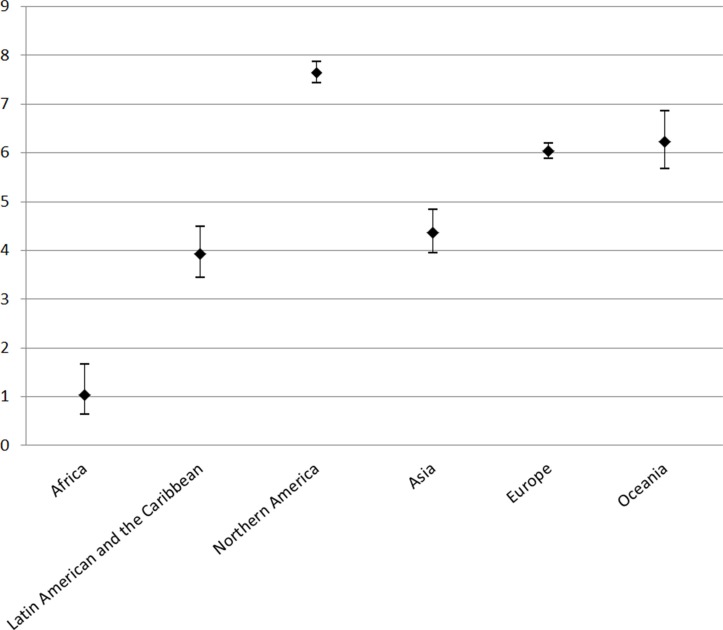
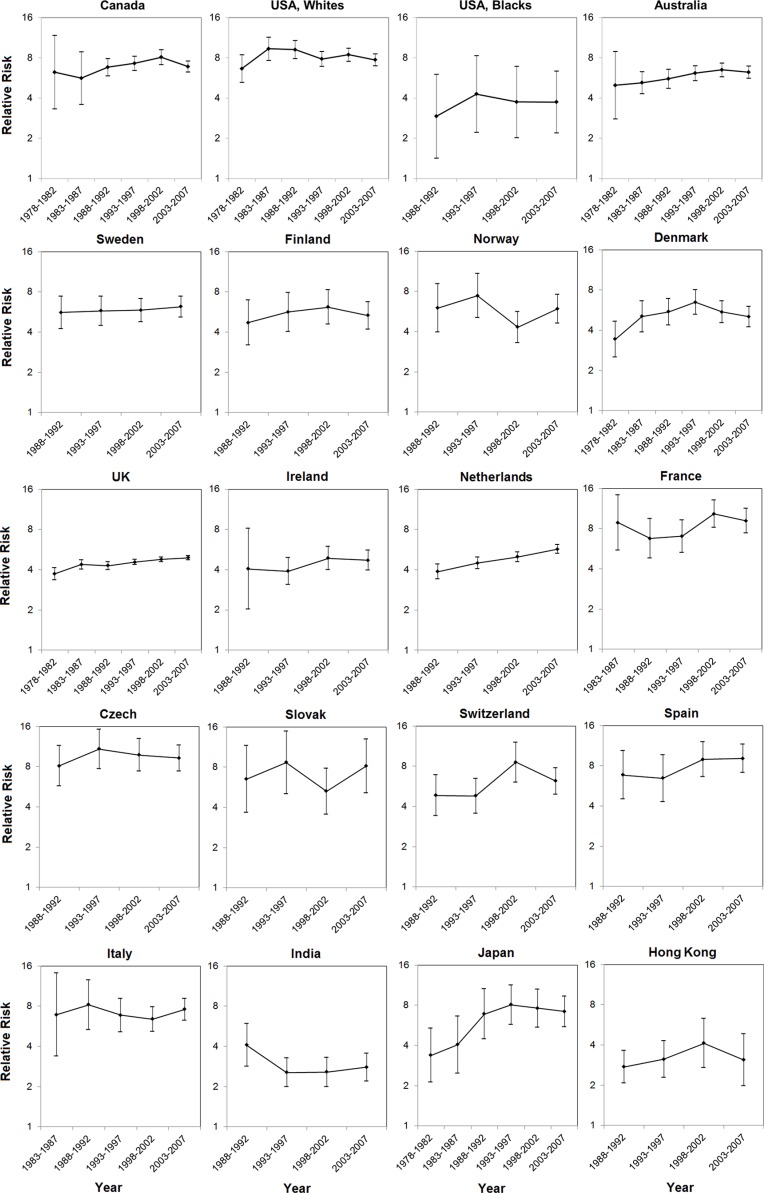
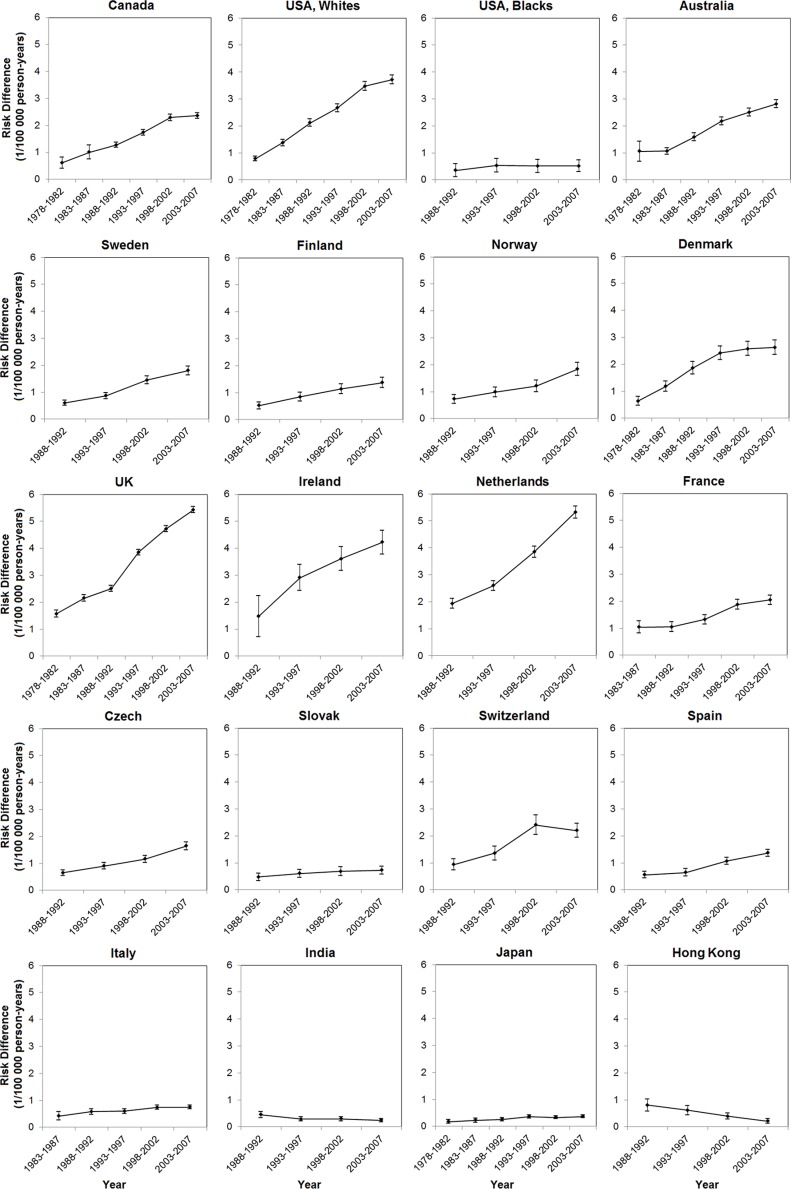
Results: The male-to-female ratio in EAC incidence varied greatly across continents, ranging from 1.03 in Africa to 7.64 in Northern America during 2003- 2007. The ratio was high in Europe (6.04) and Oceania (6.24), and lower in Asia (4.37) and Latin America and the Caribbean (3.94). The sex ratio remained relatively stable over time in most populations. In absolute terms, the sex difference in EAC incidence increased over time in populations of higher incidence, while it remained stable or slightly decreased in low-incidence populations.
Materials and methods: We used data from the Cancer Incidence in Five Continents series to compute sex-specific age-standardized rates of EAC by population. The sex difference in incidence was evaluated on both absolute and relative scales, measured by the absolute difference and ratio between sexes, respectively.
Conclusions: This first global assessment of the sex ratio in EAC shows that the male predominance is particularly strong in developed countries. The underlying reasons remain to be identified, but the emerging EAC burden in men merits consideration for targeted prevention and early detection.
Keywords: epidemiology; esophageal adenocarcinoma; incidence; male predominance; sex difference.
Conflict of interest statement
The authors declare no conflicts of interest.
Figures
References
-
- Rustgi AK, El-Serag HB. Esophageal carcinoma. N Engl J Med. 2014;371:2499–2509. - PubMed
-
- Lagergren J, Lagergren P. Recent developments in esophageal adenocarcinoma. CA Cancer J Clin. 2013;63:232–248. - PubMed
-
- Edgren G, Adami HO, Weiderpass E, Nyren O. A global assessment of the oesophageal adenocarcinoma epidemic. Gut. 2013;62:1406–1414. - PubMed
-
- Arnold M, Soerjomataram I, Ferlay J, Forman D. Global incidence of oesophageal cancer by histological subtype in 2012. Gut. 2015;64:381–387. - PubMed
MeSH terms
Supplementary concepts
LinkOut - more resources
Full Text Sources
Other Literature Sources
Medical