


The State of Diabetes Prevention Policy in the USA Following the Affordable Care Act
- PMID: 27145778
- PMCID: PMC5210175
- DOI: 10.1007/s11892-016-0742-6
The State of Diabetes Prevention Policy in the USA Following the Affordable Care Act
Abstract
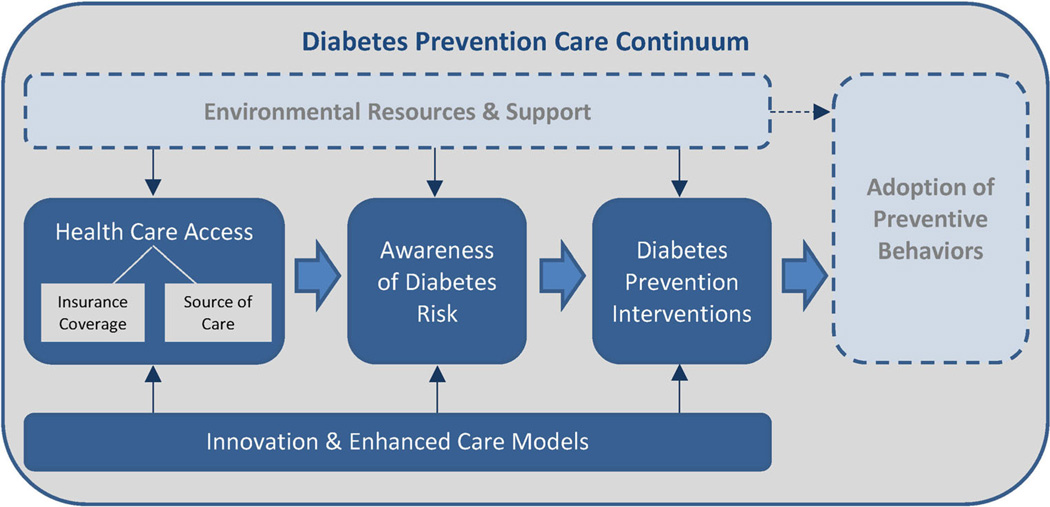
Type 2 diabetes is a major public health problem in the USA, affecting over 12 % of American adults and imposing considerable health and economic burden on individuals and society. There is a strong evidence base demonstrating that lifestyle behavioral changes and some medications can prevent or delay the onset of type 2 diabetes in high risk adults, and several policy and healthcare system changes motivated by the Patient Protection and Affordable Care Act (ACA) have the potential to accelerate diabetes prevention. In this narrative review, we (1) offer a conceptual framework for organizing how the ACA may influence diabetes prevention efforts at the level of individuals, healthcare providers, and health systems; (2) highlight ACA provisions at each of these levels that could accelerate type 2 diabetes prevention nationwide; and (3) explore possible policy gaps and opportunity areas for future research and action.
Keywords: Affordable Care Act; Diabetes; Health policy; Prediabetes; Primary prevention.
Conflict of interest statement
Compliance with Ethics Guidelines Conflict of Interest Namratha Kandula discloses that she receives salary support from the American Medical Association and honoraria from Patient-Centered Outcomes Research Institute for serving as a grant reviewer. Juleigh Nowinski Konchak, Margaret Moran, Matthew O’Brien, and Ronald Ackermann declare that they have nothing to disclose. Human and Animal Rights and Informed Consent This article does not contain any studies with human or animal subjects performed by any of the authors.
Figures
References
-
- Centers for Disease Control and Prevention. [Accessed May 3, 2014];National Diabetes Statistical Report: Estimates of Diabetes and Its Burden in the United States, 2014. 2014 http://www.cdc.gov/diabetes/pubs/ statsreport14.htm.
-
- Menke A, Casagrande S, Geiss L, Cowie CC. Prevalence of and trends in diabetes among adults in the United States, 1988–2012. JAMA. 2015;314(10):1021–1029. - PubMed
-
- Adler NE, Prather AA. Risk for type 2 diabetes mellitus: person, place, and precision prevention. JAMA Intern Med. 2015;175(8):1321–1322. - PubMed
Publication types
MeSH terms
Grants and funding
LinkOut - more resources
Full Text Sources
Other Literature Sources
Medical
