


The organization of exploratory behaviors in infant locomotor planning
- PMID: 27147103
- PMCID: PMC5097037
- DOI: 10.1111/desc.12421
The organization of exploratory behaviors in infant locomotor planning
Abstract
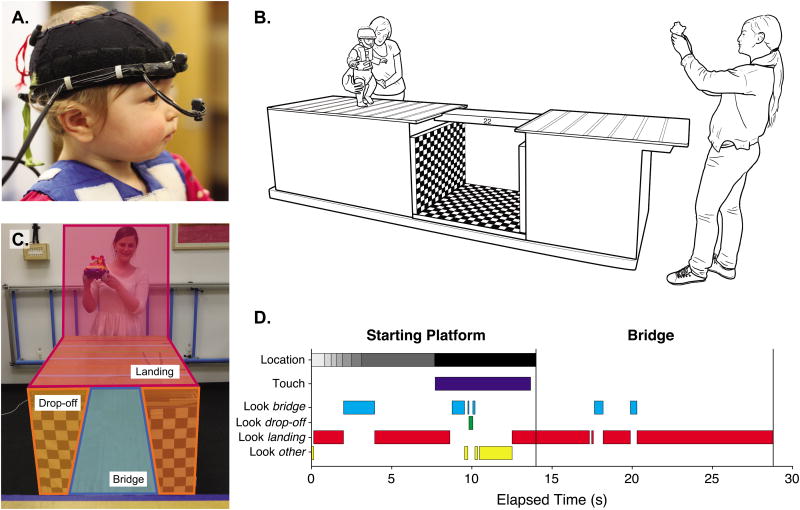
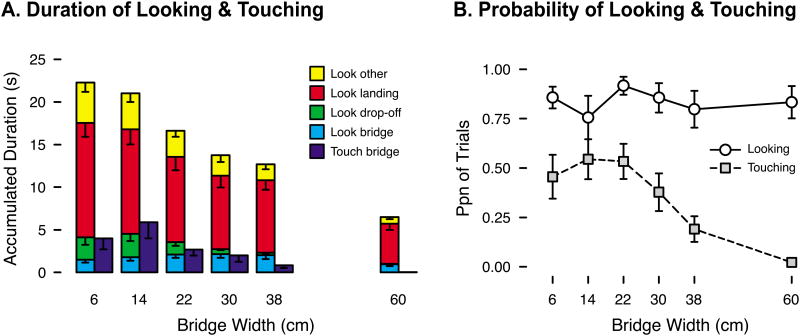
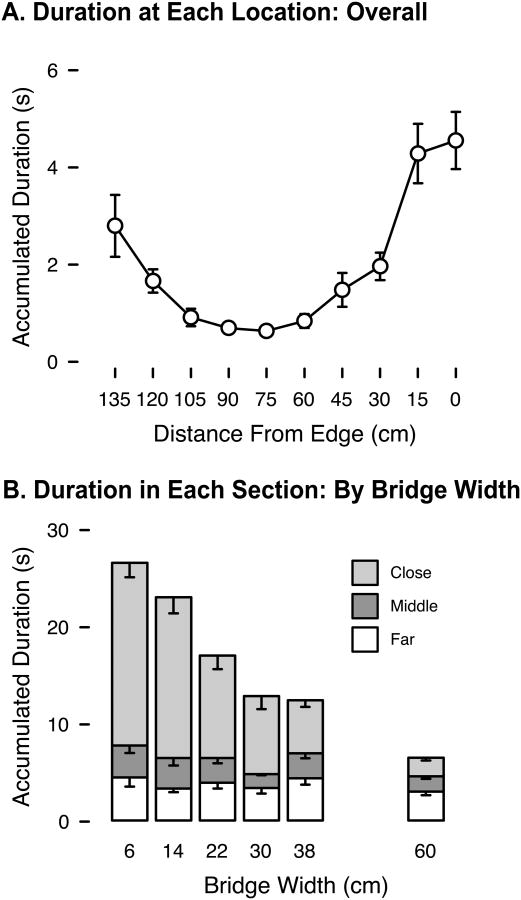
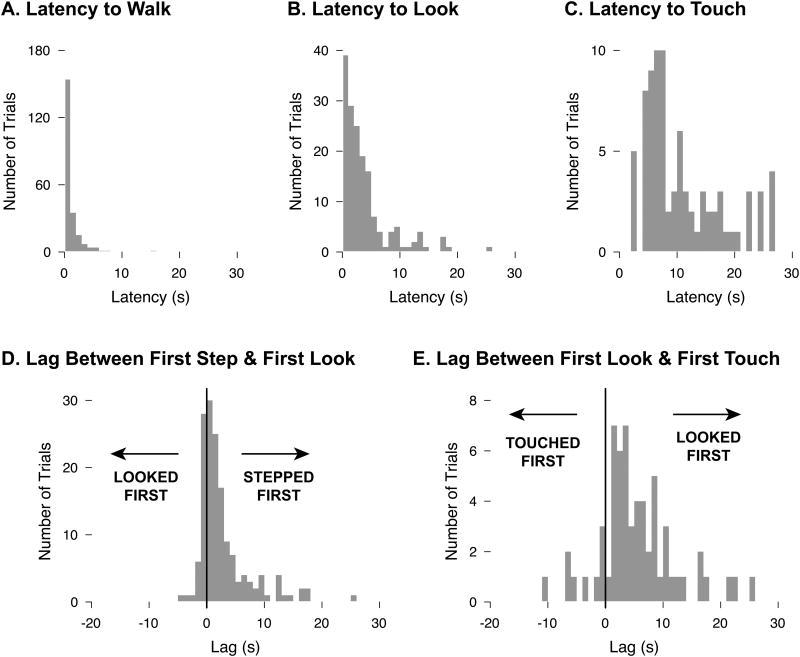
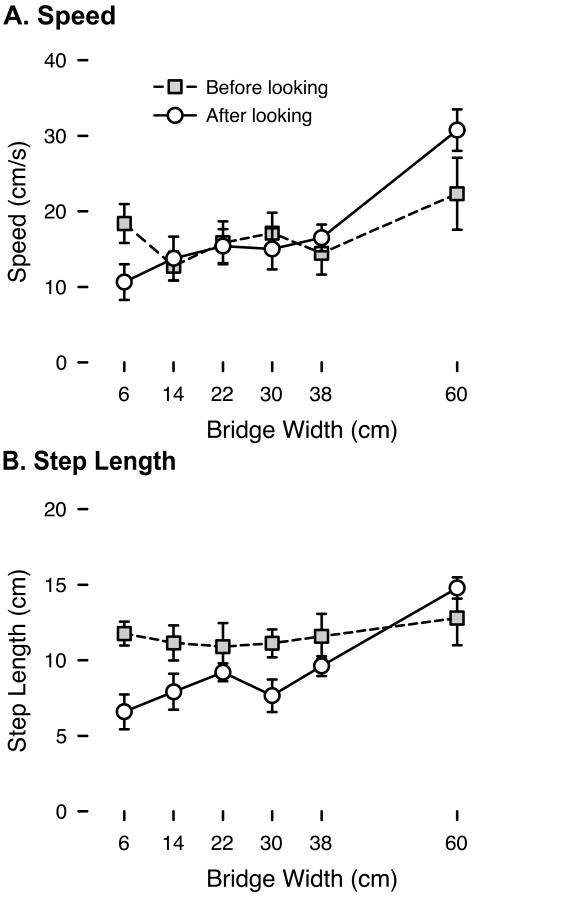
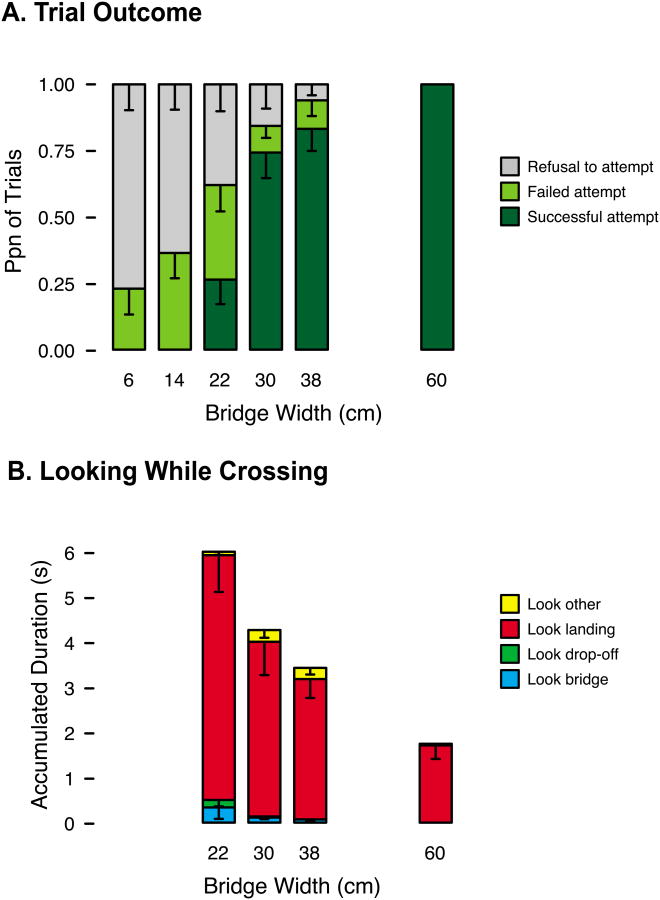
How do infants plan and guide locomotion under challenging conditions? This experiment investigated the real-time process of visual and haptic exploration in 14-month-old infants as they decided whether and how to walk over challenging terrain - a series of bridges varying in width. Infants' direction of gaze was recorded with a head-mounted eye tracker and their haptic exploration and locomotor actions were captured on video. Infants' exploration was an organized, efficient sequence of visual, haptic, and locomotor behaviors. They used visual exploration from a distance as an initial assessment on nearly every bridge. Visual information subsequently prompted gait modifications while approaching narrow bridges and haptic exploration at the edge of the bridge. Results confirm predictions about the sequential, ramping-up process of exploration and the distinct roles of vision and touch. Exploration, however, was not a guarantee of adaptive decisions. With walking experience, exploratory behaviors became increasingly efficient and infants were better able to interpret the resulting perceptual information in terms of whether it was safe to walk.
© 2016 John Wiley & Sons Ltd.
Figures

References
-
- Adolph KE. Psychophysical assessment of toddlers' ability to cope with slopes. Journal of Experimental Psychology: Human Perception and Performance. 1995;21:734–750. - PubMed
-
- Adolph KE. Specificity of learning: Why infants fall over a veritable cliff. Psychological Science. 2000;11:290–295. - PubMed
-
- Adolph KE, Eppler MA. Development of visually guided locomotion. Ecological Psychology. 1998;10:303–321.
-
- Adolph KE, Eppler MA, Marin L, Weise IB, Clearfield MW. Exploration in the service of prospective control. Infant Behavior and Development. 2000;23:441–460.
Publication types
MeSH terms
Grants and funding
LinkOut - more resources
Full Text Sources
Other Literature Sources
