


Immunogenicity of Virus Like Particle Forming Baculoviral DNA Vaccine against Pandemic Influenza H1N1
- PMID: 27149064
- PMCID: PMC4858234
- DOI: 10.1371/journal.pone.0154824
Immunogenicity of Virus Like Particle Forming Baculoviral DNA Vaccine against Pandemic Influenza H1N1
Abstract
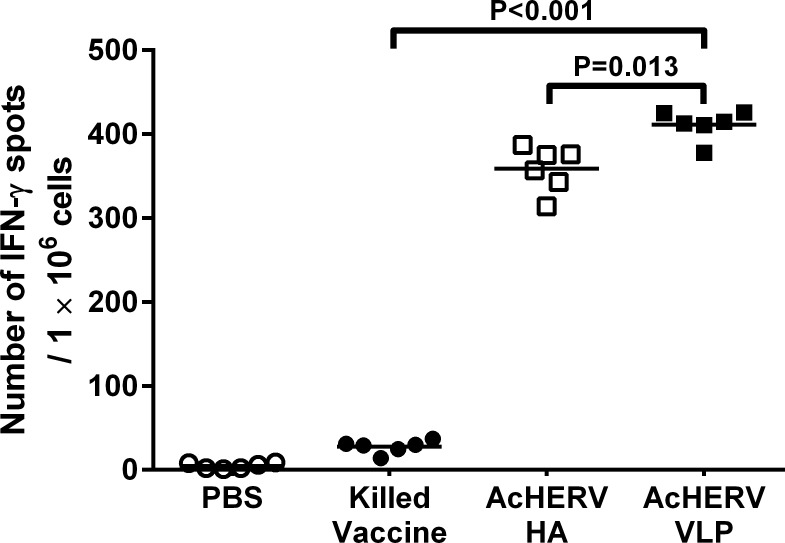
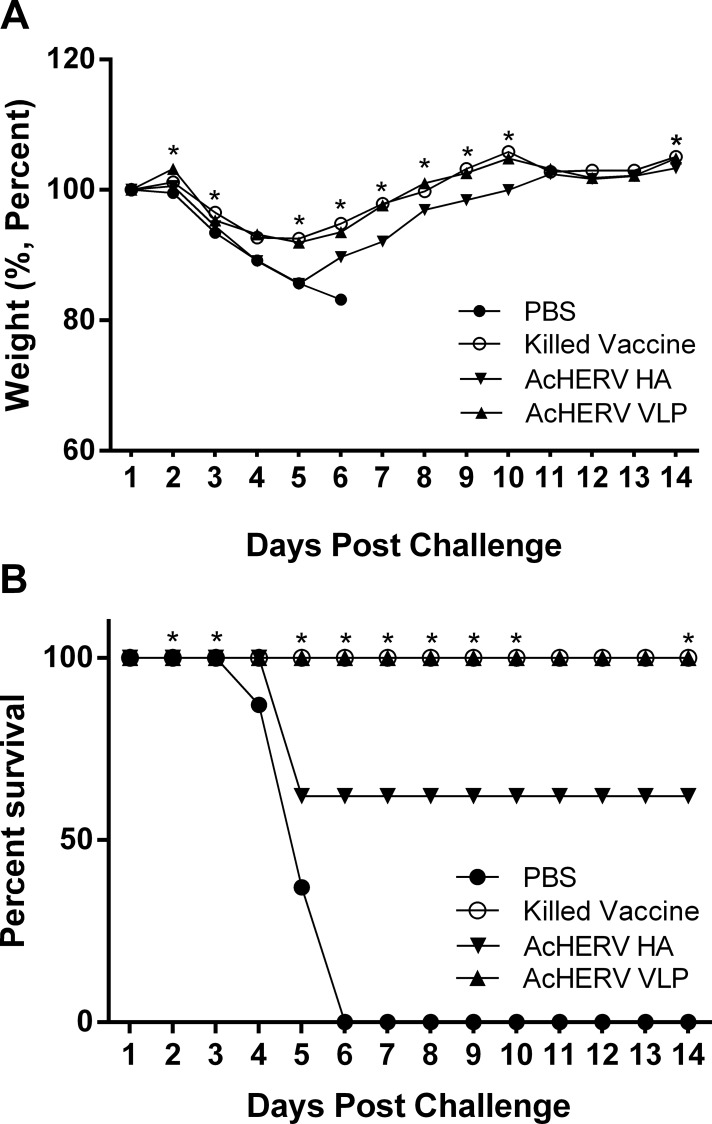
An outbreak of influenza H1N1 in 2009, representing the first influenza pandemic of the 21st century, was transmitted to over a million individuals and claimed 18,449 lives. The current status in many countries is to prepare influenza vaccine using cell-based or egg-based killed vaccine. However, traditional influenza vaccine platforms have several limitations. To overcome these limitations, many researchers have tried various approaches to develop alternative production platforms. One of the alternative approach, we reported the efficacy of influenza HA vaccination using a baculoviral DNA vaccine (AcHERV-HA). However, the immune response elicited by the AcHERV-HA vaccine, which only targets the HA antigen, was lower than that of the commercial killed vaccine. To overcome the limitations of this previous vaccine, we constructed a human endogenous retrovirus (HERV) envelope-coated, baculovirus-based, virus-like-particle (VLP)-forming DNA vaccine (termed AcHERV-VLP) against pandemic influenza A/California/04/2009 (pH1N1). BALB/c mice immunized with AcHERV-VLP (1×10(7) FFU AcHERV-VLP, i.m.) and compared with mice immunized with the killed vaccine or mice immunized with AcHERV-HA. As a result, AcHERV-VLP immunization produced a greater humoral immune response and exhibited neutralizing activity with an intrasubgroup H1 strain (PR8), elicited neutralizing antibody production, a high level of interferon-γ secretion in splenocytes, and diminished virus shedding in the lung after challenge with a lethal dose of influenza virus. In conclusion, VLP-forming baculovirus DNA vaccine could be a potential vaccine candidate capable of efficiently delivering DNA to the vaccinee and VLP forming DNA eliciting stronger immunogenicity than egg-based killed vaccines.
Conflict of interest statement
Figures



References
-
- Fabian GT. Pandemic influenza and lessons from history. J S C Med Assoc. 2008;104(5):126–31. Epub 2008/07/30. . - PubMed
-
- Stech J, Beer M, Vahlenkamp T, Harder T. [The pandemic influenza virus H1N1/2009: a review of the molecular biology, phylogeny, history of reassortments, and parameters of host switching]. Bundesgesundheitsblatt, Gesundheitsforschung, Gesundheitsschutz. 2010;53(12):1231–7. Epub 2010/12/17. 10.1007/s00103-010-1166-0 . - DOI - PubMed
-
- WHO. World now at the start of 2009 influenza pandemi. WHO—Media centre. 2009. Available: http://www.who.int/mediacentre/news/statements/2009/h1n1_pandemic_phase6....
Publication types
MeSH terms
Substances
LinkOut - more resources
Full Text Sources
Other Literature Sources
Medical
Research Materials
