


The Effectiveness of Transforaminal Versus Caudal Routes for Epidural Steroid Injections in Managing Lumbosacral Radicular Pain: A Systematic Review and Meta-Analysis
- PMID: 27149443
- PMCID: PMC4863760
- DOI: 10.1097/MD.0000000000003373
The Effectiveness of Transforaminal Versus Caudal Routes for Epidural Steroid Injections in Managing Lumbosacral Radicular Pain: A Systematic Review and Meta-Analysis
Abstract
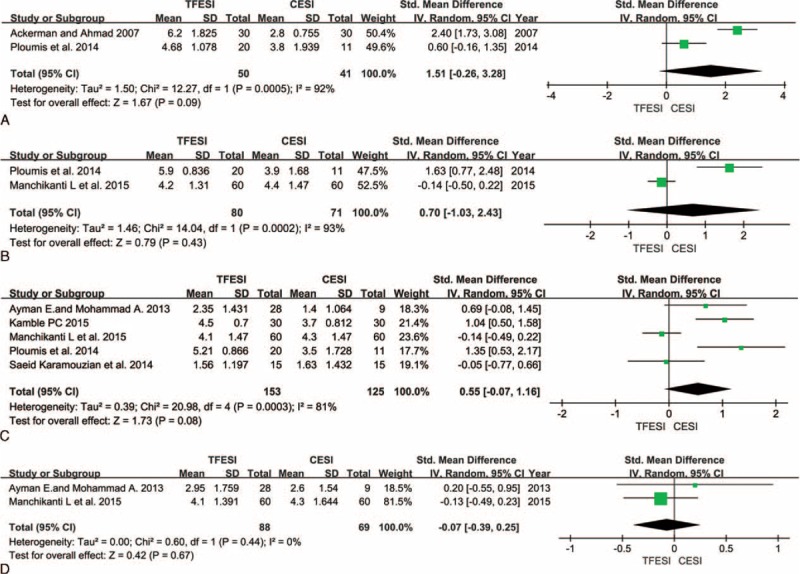
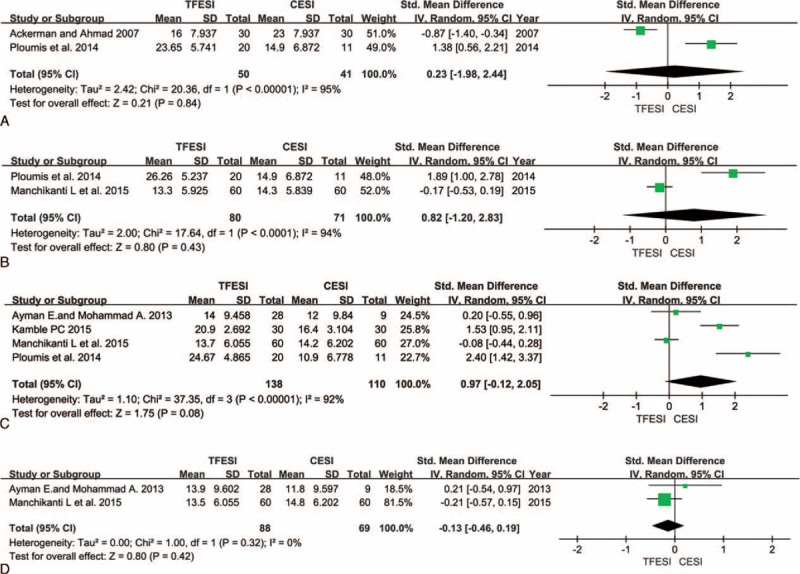
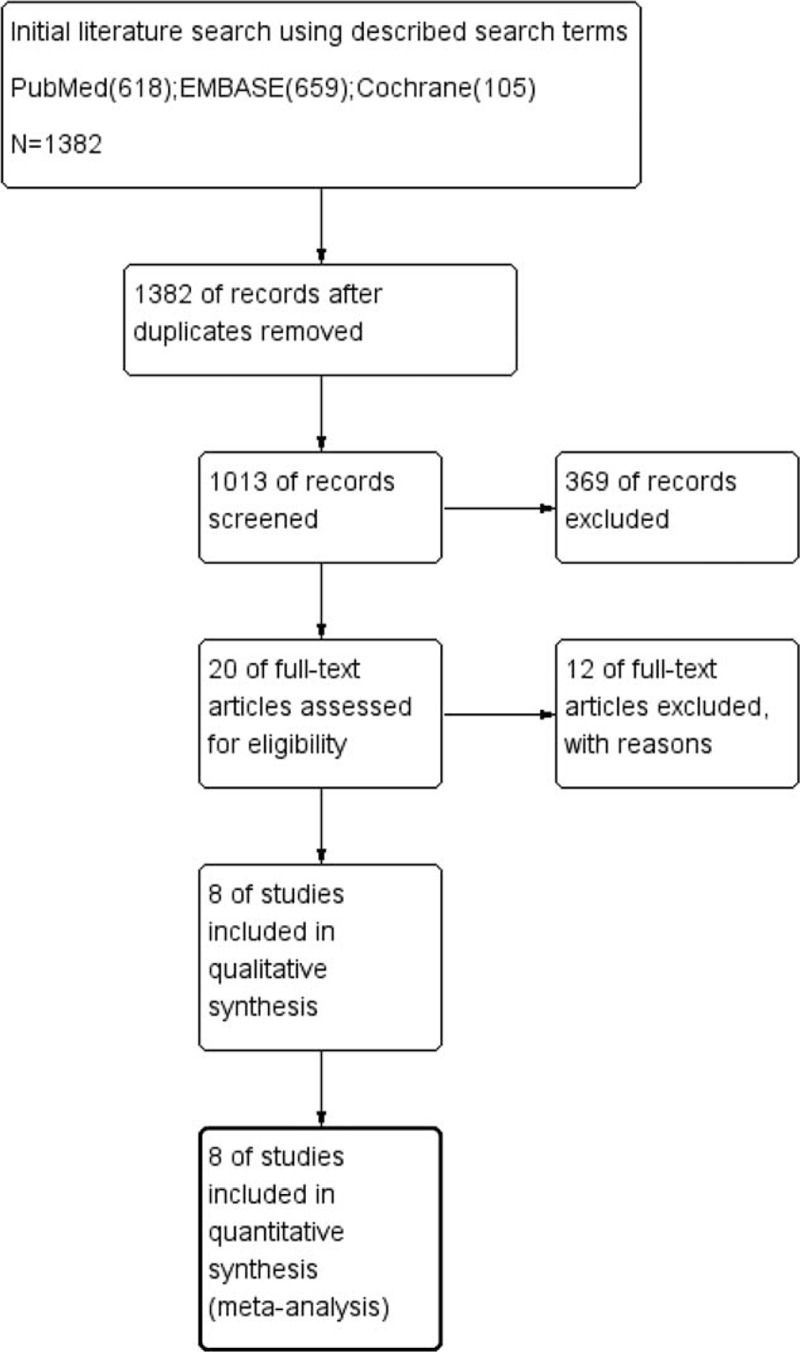
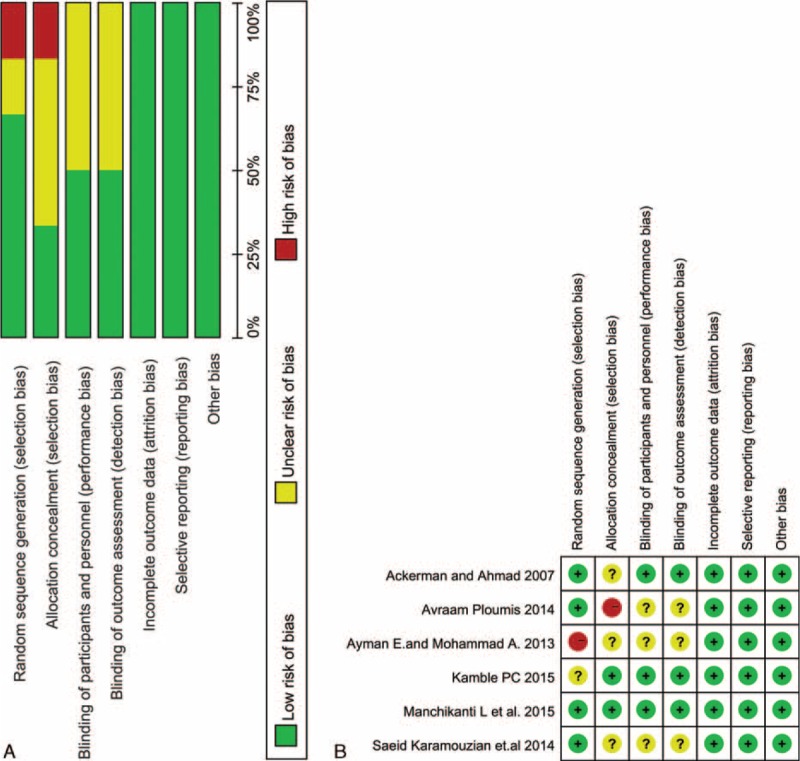
Epidural steroid injection (ESI) is one of the most commonly used treatments for radiculopathy. Previous studies have described the effectiveness of ESI in the management of radiculopathy. However, controversy exists regarding the route that is most beneficial and effective with respect to the administration of epidural steroids, as both transforaminal (TF) and caudal (C) routes are commonly used.This analysis reviewed studies comparing the effectiveness of TF-ESIs with that of C-ESIs in the treatment of radiculopathy as a means of providing pain relief and improving functionality. This meta-analysis was performed to guide clinical decision-making.The study was a systematic review of comparative studies.A systematic literature search was performed using the PubMed, EMBASE, and Cochrane Library databases for trials written in English. The randomized trials and observational studies that met our inclusion criteria were subsequently included. Two reviewers, respectively, extracted data and estimated the risk of bias. All statistical analyses were performed using Review Manager 5.3.Six prospective and 2 retrospective studies involving 664 patients were included. Statistical analysis was performed utilizing only the 6 prospective studies. Although slight pain and functional improvements were noted in the TF-ESI groups compared with the C-ESI groups, these improvements were neither clinically nor statistically significant.The limitations of this meta-analysis resulted primarily from the weaknesses of the comparative studies and the relative paucity of patients included in each study.Both the TF and C approaches are effective in reducing pain and improving functional scores, and they demonstrated similar efficacies in the management of lumbosacral radicular pain.
Conflict of interest statement
Conflicts of interest: None of the authors of the manuscript received any remuneration. Further, the authors have not received any reimbursement or honorarium in any other manner.
The authors report no conflicts of interest.
Figures
References
-
- Boonstra AM, Schiphorst Preuper HR, Reneman MF, et al. Reliability and validity of the visual analogue scale for disability in patients with chronic musculoskeletal pain. Int J Rehabil Res 2008; 31:165–169. - PubMed
-
- Ackerman WE, 3rd, Ahmad M. The efficacy of lumbar epidural steroid injections in patients with lumbar disc herniations. Anesth Analg 2007; 104:1217–1222.[tables of contents]. - PubMed
-
- Abdi S, Datta S, Trescot AM, et al. Epidural steroids in the management of chronic spinal pain: a systematic review. Pain Physician 2007; 10:185–212. - PubMed
-
- Robecchi A, Capra R. Hydrocortisone (compound F): first clinical experiments in the field of rheumatology. Minerva Med 1952; 43:1259–1263. - PubMed
-
- Manchikanti L, Pampati V, Falco FJ, et al. Growth of spinal interventional pain management techniques: analysis of utilization trends and Medicare expenditures ∗2000 to 2008. Spine (Phila Pa 1976) 2013; 38:157–168. - PubMed
Publication types
MeSH terms
Substances
LinkOut - more resources
Full Text Sources
Other Literature Sources
Medical
Miscellaneous
