


Prolonged Non-metabolic Heart Rate Variability Reduction as a Physiological Marker of Psychological Stress in Daily Life
- PMID: 27150960
- PMCID: PMC5054058
- DOI: 10.1007/s12160-016-9795-7
Prolonged Non-metabolic Heart Rate Variability Reduction as a Physiological Marker of Psychological Stress in Daily Life
Abstract
Background: Prolonged cardiac activity that exceeds metabolic needs can be detrimental for somatic health. Psychological stress could result in such "additional cardiac activity."
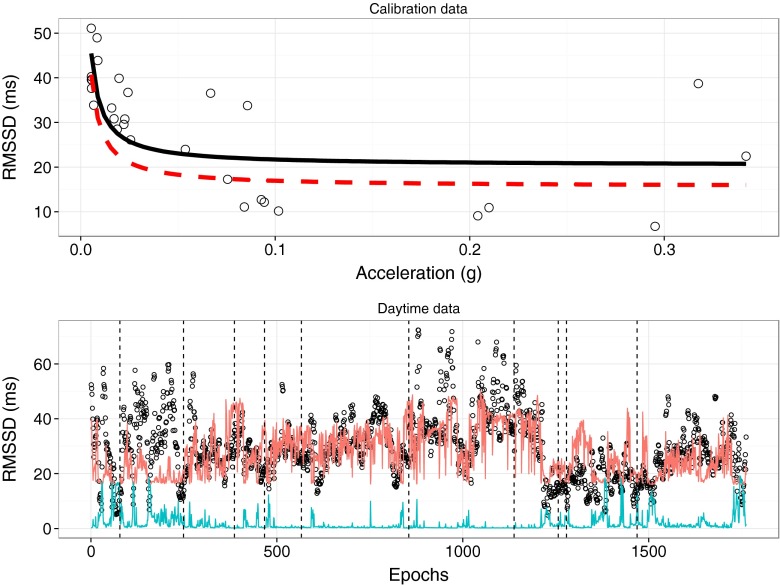
Purpose: In this study, we examined whether prolonged additional reductions in heart rate variability (AddHRVr) can be measured in daily life with an algorithm that filters out changes in HRV that are purely due to metabolic demand, as indexed by movement, using a brief calibration procedure. We tested whether these AddHRVr periods were related to worry, stress, and negative emotions.
Methods: Movement and the root of the mean square of successive differences (RMSSD) in heart rate were measured during a calibration phase and the subsequent 24 h in 32 participants. Worry, stress, explicit and implicit emotions were assessed hourly using smartphones. The Levels of Emotional Awareness Scale and resting HRV were used to account for individual differences. During calibration, person-specific relations between movement and RMSSD were determined. The 24-h data were used to detect prolonged periods (i.e., 7.5 min) of AddHRVr.
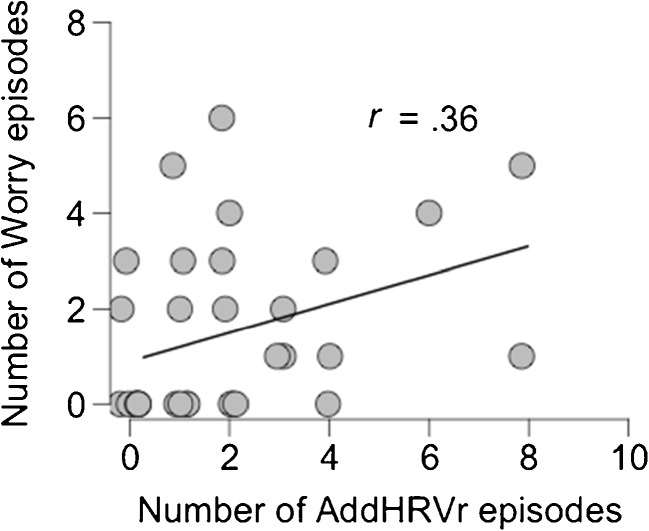
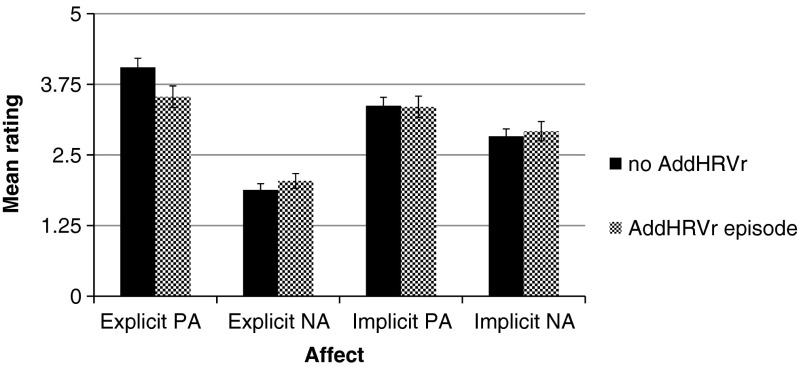
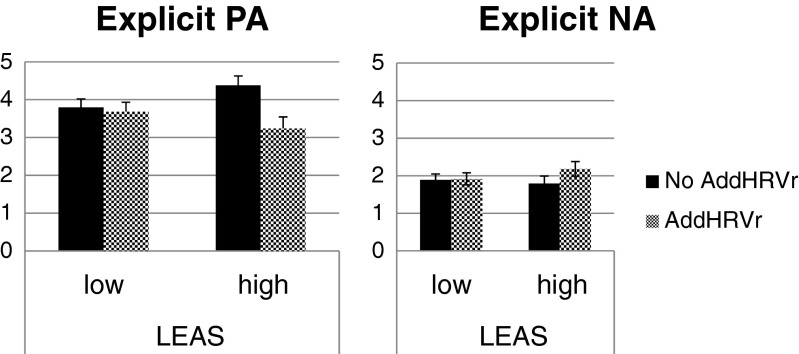
Results: AddHRVr periods were associated with worrying, with decreased explicit positive affect, and with increased tension, but not with the frequency of stressful events or implicit emotions. Only in people high in emotional awareness and high in resting HRV did changes in AddHRVr covary with changes in explicit emotions.
Conclusions: The algorithm can be used to capture prolonged reductions in HRV that are not due to metabolic needs. This enables the real-time assessment of episodes of potentially detrimental cardiac activity and its psychological determinants in daily life.
Keywords: Emotional awareness; Heart rate variability; Metabolic; Perseverative cognition; Physical activity; Worry.
Conflict of interest statement
Compliance with Ethical Standards Authors’ Statement of Conflict of Interest and Adherence to Ethical Standards Authors Bart Verkuil, Jos F. Brosschot, Marieke S. Tollenaar, Richard D. Lane, and Julian F. Thayer declare that they have no conflict of interest. All procedures, including the informed consent process, were conducted in accordance with the ethical standards of the responsible institutional committee on human experimentation (institutional and national) and with the Helsinki Declaration of 1975, as revised in 2000.
Figures
References
-
- La Rovere MT, Bigger JT, Marcus FI, et al. Baroreflex sensitivity and heart-rate variability in prediction of total cardiac mortality after myocardial infarction. Lancet. 1998;351(9101):478–484. - PubMed
-
- Stein PK, Barzilay JI, Chaves PHM, et al. Higher levels of inflammation factors and greater insulin resistance are independently associated with higher heart rate and lower heart rate variability in normoglycemic older individuals: The Cardiovascular Health Study. J Am Geriatr Soc. 2008;56(2):315–321. - PubMed
-
- Jarczok MN, Koenig J, Mauss D, et al. Lower heart rate variability predicts increased level of C-reactive protein 4 years later in healthy, nonsmoking adults. J Intern Med. 2014;276(6):667–671. - PubMed
-
- Hillebrand S, Gast KB, De Mutsert R, et al. Heart rate variability and first cardiovascular event in populations without known cardiovascular disease: Meta-analysis and dose–response meta-regression. Europace. 2013;15(5):742–749. - PubMed
Publication types
MeSH terms
LinkOut - more resources
Full Text Sources
Other Literature Sources
Medical
