


The epidemiological transition and the global childhood obesity epidemic
- PMID: 27152182
- PMCID: PMC4850613
- DOI: 10.1038/ijosup.2015.12
The epidemiological transition and the global childhood obesity epidemic
Abstract
Objectives: Childhood obesity is now recognized as a global public health issue. Social patterning of obesity, consistent with the theory of epidemiologic transition, has not been well described in children, and the limited research has focused on developed settings. The aim of this study was to describe the relationship between childhood obesity and household income using objective measures of adiposity and to explore how this relationship differs across levels of country human development.
Methods: The International Study of Childhood Obesity, Lifestyle and the Environment (ISCOLE) was a multi-national cross-sectional study conducted in 12 urban/suburban study sites that represented all inhabited continents and wide ranges of development. ISCOLE collected objectively measured height, body mass and percentage body fat in 7341 10-year-old children. Multi-level random-effects models were used to examine income gradients in several obesity measures.
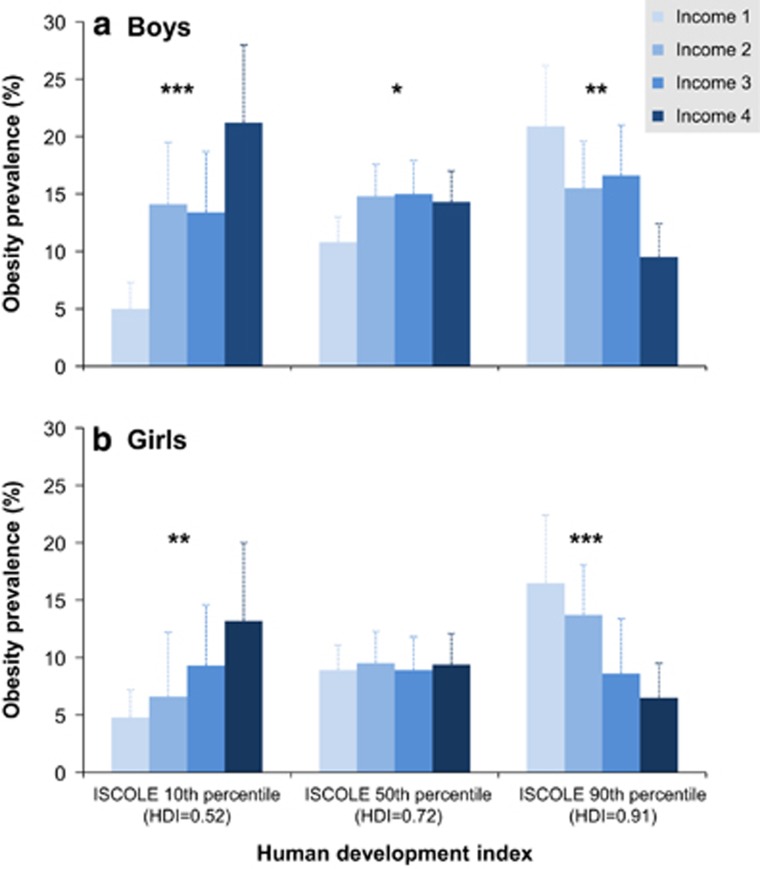
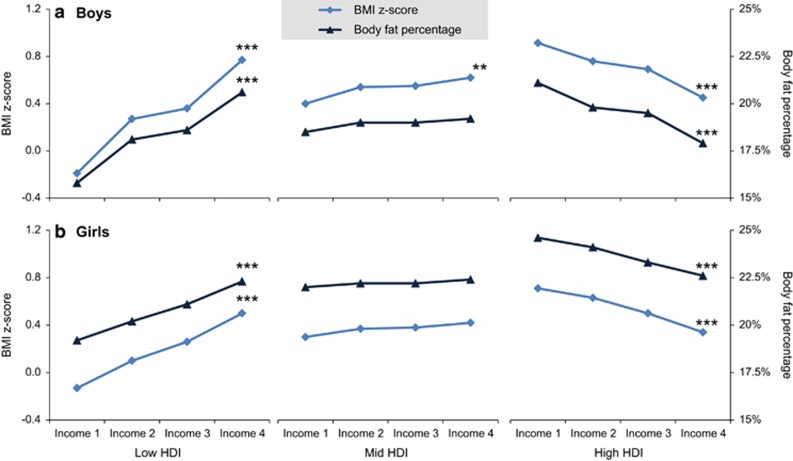
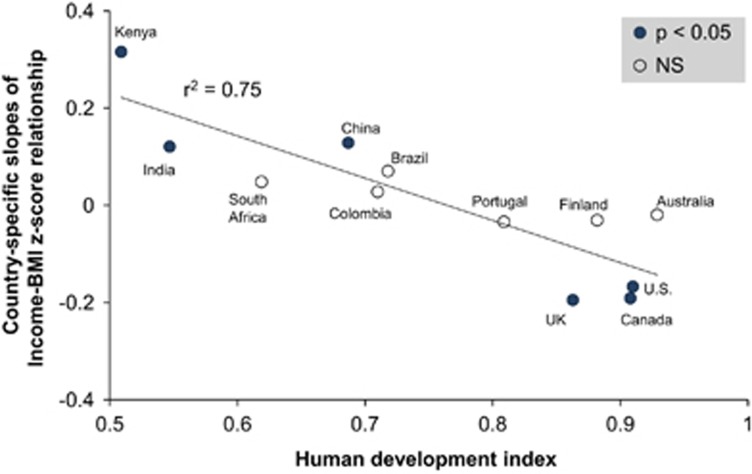
Results: The mean age of the children was 10.4 years, and 12.6% were obese, ranging from 5.4% (Finland) to 23.8% (China). For both boys and girls, obesity prevalence, body fat percentage and body mass index (BMI) z-score increased linearly with higher income at lower levels of development (all P for trend ⩽0.0012), but decreased linearly with higher income at higher levels of development (all P for trend ⩽0.0003). Country human development explained 75% of the variation in the country-specific income-obesity relationships (r=-0.87, P=0.0003).
Conclusions: Results are consistent with the theory of epidemiologic transition. Global efforts to control obesity must account for socioeconomic factors within a country's context. Future research should seek to understand global socioeconomic patterns in obesity-related lifestyle behaviors.
Figures
References
-
- World Health Organization. Consultation on Obesity. Obesity: preventing and managing the global epidemic. Report of a WHO consultation. World Health Organ Tech Rep Ser 2000; 894: i–xii, 1–253. - PubMed
-
- Omran AR. The epidemiologic transition. A theory of the epidemiology of population change. Milbank Mem Fund Q 1971; 49: 509–538. - PubMed
-
- Sobal J, Stunkard AJ. Socioeconomic status and obesity: a review of the literature. Psychol Bull 1989; 105: 260–275. - PubMed
LinkOut - more resources
Full Text Sources
Other Literature Sources
