


Using theory of change to design and evaluate public health interventions: a systematic review
- PMID: 27153985
- PMCID: PMC4859947
- DOI: 10.1186/s13012-016-0422-6
Using theory of change to design and evaluate public health interventions: a systematic review
Abstract
Background: Despite the increasing popularity of the theory of change (ToC) approach, little is known about the extent to which ToC has been used in the design and evaluation of public health interventions. This review aims to determine how ToCs have been developed and used in the development and evaluation of public health interventions globally.
Methods: We searched for papers reporting the use of "theory of change" in the development or evaluation of public health interventions in databases of peer-reviewed journal articles such as Scopus, Pubmed, PsychInfo, grey literature databases, Google and websites of development funders. We included papers of any date, language or study design. Both abstracts and full text papers were double screened. Data were extracted and narratively and quantitatively summarised.
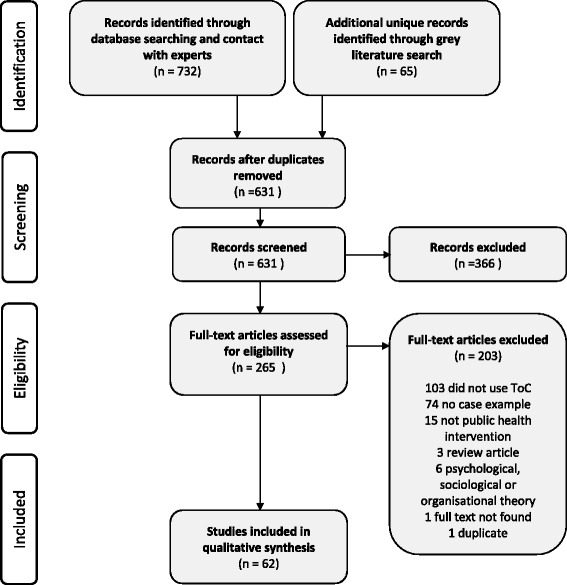
Results: A total of 62 papers were included in the review. Forty-nine (79 %) described the development of ToC, 18 (29 %) described the use of ToC in the development of the intervention and 49 (79 %) described the use of ToC in the evaluation of the intervention. Although a large number of papers were included in the review, their descriptions of the ToC development and use in intervention design and evaluation lacked detail.
Conclusions: The use of the ToC approach is widespread in the public health literature. Clear reporting of the ToC process and outputs is important to strengthen the body of literature on practical application of ToC in order to develop our understanding of the benefits and advantages of using ToC. We also propose a checklist for reporting on the use of ToC to ensure transparent reporting and recommend that our checklist is used and refined by authors reporting the ToC approach.
Keywords: Evaluation; Intervention development; Programme theory; Public health; Systematic review; Theory of change.
Figures
References
-
- Ling T. Evaluating complex and unfolding interventions in real time. Evaluation. 2012;18:79–91. doi: 10.1177/1356389011429629. - DOI
-
- Coryn CLS, Noakes LA, Westine CD, Schroter DC. A systematic review of theory-driven evaluation practice from 1990 to 2009. Am J Eval. 2011;32:199–226. doi: 10.1177/1098214010389321. - DOI
-
- Funnell SC, Rogers PJ. Purposeful program theory: effective use of theories of change and logic models. 1. San Francisco, CA: Jossey-Bass; 2011.
Publication types
MeSH terms
LinkOut - more resources
Full Text Sources
Other Literature Sources
Medical
