


Dissociating the role of endocannabinoids in the pleasurable and motivational properties of social play behaviour in rats
- PMID: 27154553
- PMCID: PMC4914428
- DOI: 10.1016/j.phrs.2016.04.031
Dissociating the role of endocannabinoids in the pleasurable and motivational properties of social play behaviour in rats
Abstract
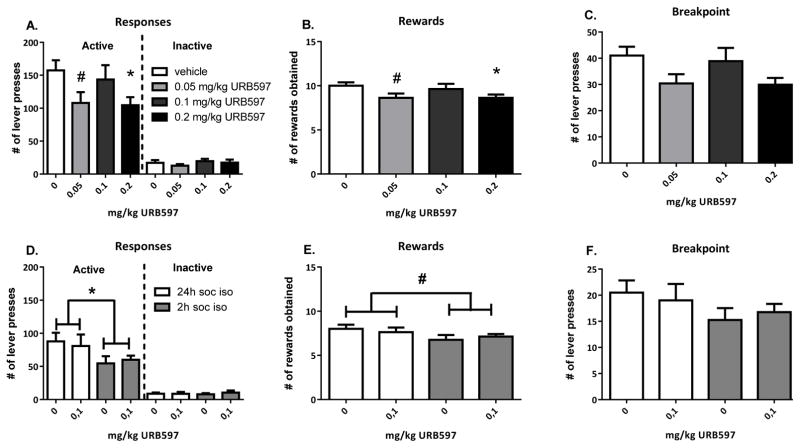
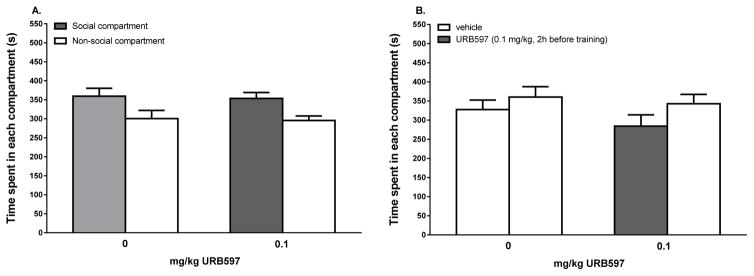
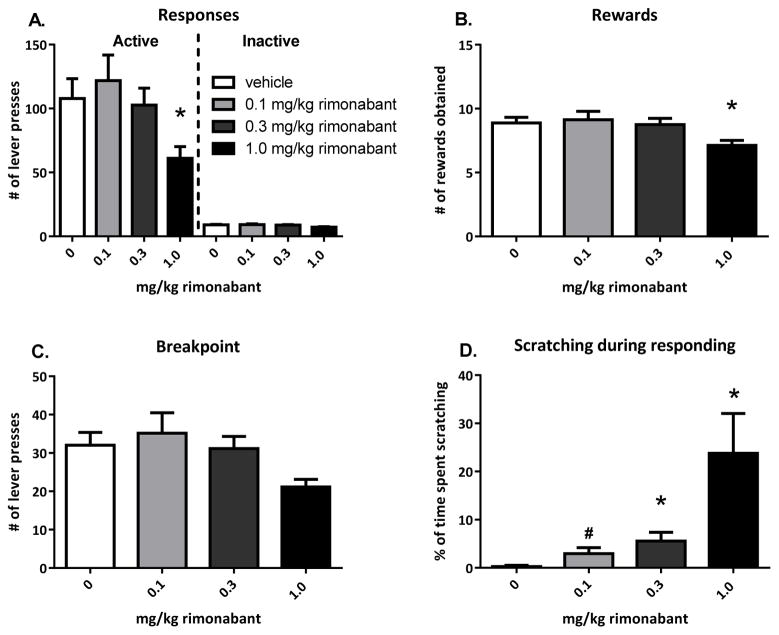
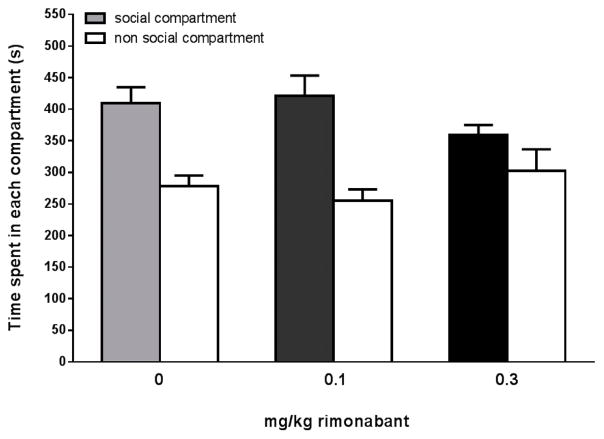
Social play behaviour is a vigorous form of social interaction, abundant during the juvenile and adolescent phases of life in many mammalian species, including humans. Social play is highly rewarding and it is important for social and cognitive development. Being a rewarding activity, social play can be dissociated in its pleasurable and motivational components. We have previously shown that endocannabinoids modulate the expression of social play behaviour in rats. In the present study, we investigated whether endocannabinoids modulate the motivational and pleasurable properties of social play behaviour, using operant and place conditioning paradigms, respectively. Treatment with the anandamide hydrolysis inhibitor URB597 did not affect operant responding or social play-induced conditioned place preference (CPP) when administered at a dose (0.1mg/kg) known to increase the expression of social play behaviour, while it modestly reduced operant responding at a higher dose (0.2mg/kg). The cannabinoid-1 (CB1) receptor antagonist rimonabant reduced operant responding when administered at a dose (1mg/kg) known to decrease the expression of social play behaviour, although this effect may be secondary to concurrent drug-induced stereotypic behaviours (i.e., grooming and scratching). These data demonstrate that enhancing endocannabinoid levels does not differentially affect the motivational and pleasurable aspects of social play behaviour, whereas CB1 receptor blockade reduces the motivational aspects of social play behaviour, possibly due to response competition. Thus, endocannabinoids likely drive the expression of social play behaviour as a whole, without differentially affecting its motivational or pleasurable properties.
Keywords: Endocannabinoids; Operant conditioning; Place conditioning; Rimonabant; Rimonabant (Pubmed Chem CID: 104849); Social play behaviour; URB597; URB597 (Pubmed Chem CID: 1383884).
Copyright © 2016 Elsevier Ltd. All rights reserved.
Figures
References
-
- Adamczyk P, McCreary AC, Przegalinski E, Mierzejewski P, Bienkowski P, Filip M. The effects of fatty acid amide hydrolase inhibitors on maintenance of cocaine and food self-administration and on reinstatement of cocaine-seeking and food-taking behaviour in rats. J Physiol Pharmacol. 2009;60:119–125. - PubMed
-
- Arnold JC, Hunt GE, McGregor IS. Effects of the cannabinoid receptor agonist CP 55,940 and the cannabinoid receptor antagonist SR 141716 on intracranial self-stimulation in Lewis rats. Life Sci. 2001;70:97–108. - PubMed
-
- Arnone M, Maruani J, Chaperon F, Thiébot MH, Poncelet M, Soubrié P, Le Fur G. Selective inhibition of sucrose and ethanol intake by SR 141716, an antagonist of central cannabinoid (CB1) receptors. Psychopharmacology. 1997;132:104–106. - PubMed
Publication types
MeSH terms
Substances
Grants and funding
LinkOut - more resources
Full Text Sources
Other Literature Sources
