


Genetic variation in IBD: progress, clues to pathogenesis and possible clinical utility
- PMID: 27156530
- PMCID: PMC5083126
- DOI: 10.1080/1744666X.2016.1184972
Genetic variation in IBD: progress, clues to pathogenesis and possible clinical utility
Abstract
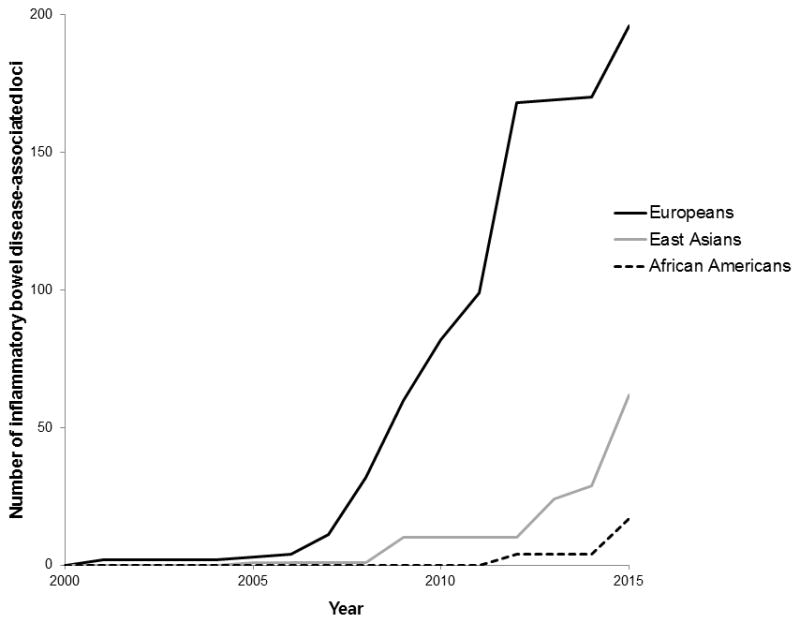
Epidemiological and clinical studies have suggested that the pathogenesis of inflammatory bowel disease (IBD) is strongly influenced by genetic predisposition. Beyond the limitations of linkage analysis, multiple genome-wide association studies, their meta-analyses, and targeted genotyping array techniques have broadened our understanding of the genetic architecture of IBD. Currently, over 200 single nucleotide polymorphisms are known to be associated with susceptibility to IBD and through functional analysis of genes and loci, a substantial proportion of pathophysiologic mechanisms have been revealed. However, because only a modest fraction of predicted heritability can be explained by known genes/loci, additional strategies are needed including the identification of rare variants with large effect sizes to help explain the missing heritability. Considerable progress is also being made on applying outcomes of genetic research in diagnostics, classification, prognostics, and the development of new therapeutics of IBD.
Keywords: Crohn’s disease; Inflammatory bowel disease; disease susceptibility; genetics; genome-wide association study; heritability; pharmacogenetics; sequencing; ulcerative colitis.
Conflict of interest statement
Declaration of interests The authors are supported by the European Union Seventh framework program 305479, the Leona M. and Harry B. Helmsley Charitable Trust and the National Institutes of Health (National Institute of Diabetes and Digestive and Kidney Diseases) DK062413. D McGovern is on the advisory board for Merck, UCB and has research support from Amgen. B Duk Ye is on the advisory board for Shire Korea, Abbvie Korea and acts as a consultant for Celltrion. The authors have no other relevant affiliations or financial involvement with any organization or entity with a financial interest in or financial conflict with the subject matter or materials discussed in the manuscript apart from those disclosed.
Figures
References
-
- Crohn BB, Ginzburg L, Oppenheimer GD. Regional ileitis: A pathologic and clinical entity. JAMA. 1932;99:1323–9. - PubMed
-
- Cho JH. The genetics and immunopathogenesis of inflammatory bowel disease. Nat Rev Immunol. 2008;8:458–66. - PubMed
-
- Brant SR. Update on the heritability of inflammatory bowel disease: the importance of twin studies. Inflamm Bowel Dis. 2011;17:1–5. - PubMed
Publication types
MeSH terms
Grants and funding
LinkOut - more resources
Full Text Sources
Other Literature Sources
