


Latarjet Fixation: A Cadaveric Biomechanical Study Evaluating Cortical and Cannulated Screw Fixation
- PMID: 27158630
- PMCID: PMC4842850
- DOI: 10.1177/2325967116643533
Latarjet Fixation: A Cadaveric Biomechanical Study Evaluating Cortical and Cannulated Screw Fixation
Abstract
Background: Attritional bone loss in patients with recurrent anterior instability has successfully been treated with a bone block procedure such as the Latarjet. It has not been previously demonstrated whether cortical or cancellous screws are superior when used for this procedure.
Purpose: To assess the strength of stainless steel cortical screws versus stainless steel cannulated cancellous screws in the Latarjet procedure.
Study design: Controlled laboratory study.
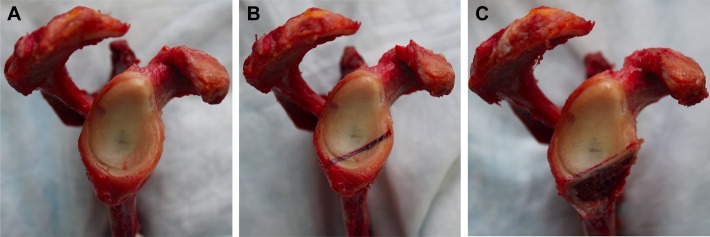
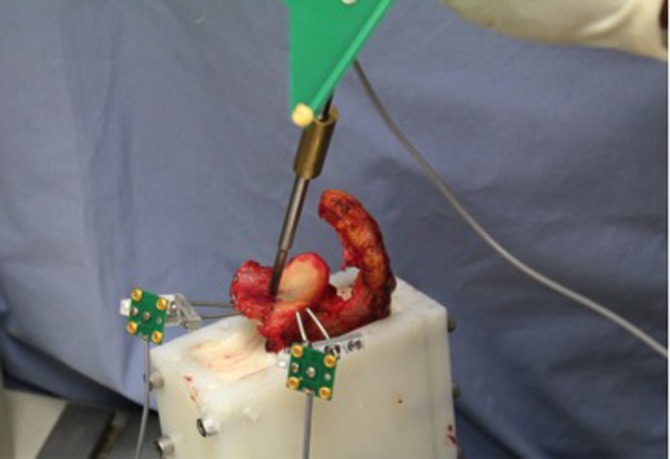
Methods: Ten fresh-frozen matched-pair shoulder specimens were randomized into 2 separate fixation groups: (1) 3.5-mm stainless steel cortical screws and (2) 4.0-mm stainless steel partially threaded cannulated cancellous screws. Shoulder specimens were dissected free of all soft tissue and a 25% glenoid defect was created. The coracoid process was osteomized, placed at the site of the glenoid defect, and fixed in place with 2 parallel screws.
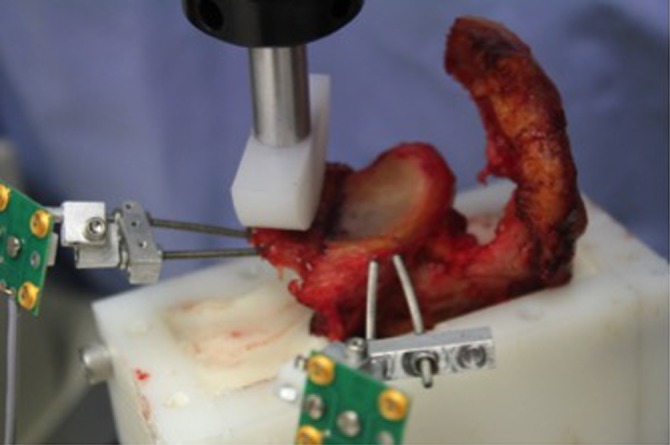
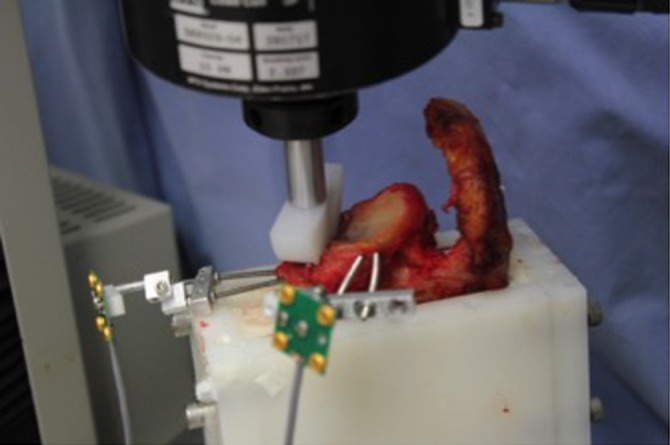
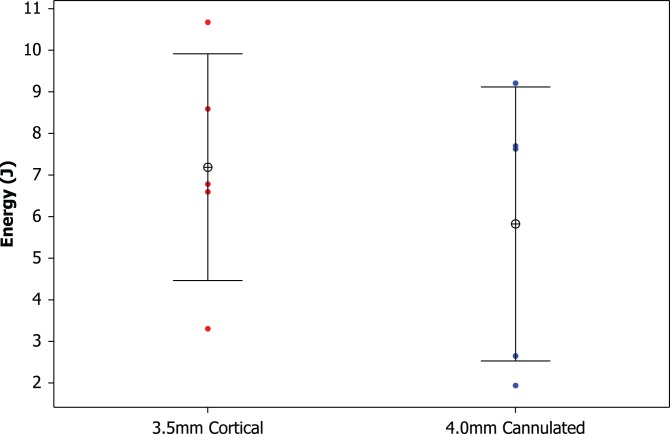
Results: All 10 specimens failed by screw cutout. Nine of 10 specimens failed by progressive displacement with an increased number of cycles. One specimen in the 4.0-mm screw group failed by catastrophic failure on initiation of the testing protocol. The 3.5-mm screws had a mean of 274 cycles (SD, ±171 cycles; range, 10-443 cycles) to failure. The 4.0-mm screws had a mean of 135 cycles (SD, ±141 cycles; range, 0-284 cycles) to failure. There was no statistically significant difference between the 2 types of screws for cycles required to cause failure (P = .144).
Conclusion: There was no statistically significant difference in energy or cycles to failure when comparing the stainless steel cortical screws versus partially threaded cannulated cancellous screws.
Clinical relevance: Latarjet may be performed using cortical or cancellous screws without a clear advantage of either option.
Keywords: Latarjet; biomechanics; general sports trauma; glenoid bone loss; shoulder instability.
Conflict of interest statement
One or more of the authors has declared the following potential conflict of interest or source of funding: A Northwestern University Department of Orthopaedic Surgery institutional department research grant of $5000 was received for this cadaveric study. M.D.S. receives royalties from Tornier and is a paid consultant for Tornier and Medacta. G.M. receives royalties from and is a paid consultant for Zimmer.
Figures
References
-
- Bergmann G, Graichen F, Bender A, Kaab M, Rohlmann A, Westerhoff P. In vivo glenohumeral contact forces—measurements in the first patient months postoperatively. J Biomech. 2007;40:2139–2149. - PubMed
-
- Bessiere C, Trojani C, Pelegri C, Carles M, Boileau P. Coracoid bone block versus arthroscopic Bankart repair: a comparative paired study with 5-year follow-up. Orthop Traumatol Surg Res. 2013;99:123–130. - PubMed
-
- Colgan SA, Hecker AT, Kirker-Head CA, Hayes WC. A comparison of the Synthes 4.5-mm cannulated screw and the Synthes 4.5-mm standard cortex screw systems in equine bone. Vet Surg. 1998;27:540–546. - PubMed
-
- de Beer JF, Roberts C. Glenoid bone defects—open Latarjet with congruent arc modification. Orthop Clin North Am. 2010;41:407–415. - PubMed
LinkOut - more resources
Full Text Sources
Other Literature Sources
