Review
. 2016 Jul;90(7):1541-53.
doi: 10.1007/s00204-016-1736-5. Epub 2016 May 10.

Diesel exhaust: current knowledge of adverse effects and underlying cellular mechanisms

Affiliations
Review

Diesel exhaust: current knowledge of adverse effects and underlying cellular mechanisms

Sandro Steiner et al. Arch Toxicol. 2016 Jul.

Abstract

Diesel engine emissions are among the most prevalent anthropogenic pollutants worldwide, and with the growing popularity of diesel-fueled engines in the private transportation sector, they are becoming increasingly widespread in densely populated urban regions. However, a large number of toxicological studies clearly show that diesel engine emissions profoundly affect human health. Thus the interest in the molecular and cellular mechanisms underlying these effects is large, especially concerning the nature of the components of diesel exhaust responsible for the effects and how they could be eliminated from the exhaust. This review describes the fundamental properties of diesel exhaust as well as the human respiratory tract and concludes that adverse health effects of diesel exhaust not only emerge from its chemical composition, but also from the interplay between its physical properties, the physiological and cellular properties, and function of the human respiratory tract. Furthermore, the primary molecular and cellular mechanisms triggered by diesel exhaust exposure, as well as the fundamentals of the methods for toxicological testing of diesel exhaust toxicity, are described. The key aspects of adverse effects induced by diesel exhaust exposure described herein will be important for regulators to support or ban certain technologies or to legitimate incentives for the development of promising new technologies such as catalytic diesel particle filters.

Keywords: Adverse effects; Diesel engines; Diesel particles; Lung cells; Ultrafine particles.


Figures
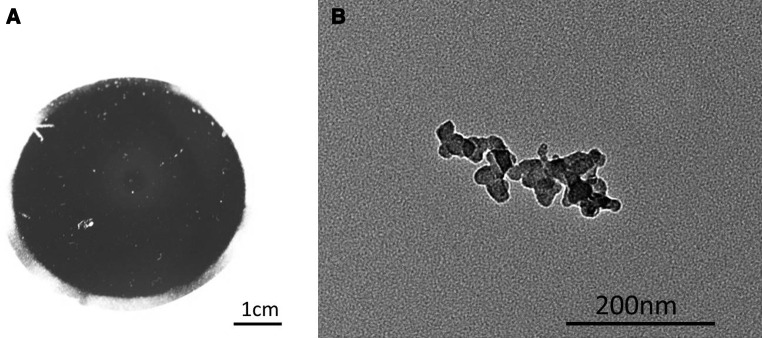
Fig. 1
Fig. 1
Diesel particles collected on a filter from an unfiltered diesel passenger car, driven for 30 min, resulting in approximately 5 mg of particles (a) and transmission electron micrograph of diesel exhaust particles (b). The picture shows representative irregularly shaped elongated particle aggregates of ca. 200 nm length. The primary particles of about 20 nm are clearly identifiable
Fig. 2
Fig. 2
After deposition in the respiratory tract, diesel exhaust particles are normally cleared from the epithelium by the mucociliary escalator or by phagocytosis by resident macrophages. Other cell types may, however, also take up the particles, which due to their biopersistence results in particle accumulation in the tissue and thereby extensive exposure to the redox-active particle surfaces. The figure shows transmission electron micrographs of diesel exhaust particles that were taken up in vitro by bronchial epithelial cells (cell line 16HBE14o–). The picture on the right shows a magnified part of the picture on the left [adapted from Lehmann et al. (2009)]
Fig. 3
Fig. 3
Inhalation of diesel exhaust directly affects the respiratory tract by inducing local oxidative stress, (pro-)inflammatory signaling and genotoxicity, which ultimately may result in respiratory diseases such as COPD, asthma and lung cancer. Exhaust components (particles and gases) are also translocated across airway and respiratory epithelia and enter the circulatory system, along with locally produced (pro-)inflammatory signaling molecules and oxidizing molecules that are either actively produced by lung-resident immune cells or are products of redox reactions triggered by exhaust components. The bloodstream distributes these molecules throughout the whole body, resulting in systemic oxidative stress and inflammation and genotoxic effects in organs other than the lung. The ultimate result may be systemic health effects such as cardiovascular diseases, thrombosis, stroke, cancer or accelerated aging

References

    1. (2013) http://www.iarc.fr/en/media-centre/pr/2012/pdfs/pr213_E.pdf
    1. Abbey DE, Nishino N, McDonnell WF, Burchette RJ, Knutsen SF, Lawrence Beeson W, Yang JX. Long-term inhalable particles and other air pollutants related to mortality in nonsmokers. Am J Respir Crit Care Med. 1999;159:373–382. doi: 10.1164/ajrccm.159.2.9806020. - DOI - PubMed
    1. Aga E, Samoli E, Touloumi G, Anderson H, Cadum E, Forsberg B, Goodman P, Goren A, Kotesovec F, Kriz B. Short-term effects of ambient particles on mortality in the elderly: results from 28 cities in the APHEA2 project. Eur Respir J. 2003;21:28s–33s. doi: 10.1183/09031936.03.00402803. - DOI - PubMed
    1. Alexis NE, Carlsten C. Interplay of air pollution and asthma immunopathogenesis: a focused review of diesel exhaust and ozone. Int Immunopharmacol. 2014;23:347–355. doi: 10.1016/j.intimp.2014.08.009. - DOI - PubMed
    1. Alfaro-Moreno E, Nawrot TS, Vanaudenaerde BM, Hoylaerts MF, Vanoirbeek JA, Nemery B, Hoet PHM. Co-cultures of multiple cell types mimic pulmonary cell communication in response to urban PM10. Eur Respir J. 2008;32:1184–1194. doi: 10.1183/09031936.00044008. - DOI - PubMed

MeSH terms

LinkOut - more resources
