


Genome-wide analysis of long noncoding RNA (lncRNA) expression in colorectal cancer tissues from patients with liver metastasis
- PMID: 27165481
- PMCID: PMC4867661
- DOI: 10.1002/cam4.738
Genome-wide analysis of long noncoding RNA (lncRNA) expression in colorectal cancer tissues from patients with liver metastasis
Abstract
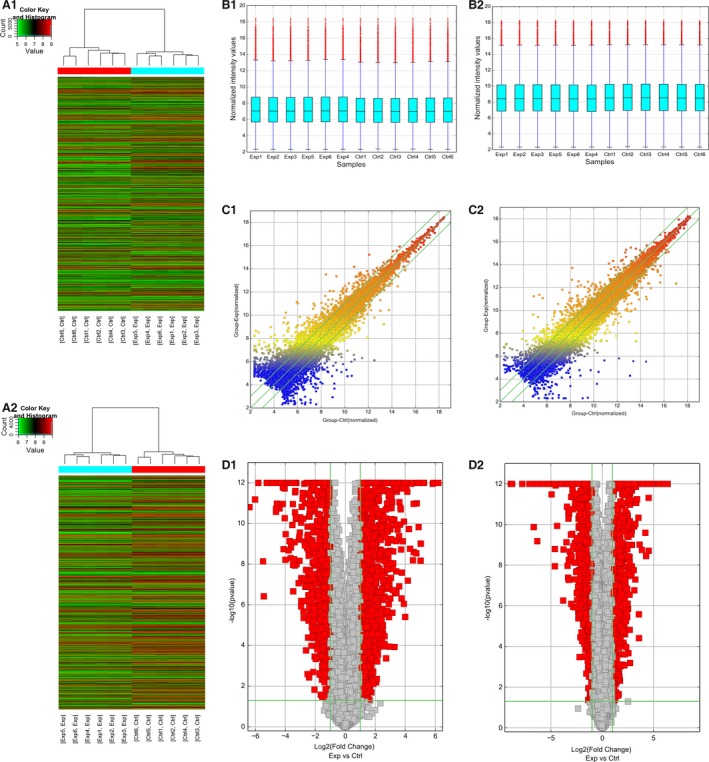
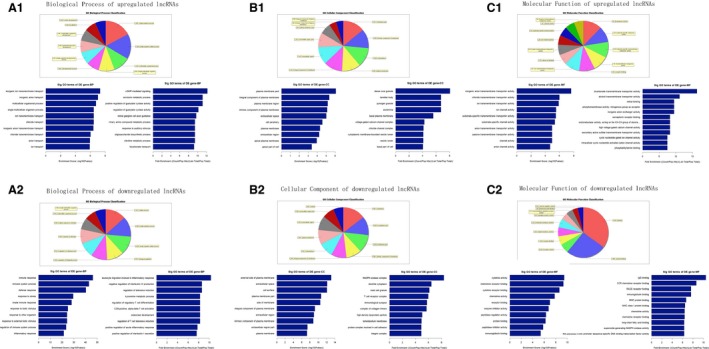
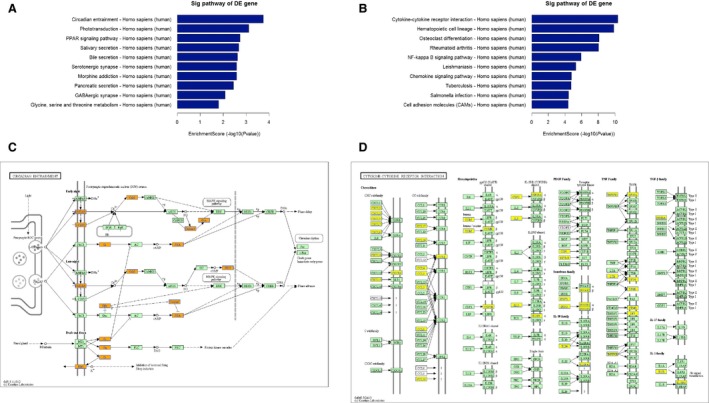
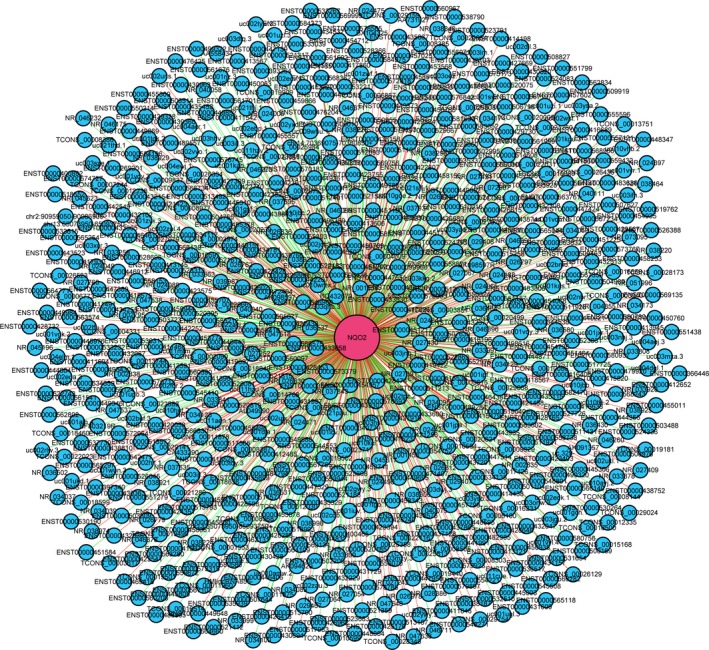
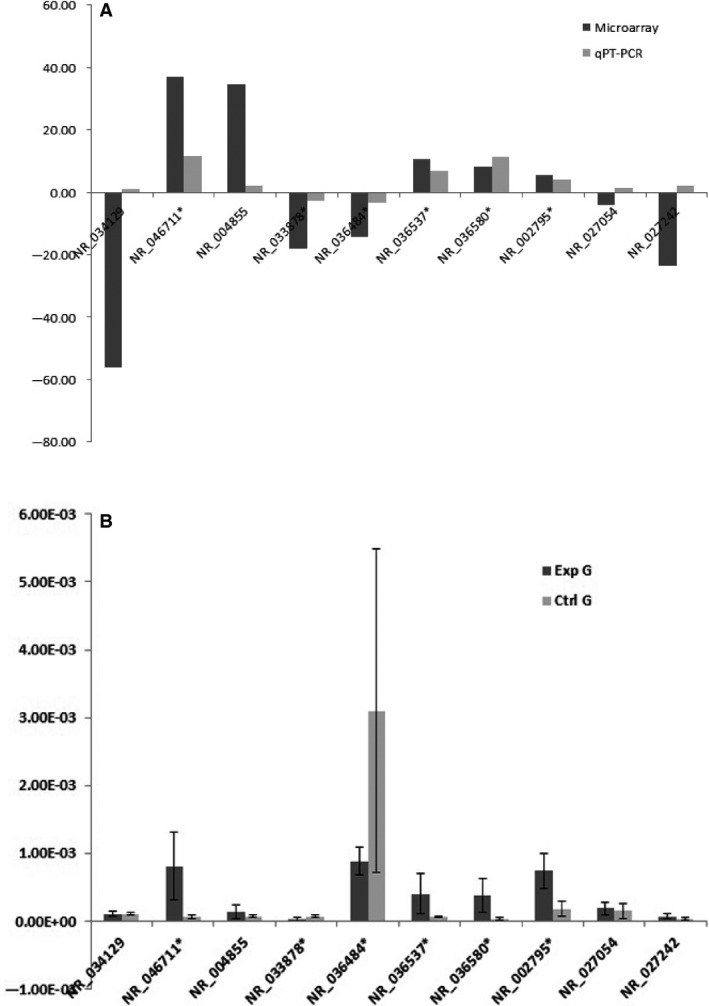
The liver is the most frequent site of metastasis in colorectal cancer (CRC), in which long noncoding RNAs (lncRNAs) may play a crucial role. In this study, we performed a genome-wide analysis of lncRNA expression to identify novel targets for the further study of liver metastasis in CRC. Samples obtained from CRC patients were analyzed using Arraystar human 8 × 60K lncRNA/mRNA v3.0 microarrays chips to find differentially expressed lncRNAs and mRNAs. The results were confirmed by quantitative reverse transcription-polymerase chain reaction (qRT-PCR). The differentially expressed lncRNAs and mRNAs were identified through fold change filtering. Gene ontology (GO) and pathway analyses were performed using standard enrichment computational methods. In the CRC tissues from patients with liver metastasis, 2636 lncRNAs were differentially expressed, including 1600 up-regulated and 1036 down-regulated over two-fold compared with the CRC tissues without metastasis. Among the 1584 differentially expressed mRNAs, 548 were up-regulated and 1036 down-regulated. GO and pathway analysis of the up-regulated and down-regulated mRNAs yielded different results. The up-regulated mRNAs were associated with single-organism process (biological process), membrane part (cellular component), and transporter activity (molecular function), whereas the down-regulated mRNAs were associated with cellular process, membrane, and binding, respectively. In the pathway analysis, 27 gene pathways associated with the up-regulated mRNAs and 51 gene pathways associated with the down-regulated mRNAs were targeted. The significant changes in NQO2 (NM_000904) mRNA and six associated lncRNAs were selected for validation by qRT-PCR. Aberrantly expressed lncRNAs may play an important role in the liver metastasis of CRC. The further study can provide useful insights into the biology and, ultimately, the prevention of liver metastasis.
Keywords: NAD (P) H Dehydrogenase, Quinone 2 (NQO2); colorectal cancer (CRC); long noncoding RNA (lncRNA).
© 2016 The Authors. Cancer Medicine published by John Wiley & Sons Ltd.
Figures
References
-
- Siegel, R. L. , Miller K. D., and Jemal A.. 2015. Cancer statistics, 2015. CA Cancer J. Clin. 65:5–29. - PubMed
-
- Siegel, R. , Desantis C., and Jemal A.. 2014. Colorectal cancer statistics, 2014. CA Cancer J. Clin. 64:104–117. - PubMed
-
- Jemal, A. , Bray F., Center M. M., Ferlay J., Ward E., and Forman D.. 2011. Global cancer statistics. CA Cancer J. Clin. 61:69–90. - PubMed
-
- Zhong, Y. , Xu J., Wei Y., Ren L., Lai Y., Fan J., et al. 2007. Surgical treatment of liver metastasis of colorectal cancer. China J. Hepatobiliary Surg. 13:4.
Publication types
MeSH terms
Substances
LinkOut - more resources
Full Text Sources
Other Literature Sources
Medical
Molecular Biology Databases
