Exposure of rhesus monkeys to cowpox virus Brighton Red by large-particle aerosol droplets results in an upper respiratory tract disease
- PMID: 27166137
- PMCID: PMC5764124
- DOI: 10.1099/jgv.0.000501
Exposure of rhesus monkeys to cowpox virus Brighton Red by large-particle aerosol droplets results in an upper respiratory tract disease
Abstract
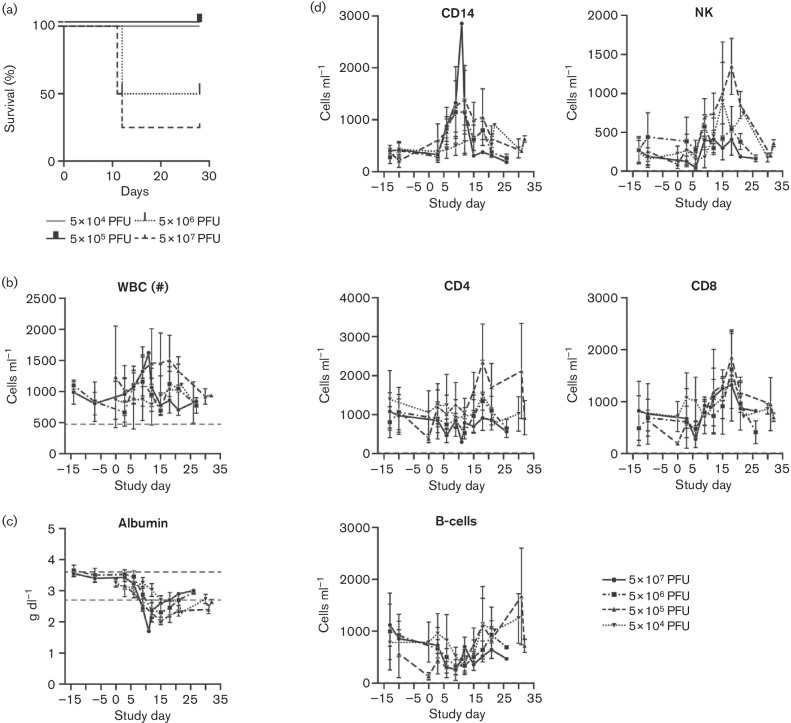
We previously demonstrated that small-particle (0.5-3.0 µm) aerosol infection of rhesus monkeys (Macaca mulatta) with cowpox virus (CPXV)-Brighton Red (BR) results in fulminant respiratory tract disease characterized by severe lung parenchymal pathology but only limited systemic virus dissemination and limited classic epidermal pox-like lesion development (Johnson et al., 2015). Based on these results, and to further develop CPXV as an improved model of human smallpox, we evaluated a novel large-particle aerosol (7.0-9.0 µm) exposure of rhesus monkeys to CPXV-BR and monitored for respiratory tract disease by serial computed tomography (CT). As expected, the upper respiratory tract and large airways were the major sites of virus-induced pathology following large-particle aerosol exposure. Large-particle aerosol CPXV exposure of rhesus macaques resulted in severe upper airway and large airway pathology with limited systemic dissemination.
Figures


References
-
- Bohannon J. K., Lackemeyer M. G., Kuhn J. H., Wada J., Bollinger L., Jahrling P. B., Johnson R. F.(2015). Generation and characterization of large-particle aerosols using a center flow tangential aerosol generator with a non-human-primate, head-only aerosol chamber. Inhal Toxicol 27247–253. 10.3109/08958378.2015.1033570 - DOI - PMC - PubMed
Publication types
MeSH terms
Substances
Grants and funding
LinkOut - more resources
Full Text Sources
Other Literature Sources
Research Materials