


Effects of carvedilol reduce conjunctivitis through changes in inflammation, NGF and VEGF levels in a rat model
- PMID: 27168839
- PMCID: PMC4840612
- DOI: 10.3892/etm.2016.3140
Effects of carvedilol reduce conjunctivitis through changes in inflammation, NGF and VEGF levels in a rat model
Abstract
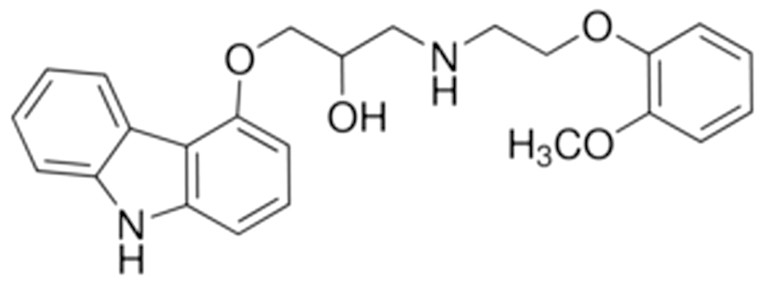
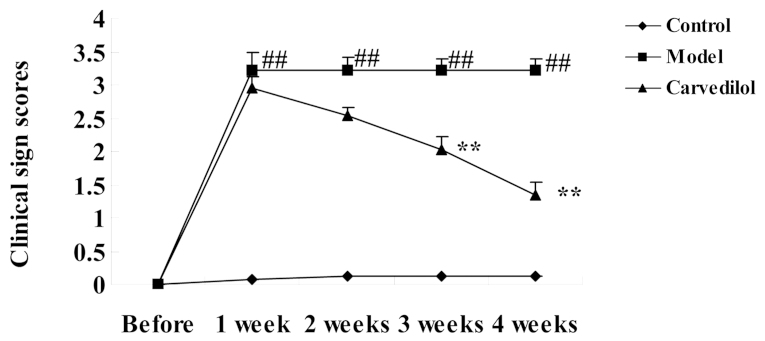
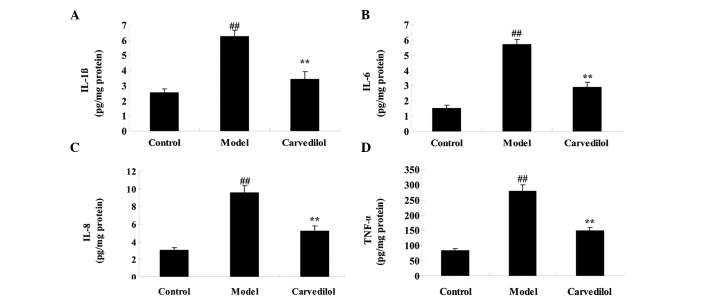
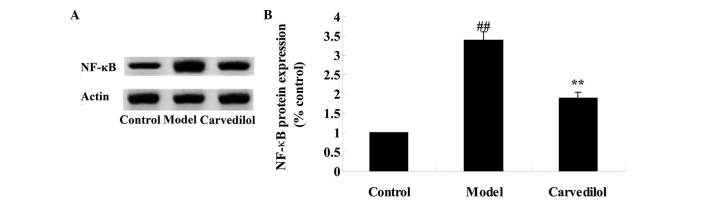
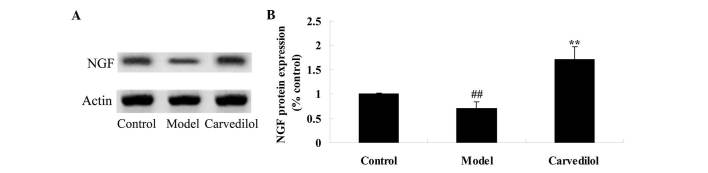
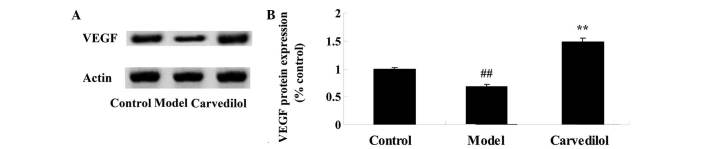
Carvedilol is a novel third generation β-blocker that acts as an antagonist of β and α adrenergic receptors, and is able to regulate various cell factors. In addition, it possesses antioxidant activity, is capable of reversing cardiac remodeling effects and has anti-arrhythmic effects. The present study aimed to investigate whether the effects of carvedilol were able to reduce conjunctivitis clinical scores. Initially, 24 Sprague Dawley (SD) rats were randomly divided into three equal groups as follows: Control group, model group and carvedilol group. The model and carvedilol group adult SD rats were injected with lipopolysaccharide (LPS) to induce conjunctivitis. In the carvedilol group, the eight SD rats with LPS-induced conjunctivitis also received 50 mg/kg/day of carvedilol for 4 weeks. Next, the effects carvedilol were assessed utilizing a system of clinical sign scores, and an enzyme-linked immunosorbent assay was used to determine the expression levels of interleukin-1β (IL-1β), IL-6, IL-8 and tumor necrosis factor-α (TNF-α). Finally, nuclear factor-κB (NF-κB), nerve growth factor (NGF) and vascular endothelial growth factor (VEGF) were analyzed by western blotting. Carvedilol was observed to significantly reduce clinical sign scores in a dose-dependent manner (P<0.01), and reduce IL-1β, IL-6, IL-8 and TNF-α expression levels (P<0.01) in the LPS-induced rat model of conjunctivitis. Carvedilol was also able to significantly reduce the protein expression levels of NF-κB, and induce the protein expression levels of NGF and VEGF in the LPS-induced rat model of conjunctivitis (P<0.01). In conclusion, the effects of carvedilol may reduce conjunctivitis clinical scores through inflammation, NGF and VEGF in LPS-induced rat models.
Keywords: carvedilol; conjunctivitis; inflammation; nerve growth factor; vascular endothelial growth factor.
Figures
References
-
- Chen Y, Zhang X, Yang L, Li M, Li B, Wang W, Sheng M. Decreased PPAR-γ expression in the conjunctiva and increased expression of TNF-α and IL-1β in the conjunctiva and tear fluid of dry eye mice. Mol Med Rep. 2014;9:2015–2023. - PubMed
-
- Barisani-Asenbauer T, Inic-Kanada A, Belij S, Marinkovic E, Stojicevic I, Montanaro J, Stein E, Bintner N, Stojanovic M. The ocular conjunctiva as a mucosal immunization route: A profile of the immune response to the model antigen tetanus toxoid. PLoS One. 2013;8:e60682. doi: 10.1371/journal.pone.0060682. - DOI - PMC - PubMed
LinkOut - more resources
Full Text Sources
Other Literature Sources