


Constitutive Intracellular Na+ Excess in Purkinje Cells Promotes Arrhythmogenesis at Lower Levels of Stress Than Ventricular Myocytes From Mice With Catecholaminergic Polymorphic Ventricular Tachycardia
- PMID: 27169737
- PMCID: PMC4902321
- DOI: 10.1161/CIRCULATIONAHA.116.021936
Constitutive Intracellular Na+ Excess in Purkinje Cells Promotes Arrhythmogenesis at Lower Levels of Stress Than Ventricular Myocytes From Mice With Catecholaminergic Polymorphic Ventricular Tachycardia
Abstract
Background: In catecholaminergic polymorphic ventricular tachycardia (CPVT), cardiac Purkinje cells (PCs) appear more susceptible to Ca(2+) dysfunction than ventricular myocytes (VMs). The underlying mechanisms remain unknown. Using a CPVT mouse (RyR2(R4496C+/Cx40eGFP)), we tested whether PC intracellular Ca(2+) ([Ca(2+)]i) dysregulation results from a constitutive [Na(+)]i surplus relative to VMs.
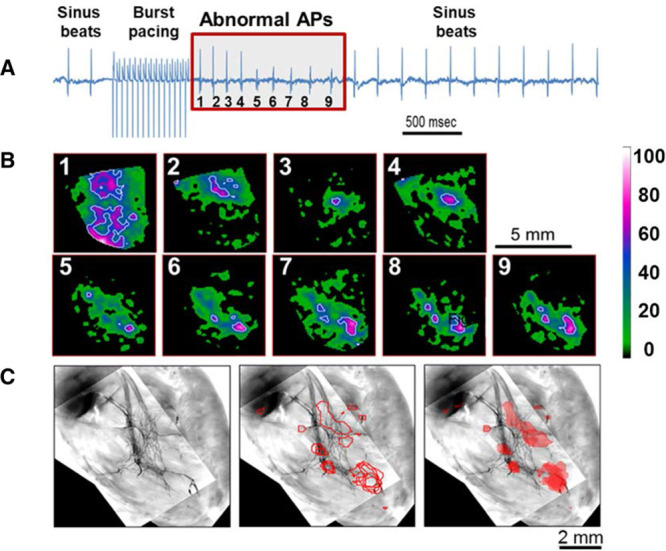
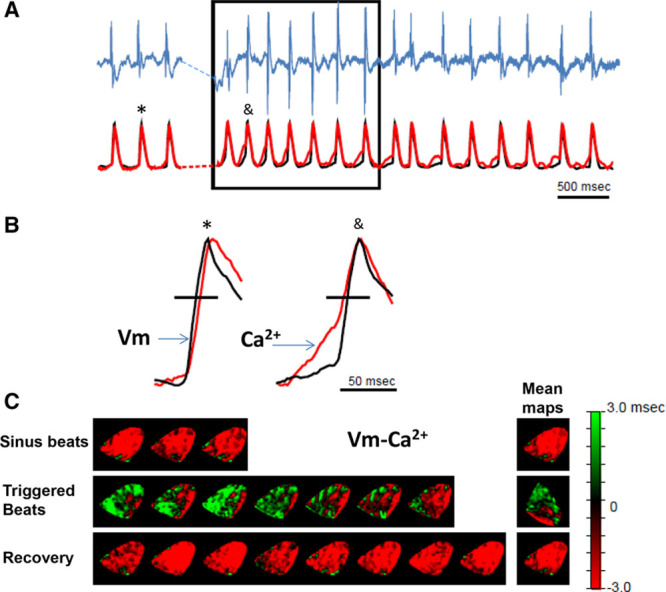
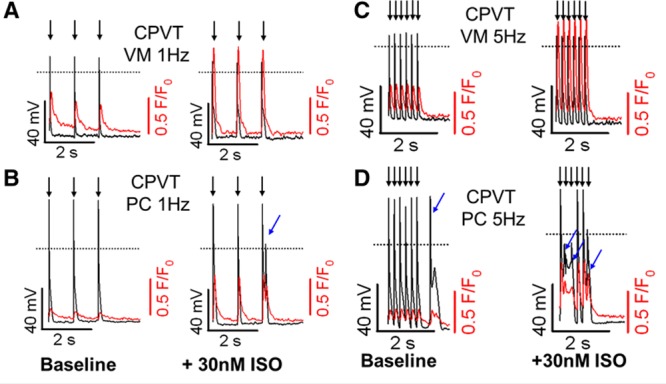
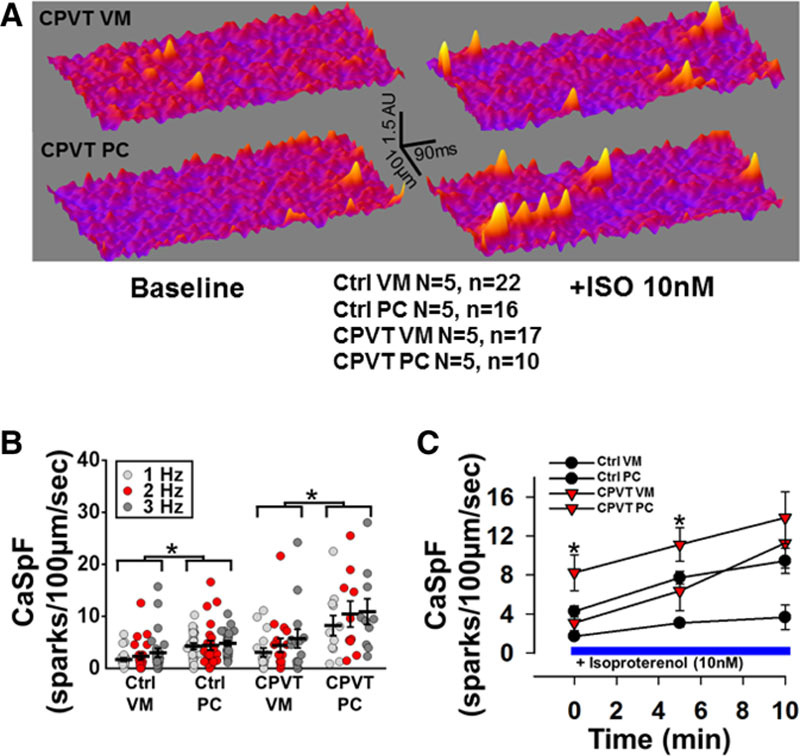
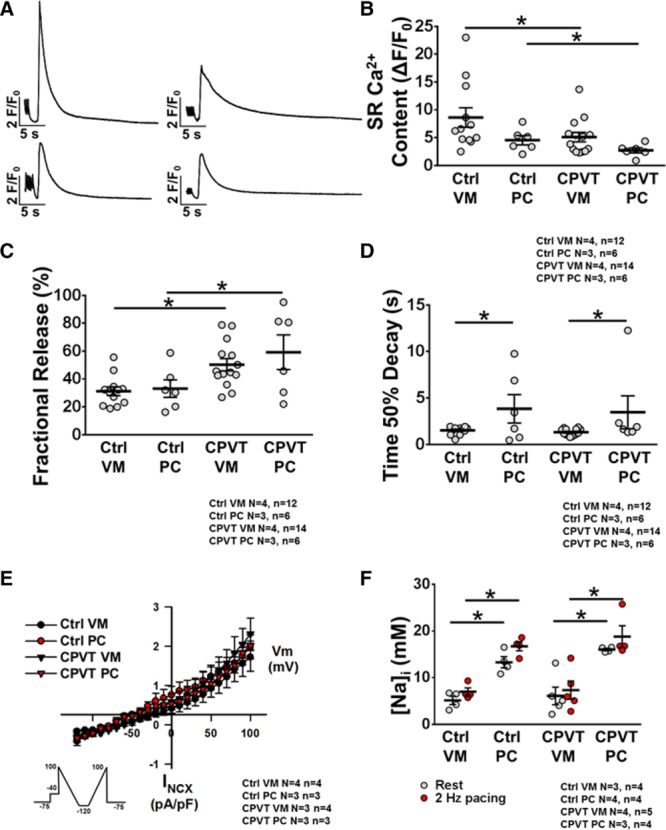
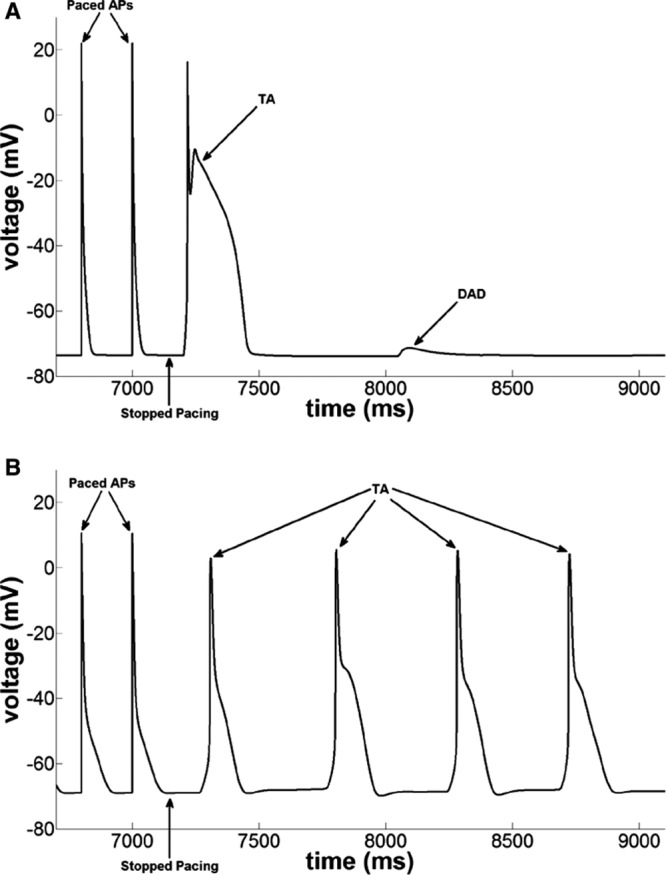
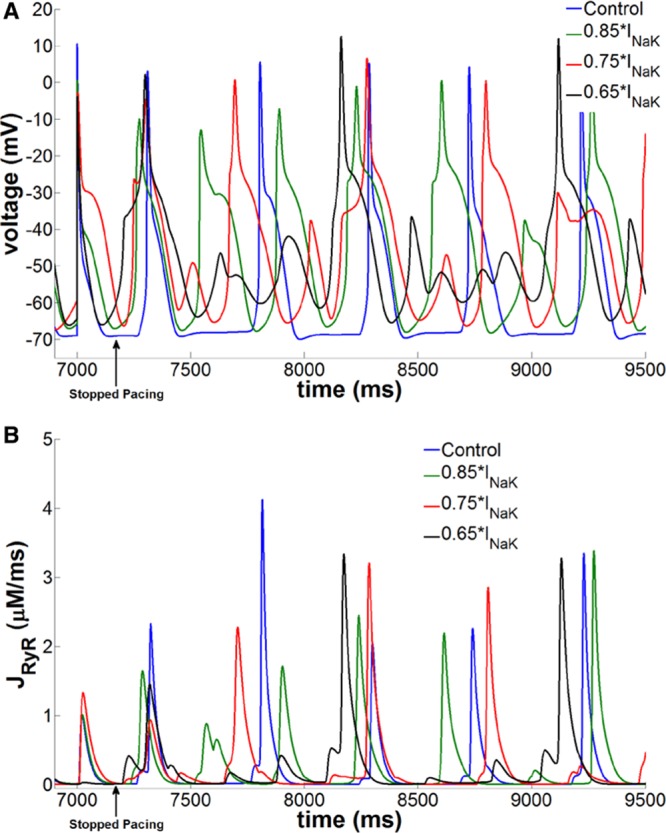
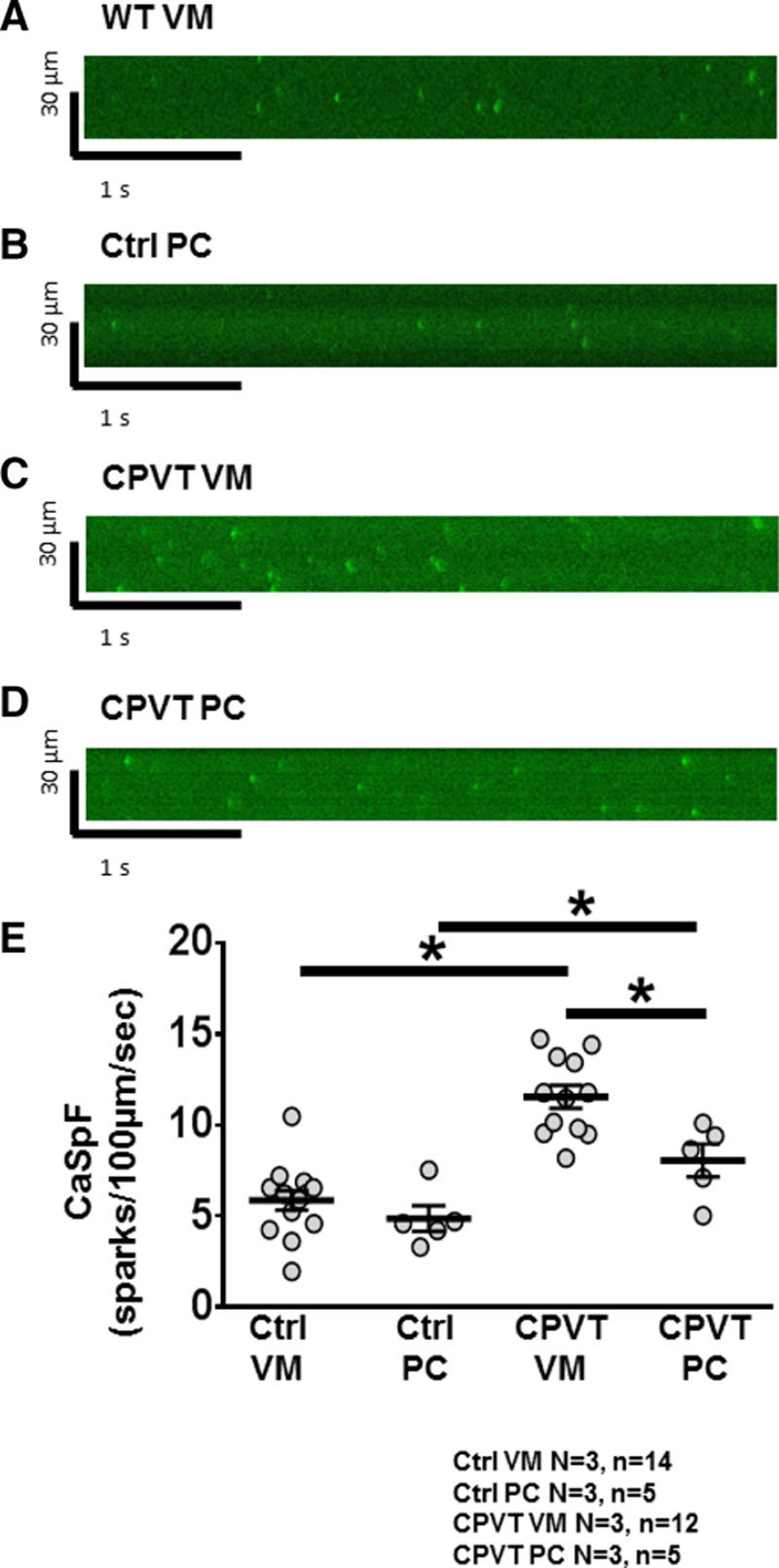
Methods and results: Simultaneous optical mapping of voltage and [Ca(2+)]i in CPVT hearts showed that spontaneous Ca(2+) release preceded pacing-induced triggered activity at subendocardial PCs. On simultaneous current-clamp and Ca(2+) imaging, early and delayed afterdepolarizations trailed spontaneous Ca(2+) release and were more frequent in CPVT PCs than CPVT VMs. As a result of increased activity of mutant ryanodine receptor type 2 channels, sarcoplasmic reticulum Ca(2+) load, measured by caffeine-induced Ca(2+) transients, was lower in CPVT VMs and PCs than respective controls, and sarcoplasmic reticulum fractional release was greater in both CPVT PCs and VMs than respective controls. [Na(+)]i was higher in both control and CPVT PCs than VMs, whereas the density of the Na(+)/Ca(2+) exchanger current was not different between PCs and VMs. Computer simulations using a PC model predicted that the elevated [Na(+)]i of PCs promoted delayed afterdepolarizations, which were always preceded by spontaneous Ca(2+) release events from hyperactive ryanodine receptor type 2 channels. Increasing [Na(+)]i monotonically increased delayed afterdepolarization frequency. Confocal imaging experiments showed that postpacing Ca(2+) spark frequency was highest in intact CPVT PCs, but such differences were reversed on saponin-induced membrane permeabilization, indicating that differences in [Na(+)]i played a central role.
Conclusions: In CPVT mice, the constitutive [Na(+)]i excess of PCs promotes triggered activity and arrhythmogenesis at lower levels of stress than VMs.
Keywords: arrhythmias, cardiac; calcium; calcium signaling; sodium-calcium exchanger.
© 2016 The Authors.
Figures
References
-
- Leenhardt A, Lucet V, Denjoy I, Grau F, Ngoc DD, Coumel P. Catecholaminergic polymorphic ventricular tachycardia in children: a 7-year follow-up of 21 patients. Circulation. 1995;91:1512–1519. - PubMed
-
- Venetucci L, Denegri M, Napolitano C, Priori SG. Inherited calcium channelopathies in the pathophysiology of arrhythmias. Nat Rev Cardiol. 2012;9:561–575. doi: 10.1038/nrcardio.2012.93. - PubMed
-
- Priori SG, Napolitano C, Tiso N, Memmi M, Vignati G, Bloise R, Sorrentino V, Danieli GA. Mutations in the cardiac ryanodine receptor gene (hRyR2) underlie catecholaminergic polymorphic ventricular tachycardia. Circulation. 2001;103:196–200. - PubMed
-
- Lahat H, Pras E, Olender T, Avidan N, Ben-Asher E, Man O, Levy-Nissenbaum E, Khoury A, Lorber A, Goldman B, Lancet D, Eldar M. A missense mutation in a highly conserved region of CASQ2 is associated with autosomal recessive catecholamine-induced polymorphic ventricular tachycardia in Bedouin families from Israel. Am J Hum Genet. 2001;69:1378–1384. doi: 10.1086/324565. - PMC - PubMed
-
- Roux-Buisson N, Cacheux M, Fourest-Lieuvin A, Fauconnier J, Brocard J, Denjoy I, Durand P, Guicheney P, Kyndt F, Leenhardt A, Le Marec H, Lucet V, Mabo P, Probst V, Monnier N, Ray PF, Santoni E, Trémeaux P, Lacampagne A, Fauré J, Lunardi J, Marty I. Absence of triadin, a protein of the calcium release complex, is responsible for cardiac arrhythmia with sudden death in human. Hum Mol Genet. 2012;21:2759–2767. doi: 10.1093/hmg/dds104. - PMC - PubMed
Publication types
MeSH terms
Substances
Grants and funding
LinkOut - more resources
Full Text Sources
Other Literature Sources
Molecular Biology Databases
Research Materials
Miscellaneous
