


The Role of Physical Activity in Preconception, Pregnancy and Postpartum Health
- PMID: 27169984
- PMCID: PMC6986386
- DOI: 10.1055/s-0036-1583530
The Role of Physical Activity in Preconception, Pregnancy and Postpartum Health
Abstract
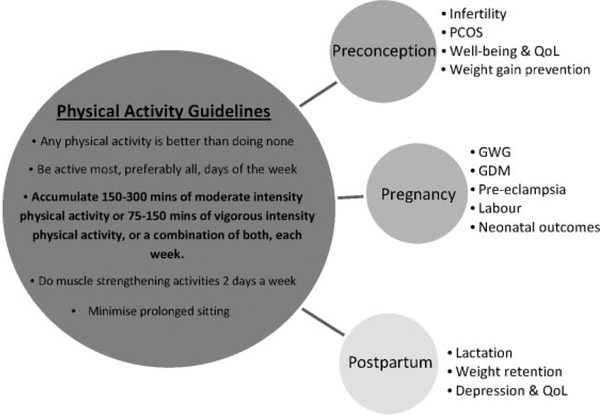
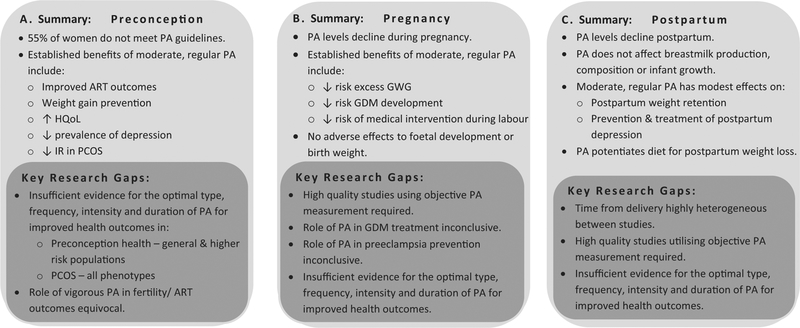
The rise in obesity and associated morbidity is currently one of our greatest public health challenges. Women represent a high risk group for weight gain with associated metabolic, cardiovascular, reproductive and psychological health impacts. Regular physical activity is fundamental for health and well-being with protective benefits across the spectrum of women's health. Preconception, pregnancy and the early postpartum period represent opportune windows to engage women in regular physical activity to optimize health and prevent weight gain with added potential to transfer behavior change more broadly to children and families. This review summarizes the current evidence for the role of physical activity for women in relation to preconception (infertility, assisted reproductive therapy, polycystic ovary syndrome, weight gain prevention and psychological well-being) pregnancy (prevention of excess gestational weight gain, gestational diabetes and preeclampsia as well as labor and neonatal outcomes) and postpartum (lactation and breastfeeding, postpartum weight retention and depression) health. Beneficial outcomes validate the importance of regular physical activity, yet key methodological gaps highlight the need for large, high-quality studies to clarify the optimal type, frequency, duration and intensity of physical activity required for beneficial health outcomes during preconception, pregnancy and postpartum.
Thieme Medical Publishers 333 Seventh Avenue, New York, NY 10001, USA.
Figures
References
-
- Australian Bureau of Statistics. Australian Health Survey: updated results, 2011–2012. ABS cat no 4364055003 Canberra: ABS; Available from: http://wwwabsgovau/ausstats/abs@nsf/Lookup/4364055003Chapter12011-2012 [Accessed 16/11/2015]. 2013.
-
- Australian Institute of Heath and Welfare (AIHW). Who is Overweight? Available From: http://www.aihw.gov.au/who-is-overweight/ [Accessed 23/11/2015]. Canberra: AIHW.
-
- Chu SY, Callaghan WM, Bish CL, D’Angelo D. Gestational weight gain by body mass index among US women delivering live births, 2004–2005: fueling future obesity. Am J Obstet Gynecol 2009; 200(3):271.e1–271.e7 - PubMed
-
- Harrison CL, Teede HJ, Lombard CB. How effective is self-weighing in the setting of a lifestyle intervention to reduce gestational weight gain and postpartum weight retention? Aust N Z J Obstet Gynaecol 2014;54(4):382–385 - PubMed
Publication types
MeSH terms
Grants and funding
LinkOut - more resources
Full Text Sources
Other Literature Sources
Medical
