Review
. 2016 Sep;135(9):1059-70.
doi: 10.1007/s00439-016-1678-2. Epub 2016 May 12.

TALEN gene editing takes aim on HIV

Affiliations
Review

TALEN gene editing takes aim on HIV

Ronald Benjamin et al. Hum Genet. 2016 Sep.

Abstract

Transcription activator-like effector nucleases (TALENs) are one of several types of programmable, engineered nucleases that bind and cleave specific DNA sequences. Cellular machinery repairs the cleaved DNA by introducing indels. In this review, we emphasize the potential, explore progress, and identify challenges in using TALENs as a therapeutic tool to treat HIV infection. TALENs have less off-target editing and can be more effective at tolerating HIV escape mutations than CRISPR/Cas-9. Scientists have explored TALEN-mediated editing of host genes such as viral entry receptors (CCR5 and CXCR4) and a protein involved in proviral integration (LEDGF/p75). Viral targets include the proviral DNA, particularly focused on the long terminal repeats. Major challenges with translating gene therapy from bench to bedside are improving cleavage efficiency and delivery, while minimizing off-target editing, cytotoxicity, and immunogenicity. However, rapid improvements in TALEN technology are enhancing cleavage efficiency and specificity. Therapeutic testing in animal models of HIV infection will help determine whether TALENs are a viable HIV treatment therapy. TALENs or other engineered nucleases could shift the therapeutic paradigm from life-long antiretroviral therapy toward eradication of HIV infection.


Figures
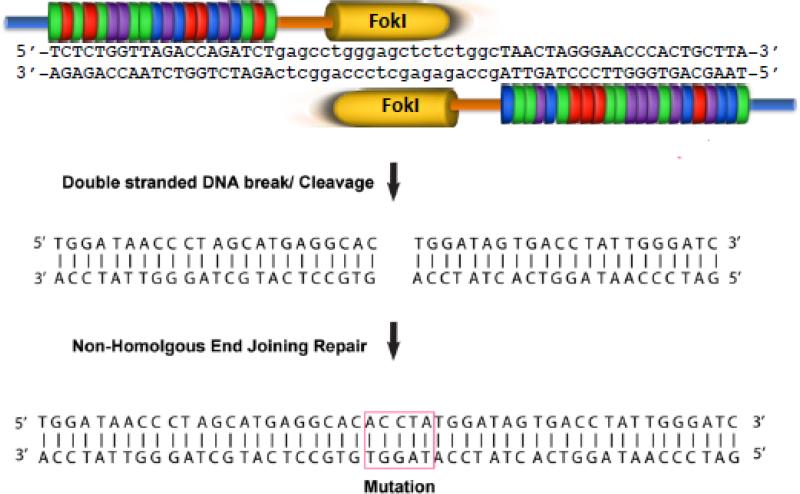
Fig. 1
Fig. 1. TALEN pair targeting HIV proviral DNA
Example of TALEN binding, cleavage and repair of double strand breaks. TALENs bind and cleave a DNA target sequence; the HIV LTR sequence is the example shown (Strong et al. 2015). Endogenous NHEJ repair of double strand breaks introduces indels.
Fig. 2
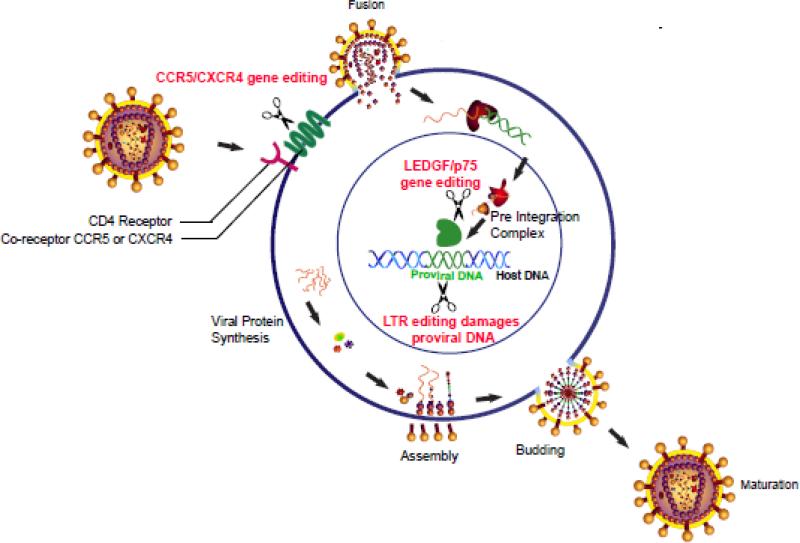
Fig. 2. HIV and host targets of TALEN-based therapies
Cartoon of a T-cell with cell processes labeled and TALEN targets labeled in red font.
Fig. 3
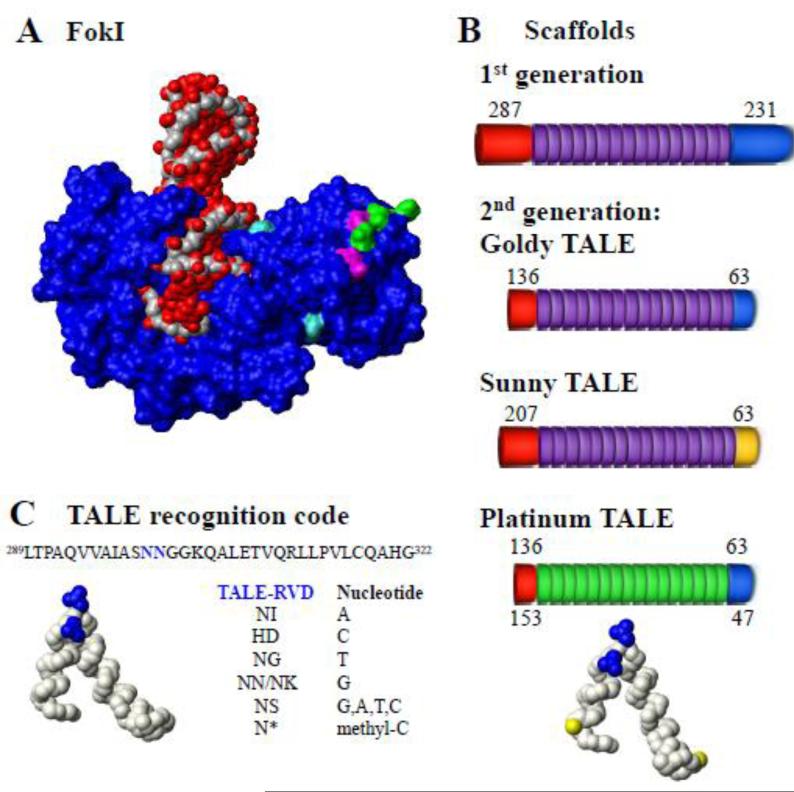
Fig. 3. Location of Sharkey and obligate heterodimer mutations in the FokI endonuclease
A. Structure of complex (Protein Data Bank [PDB] accession = 1FOK) of wild type Flavobacterium okeanokoites FokI protein (Blue) with DNA (red/grey). Mutations are colored: magenta and green indicate the ELD and KKR obligate heterodimers mutations of the FokI, respectively [3]; Turquoise indicates the Sharkey mutations [3]. B. TALE recognition code. Protein sequence and structure of PthXo1 TALE (PDB accession = 3UGM, amino acids 289-322) with positions of the RVD colored blue(Mak et al. 2012). Nucleotide recognition code for substituted RVDs is shown; * indicated deletion. C. Scaffolds used to build TALENs. Lengths of N- and C-terminal domains are shown with TALE repeats. Red indicates the C-terminus; purple indicates 1st generation TALE repeats and green indicates Platinum TALE repeats; blue indicates 1st generation C-terminal domain; and yellow indicates mutated Sunny TALE C-terminal domain. PthXo1TALE structure (amino acids 289-322) with positions of the RVD (blue) and substitutions in the repeat scaffold at positions 4 and 35 (yellow) shown for Platinum TALEs (PDB accession = 3UGM). Structure figures were created with MOLMOL 2K.1 (Koradi et al. 1996).

References

    1. Agosto LM, Yu JJ, Liszewski MK, et al. The CXCR4-Tropic Human Immunodeficiency Virus Envelope Promotes More-Efficient Gene Delivery to Resting CD4+ T Cells than the Vesicular Stomatitis Virus Glycoprotein G Envelope. J Virol. 2009;83:8153–8162. doi: 10.1128/JVI.00220-09. - PMC - PubMed
    1. Akkina R, Berges BK, Palmer BE, et al. Humanized Rag1−/− γc−/− mice support multilineage hematopoiesis and are susceptible to HIV-1 infection via systemic and vaginal routes. PLoS ONE. 2011;6:e20169. doi: 10.1371/journal.pone.0020169. - PMC - PubMed
    1. Aldrovandi GM, Feuer G, Gao L, et al. The SCID-hu mouse as a model for HIV-1 infection. Nature. 1993;363:732–736. doi: 10.1038/363732a0. - PubMed
    1. Allers K, Schneider T. CCR5Δ32 mutation and HIV infection: basis for curative HIV therapy. Current Opinion in Virology. 2015;14:24–29. doi: 10.1016/j.coviro.2015.06.007. - PubMed
    1. Ayuso E. Manufacturing of recombinant adeno-associated viral vectors: new technologies are welcome. Molecular Therapy — Methods & Clinical Development. 2016;3:15049. doi: 10.1038/mtm.2015.49. - PMC - PubMed

Publication types

Substances