Smartphone-Based Real-time Assessment of Swallowing Ability From the Swallowing Sound
- PMID: 27170905
- PMCID: PMC4848072
- DOI: 10.1109/JTEHM.2015.2500562
Smartphone-Based Real-time Assessment of Swallowing Ability From the Swallowing Sound
Abstract
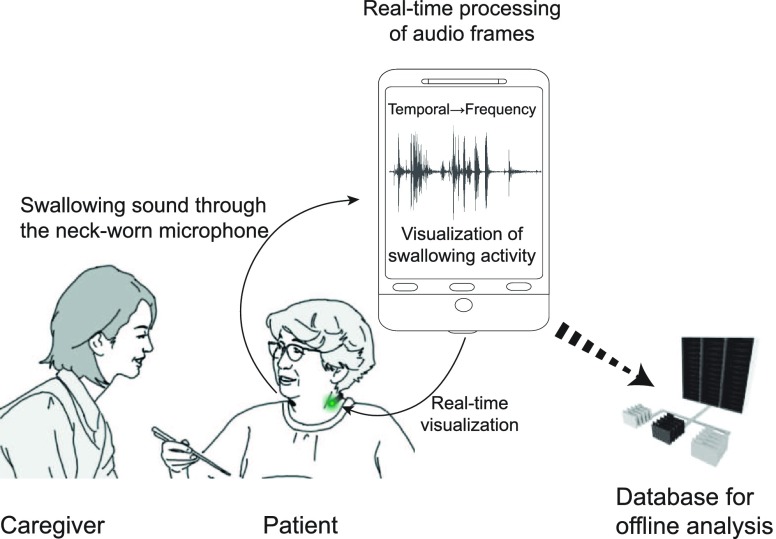
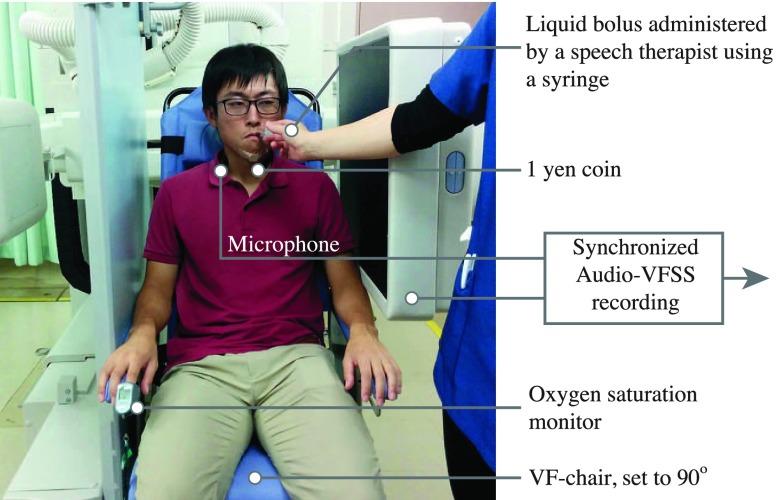
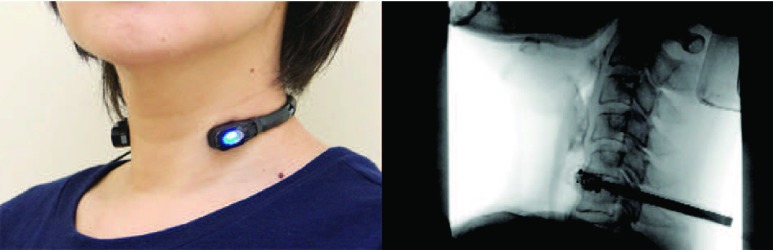
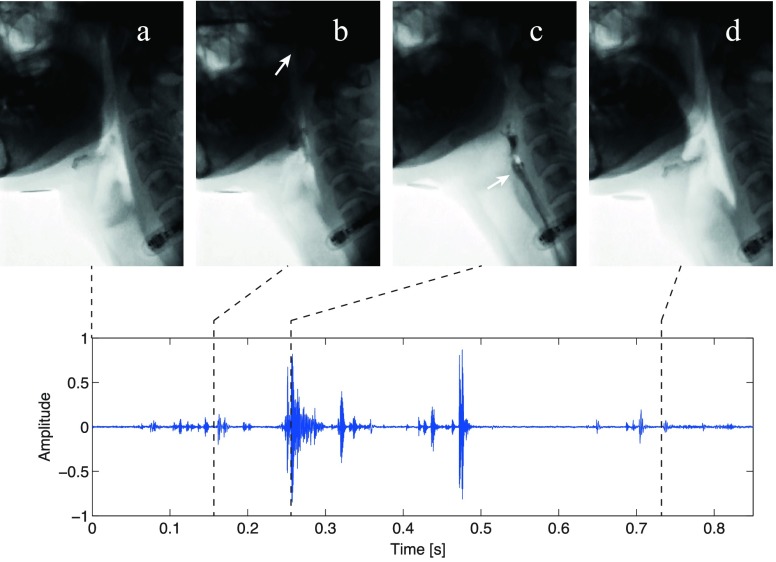
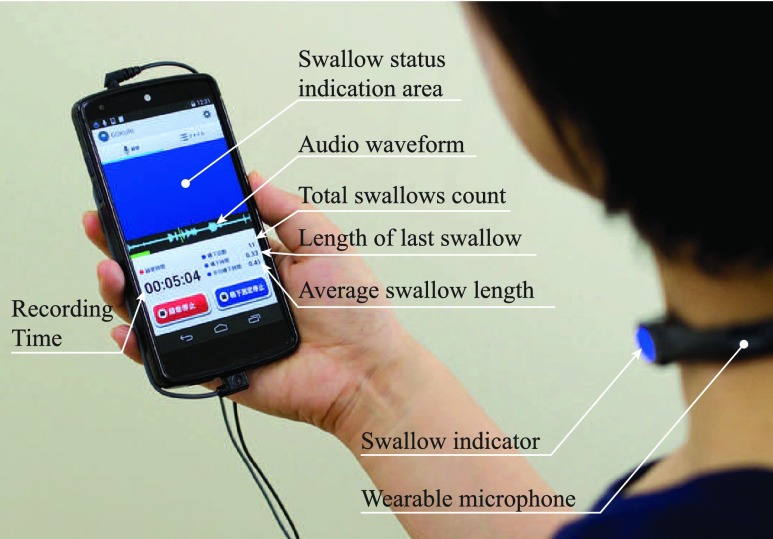
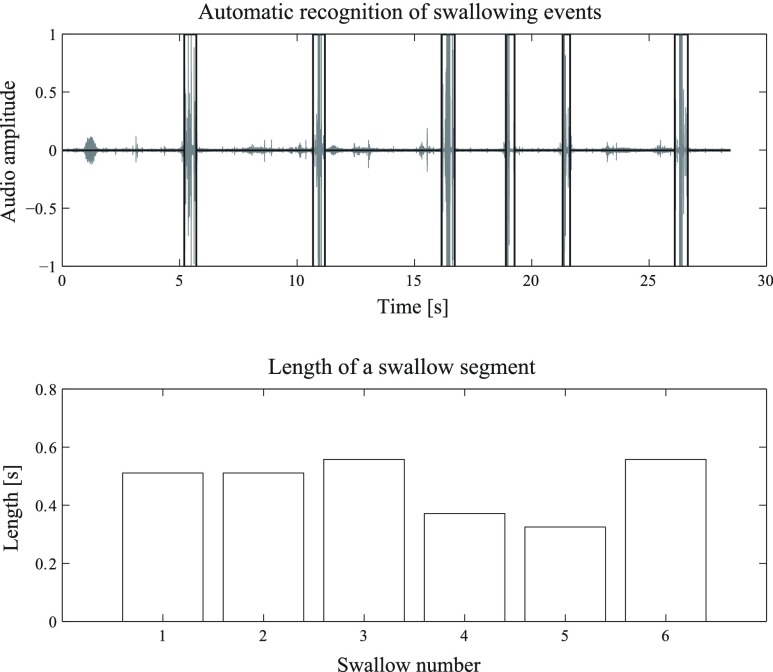
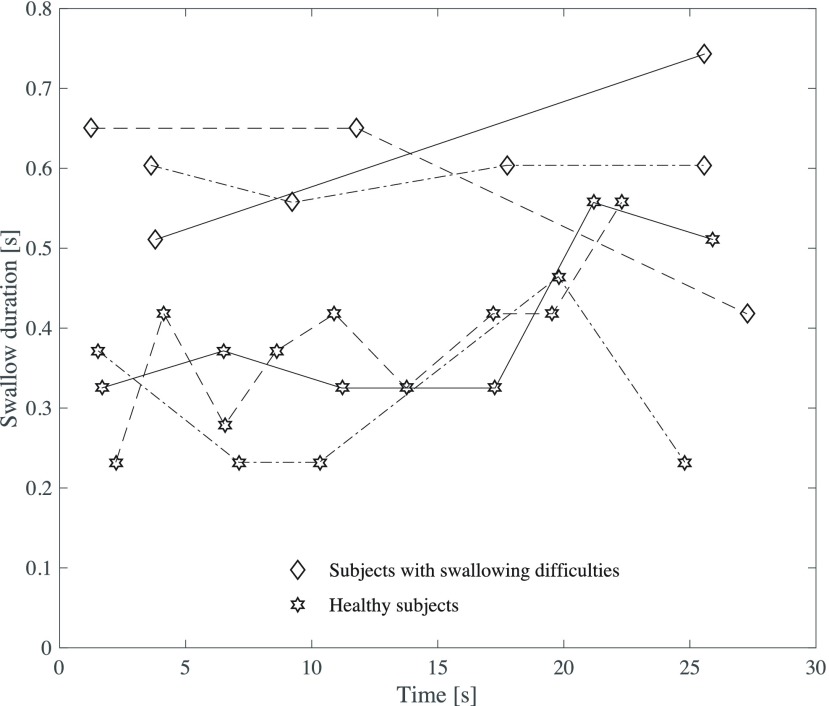
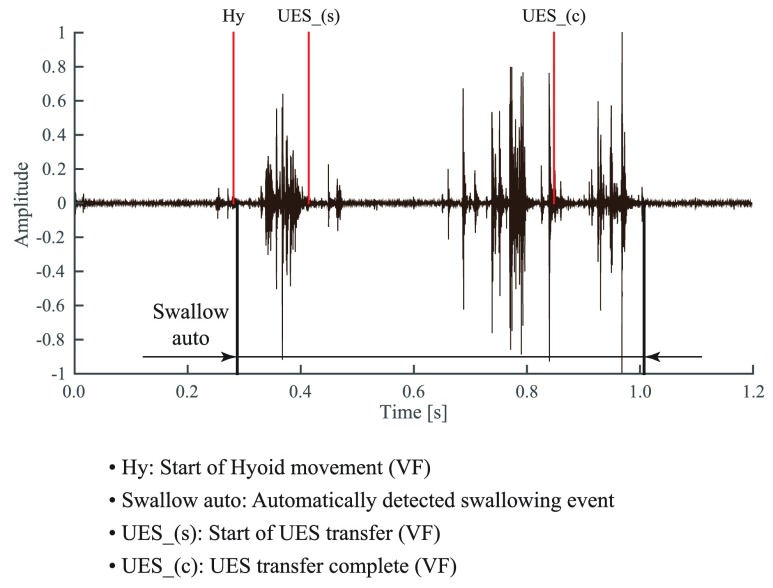
Dysphagia can cause serious challenges to both physical and mental health. Aspiration due to dysphagia is a major health risk that could cause pneumonia and even death. The videofluoroscopic swallow study (VFSS), which is considered the gold standard for the diagnosis of dysphagia, is not widely available, expensive and causes exposure to radiation. The screening tests used for dysphagia need to be carried out by trained staff, and the evaluations are usually non-quantifiable. This paper investigates the development of the Swallowscope, a smartphone-based device and a feasible real-time swallowing sound-processing algorithm for the automatic screening, quantitative evaluation, and the visualisation of swallowing ability. The device can be used during activities of daily life with minimal intervention, making it potentially more capable of capturing aspirations and risky swallow patterns through the continuous monitoring. It also consists of a cloud-based system for the server-side analyzing and automatic sharing of the swallowing sound. The real-time algorithm we developed for the detection of dry and water swallows is based on a template matching approach. We analyzed the wavelet transformation-based spectral characteristics and the temporal characteristics of simultaneous synchronised VFSS and swallowing sound recordings of 25% barium mixed 3-ml water swallows of 70 subjects and the dry or saliva swallowing sound of 15 healthy subjects to establish the parameters of the template. With this algorithm, we achieved an overall detection accuracy of 79.3% (standard error: 4.2%) for the 92 water swallows; and a precision of 83.7% (range: 66.6%-100%) and a recall of 93.9% (range: 72.7%-100%) for the 71 episodes of dry swallows.
Keywords: Dysphagia; Swallowing sound; bedside monitoring; cervical auscultation; mHealth; realtime monitoring; screening; videofluoroscopy.
Figures
References
-
- Jones B., Ed., Normal and Abnormal Swallowing: Imaging in Diagnosis and Therapy. New York, NY, USA: Springer-Verlag, 2003, ch. 2.
-
- (2011). “Vital statistics in Japan—The latest trends,” Dept. Statist. Inf, Ministry of Health, Labour and Welfare, Tokyo, Japan, Tech. Rep., 2011. [Online]. Available: http://www.mhlw.go.jp/english/database/report.html
-
- Leder S. B., Suiter D. M., Warner H. L., Acton L. M., and Swainson B. A., “Success of recommending oral diets in acute stroke patients based on passing a 90-cc water swallow challenge protocol,” Topics Stroke Rehabil., vol. 19, no. , pp. 40–44, 2012. - PubMed
-
- Horiguchi S. and Suzuki Y., “Screening tests in evaluating swallowing function,” Jpn. Med. Assoc. J., vol. 54, no. 1, pp. 31–34, 2011.
-
- Oguchi K., Saitoh E., Mizuno M., Baba M., Okui M., and Suzuki M., “The repetitive saliva swallowing test (RSST) as a screening test of functional dysphagia (1) normal values of RSST,” (in Japanese), Jpn. J. Rehabil. Med., vol. 37, no. 6, pp. 375–382, 2000.