Review
. 2016 May 11;19(5):641-50.
doi: 10.1016/j.chom.2016.04.011.

Transcriptional Regulation of Pattern-Triggered Immunity in Plants

Affiliations
Review

Transcriptional Regulation of Pattern-Triggered Immunity in Plants

Bo Li et al. Cell Host Microbe. .

Abstract

Perception of microbe-associated molecular patterns (MAMPs) by cell-surface-resident pattern recognition receptors (PRRs) induces rapid, robust, and selective transcriptional reprogramming, which is central for launching effective pattern-triggered immunity (PTI) in plants. Signal relay from PRR complexes to the nuclear transcriptional machinery via intracellular kinase cascades rapidly activates primary immune response genes. The coordinated action of gene-specific transcription factors and the general transcriptional machinery contribute to the selectivity of immune gene activation. In addition, PRR complexes and signaling components are often transcriptionally upregulated upon MAMP perception to ensure the robustness and sustainability of PTI outputs. In this review, we discuss recent advances in deciphering the signaling pathways and regulatory mechanisms that coordinately lead to timely and accurate MAMP-induced gene expression in plants.

Keywords: Microbe-associated molecular patterns (MAMPs); Transcriptional reprogramming; general transcriptional machinery; pattern-triggered immunity (PTI); transcription factors.


Conflict of interest statement

The authors have declared no conflict of interests.

Figures
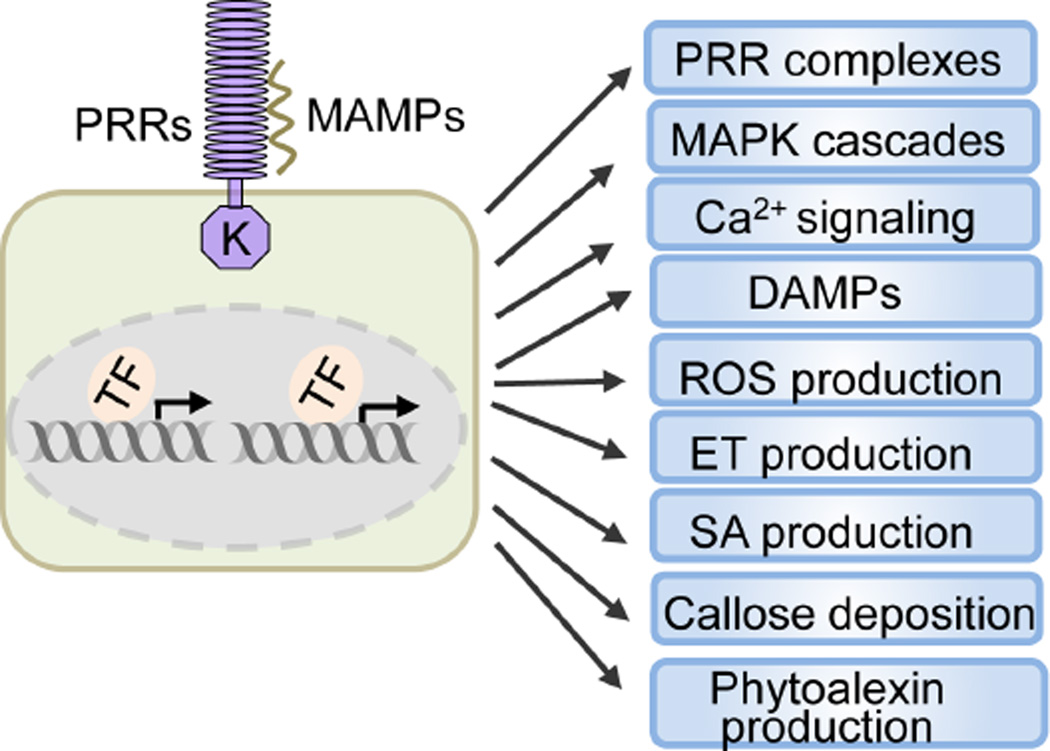
Figure 1
Figure 1. Plant PTI signaling and outputs are regulated by transcription
Perception of different MAMPs by the cognate PRRs controls various PTI responses via transcriptional regulation. TF: transcription factor.
Figure 2
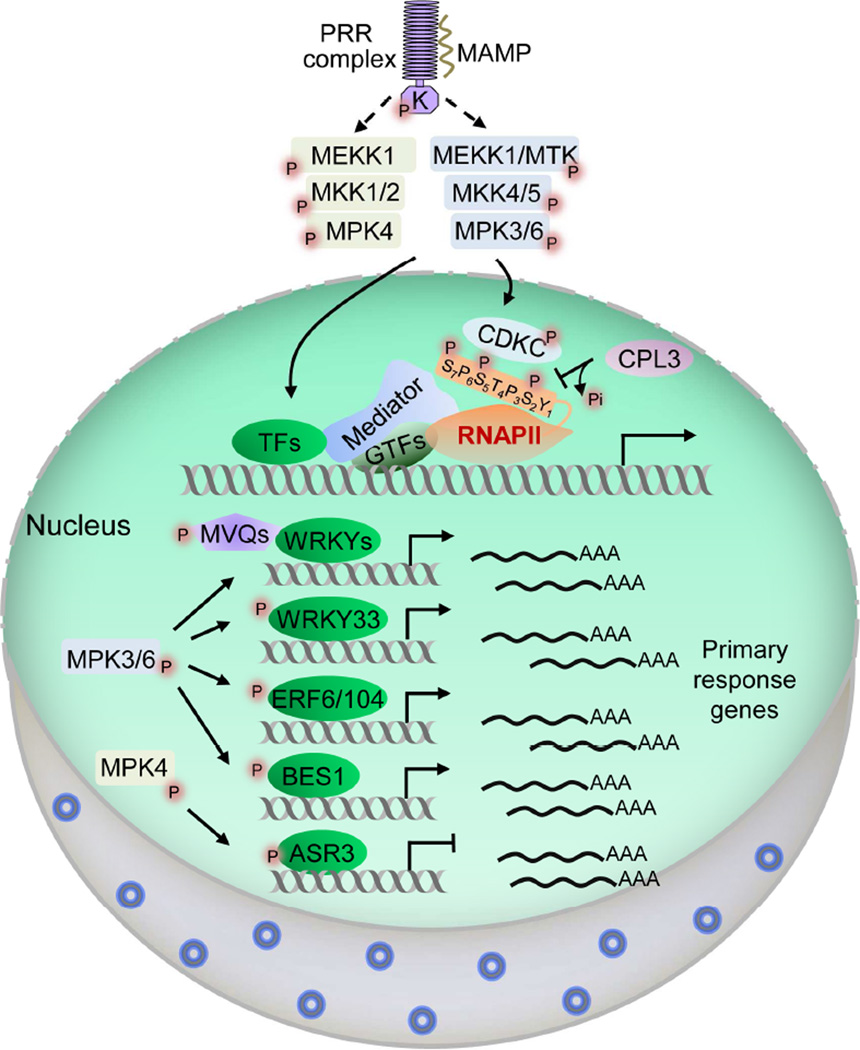
Figure 2. Phosphorylation relays control nuclear transcription dynamics in plant PTI
Transcription of eukaryotic mRNA is controlled by the concerted action of RNAPII, general transcription factors (GTFs), Mediator, gene-specific transcription factors (TFs) and other transcription regulators, many of which are regulated by MAMP-activated MAPK cascades. Perception of MAMPs activates two MAPK cascades: MEKK1/MTK-MKK4/MKK5-MPK3/MPK6 and MEKK1-MKK1/MKK2-MPK4. MPK3/MPK6 directly phosphorylate CDKCs, which in turn phosphorylate CTD of RNAPII. CTD phosphorylation is counter-regulated by the CPL3 phosphatase. MAPKs also phosphorylate individual TFs to regulate their activities or stability. For instance, MPK3/MPK6 phosphorylate WRKY33, ERF6/ERF104 and BES1, whereas MPK4 phosphorylates ASR3 to control the expression of a subset of MAMP responsive genes. In some cases, MPK3/MPK6 directly phosphorylate MVQs, which interact with different WRKYs. Individual Mediator subunits interact with different pathway-specific TFs and contribute to the selectivity of immune gene activation. P indicates phosphorylation modification.
Figure 3
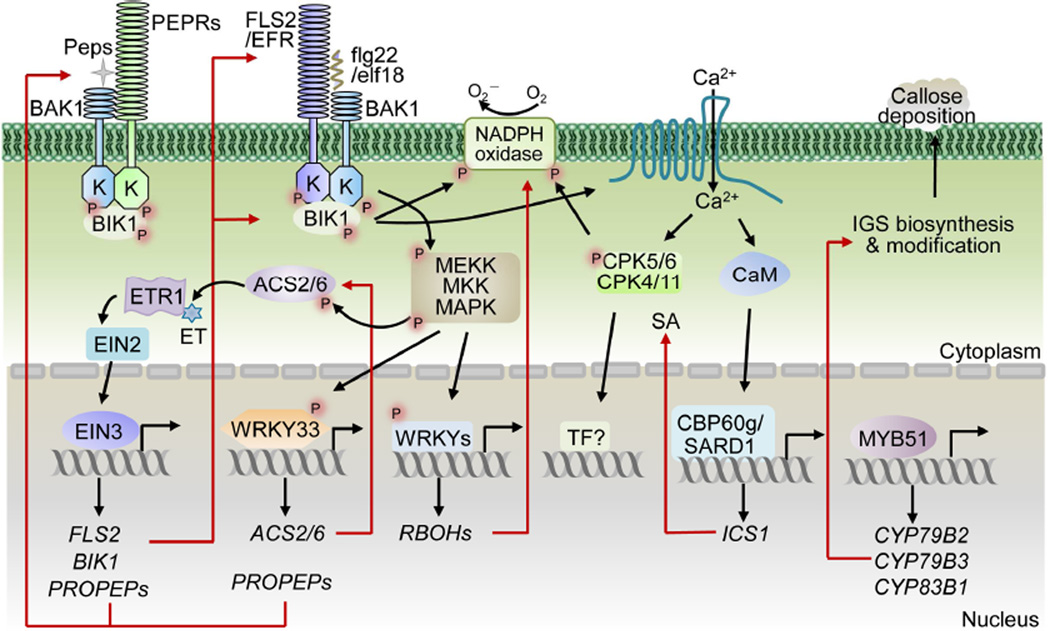
Figure 3. Transcriptional control of plant PTI signaling components and outputs
MAMPs, flg22 and elf18, are perceived by the cognate PRRs, FLS2 and EFR, and induce PRR heterodimerization with co-receptor BAK1 family RLKs to phosphorylate and activate BIK1 family RLCKs. MAPKs and Ca2+ signaling are two convergent points downstream of multiple PRRs. MAPKs can phosphorylate some WRKYs, which control the expression of RBOHs encoding NADPH oxidase for ROS production. MPK3/MPK6 control ET production through stabilization of ACS2/ACS6 by phosphorylation and transcriptional activation of ACS2/ACS6 via phosphorylated WRKY33. WRKY33 also regulates expression of PROPEPs to amplify the danger signals via Pep-PEPR recognition. Perception of ET by ETR1 activates the TF EIN3 via EIN2. EIN3 controls the expression of FLS2 and BIK1. ET is also important for the MAMP-induced expression of PROPEPs. MYB51 encodes a TF important for callose deposition via regulating genes for precursor IGS biosynthesis. Downstream of Ca2+ signaling, several CaM-binding protein CBP60 family members regulate MAMP-induced SA accumulation via binding to the SA biosynthetic gene ICS1 promoter. Red lines and arrows indicate the transcriptional regulation of PTI responses.

References

    1. Adachi H, Nakano T, Miyagawa N, Ishihama N, Yoshioka M, Katou Y, Yaeno T, Shirasu K, Yoshioka H. WRKY Transcription Factors Phosphorylated by MAPK Regulate a Plant Immune NADPH Oxidase in Nicotiana benthamiana. The Plant cell. 2015;27:2645–2663. - PMC - PubMed
    1. Asai T, Tena G, Plotnikova J, Willmann MR, Chiu WL, Gomez-Gomez L, Boller T, Ausubel FM, Sheen J. MAP kinase signalling cascade in Arabidopsis innate immunity. Nature. 2002;415:977–983. - PubMed
    1. Bang W, Kim S, Ueda A, Vikram M, Yun D, Bressan RA, Hasegawa PM, Bahk J, Koiwa H. Arabidopsis carboxyl-terminal domain phosphatase-like isoforms share common catalytic and interaction domains but have distinct in planta functions. Plant physiology. 2006;142:586–594. - PMC - PubMed
    1. Bartels S, Lori M, Mbengue M, van Verk M, Klauser D, Hander T, Boni R, Robatzek S, Boller T. The family of Peps and their precursors in Arabidopsis: differential expression and localization but similar induction of pattern-triggered immune responses. J Exp Bot. 2013;64:5309–5321. - PubMed
    1. Bethke G, Pecher P, Eschen-Lippold L, Tsuda K, Katagiri F, Glazebrook J, Scheel D, Lee J. Activation of the Arabidopsis thaliana mitogen-activated protein kinase MPK11 by the flagellin-derived elicitor peptide, flg22. Mol Plant Microbe Interact. 2012;25:471–480. - PubMed

MeSH terms

Substances

LinkOut - more resources