Guarding chromosomes from oxidative DNA damage to the very end
- PMID: 27174872
- PMCID: PMC4930116
- DOI: 10.1093/abbs/gmw040
Guarding chromosomes from oxidative DNA damage to the very end
Abstract
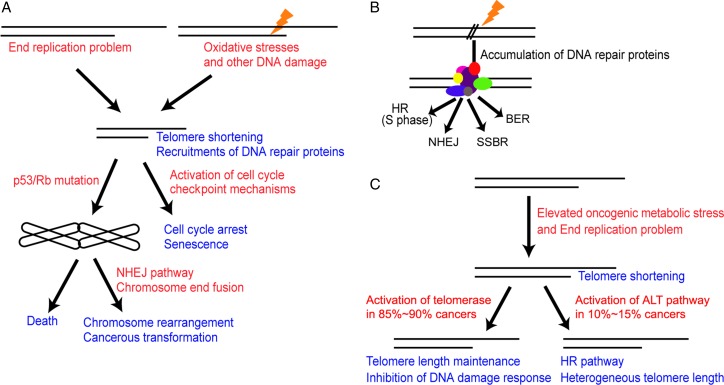
The ends of each chromosome are capped by the telomere assembly to protect chromosomal integrity from telomere attrition and DNA damage. In response to DNA damage, DNA repair factors are enriched at damage sites by a sophisticated signaling and recruitment cascade. However, DNA damage response at telomeres is different from non-telomeric region of genomic DNA due to specialized sequences and structures of the telomeres. In the course of normal DNA replication or DNA damage repair, both the telomere shelterin protein complex and the condensed telomeric chromatin structure in mammalian cells are modified to protect telomeres from exposing free DNA ends which are subject to both telemere shortening and chromosome end fusion. Initiation of either homologous recombination or non-homologous end joint repair at telomeres requires disassembling and/or post-translational modifications of the shelterin complex and telomeric chromatin. In addition, cancer cells utilize distinct mechanisms to maintain telomere length and cell survival upon damage. In this review, we summarize current studies that focus on telomere end protection and telomere DNA repair using different methodologies to model telomere DNA damage and disruption. These include genetic ablation of sheltering proteins, targeting endonuclease to telomeres, and delivering oxidative damage directly. These different approaches, when combined, offer better understanding of the mechanistic differences in DNA damage response between telomeric and genomic DNA, which will provide new hope to identify potential cancer therapeutic targets to curtail cancer cell proliferation via induction of telomere dysfunctions.
Keywords: KillerRed; oxidative DNA damage; recombination; shelterin; telomere.
© The Author 2016. Published by Oxford University Press on behalf of the Institute of Biochemistry and Cell Biology, Shanghai Institutes for Biological Sciences, Chinese Academy of Sciences. All rights reserved. For permissions, please e-mail: journals.permissions@oup.com.
Figures
References
-
- von Zglinicki T. Oxidative stress shortens telomeres. Trends Biochem Sci 2002, 27: 339–344. - PubMed
-
- Henderson E, Hardin CC, Walk SK, Tinoco I Jr, Blackburn EH. Telomeric DNA oligonucleotides form novel intramolecular structures containing guanine-guanine base pairs. Cell 1987, 51: 899–908. - PubMed
-
- de Lange T. Shelterin: the protein complex that shapes and safeguards human telomeres. Genes Dev 2005, 19: 2100–2110. - PubMed
-
- Songyang Z, Liu D. Inside the mammalian telomere interactome: regulation and regulatory activities of telomeres. Crit Rev Eukary Gene Expr 2006, 16: 103–118. - PubMed
Publication types
MeSH terms
Substances
Grants and funding
LinkOut - more resources
Full Text Sources
Other Literature Sources