Pathogenic role of the gut microbiota in gastrointestinal diseases
- PMID: 27175113
- PMCID: PMC4863046
- DOI: 10.5217/ir.2016.14.2.127
Pathogenic role of the gut microbiota in gastrointestinal diseases
Abstract
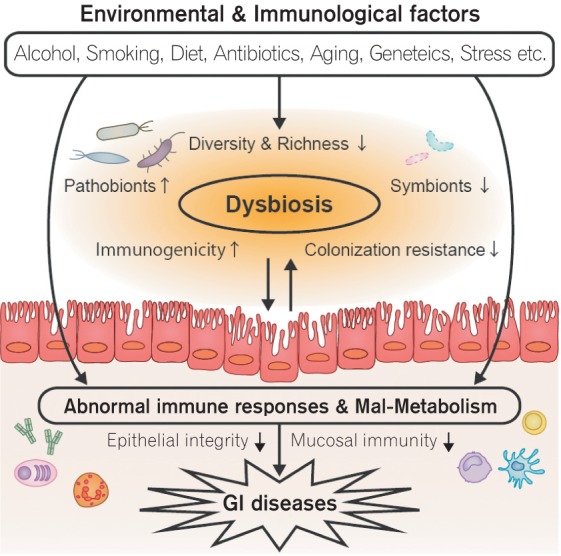
The gastrointestinal (GI) tract is colonized by a dense community of commensal microorganisms referred to as the gut microbiota. The gut microbiota and the host have co-evolved, and they engage in a myriad of immunogenic and metabolic interactions. The gut microbiota contributes to the maintenance of host health. However, when healthy microbial structure is perturbed, a condition termed dysbiosis, the altered gut microbiota can trigger the development of various GI diseases including inflammatory bowel disease, colon cancer, celiac disease, and irritable bowel syndrome. There is a growing body of evidence suggesting that multiple intrinsic and extrinsic factors, such as genetic variations, diet, stress, and medication, can dramatically affect the balance of the gut microbiota. Therefore, these factors regulate the development and progression of GI diseases by inducing dysbiosis. Herein, we will review the recent advances in the field, focusing on the mechanisms through which intrinsic and extrinsic factors induce dysbiosis and the role a dysbiotic microbiota plays in the pathogenesis of GI diseases.
Keywords: Dysbiosis; Gastrointestinal diseases; Gastrointestinal microbiome; Gut microbiota; Pathobiont.
Conflict of interest statement
Figures
References
-
- Kamada N, Seo SU, Chen GY, Núñez G. Role of the gut microbiota in immunity and inflammatory disease. Nat Rev Immunol. 2013;13:321–335. - PubMed
Publication types
Grants and funding
LinkOut - more resources
Full Text Sources
Other Literature Sources