. 2016 Jun 7;7(23):33581-94.
doi: 10.18632/oncotarget.9254.

Vaccine efficacy and T helper cell differentiation change with aging

Affiliations

Vaccine efficacy and T helper cell differentiation change with aging

Julie S Lefebvre et al. Oncotarget. .

Abstract

Influenza and pneumonia are leading causes of death in elderly populations. With age, there is an increased inflammatory response and slower viral clearance during influenza infection which increases the risk of extended illness and mortality. Here we employ a preclinical murine model of influenza infection to examine the protective capacity of vaccination with influenza nucleoprotein (NP). While NP vaccination reduces influenza-induced lung inflammation in young mice, aged mice do not show this reduction, but are protected from influenza-induced mortality. Aged mice do make a significant amount of NP-specific IgG and adoptive transfer experiments show that NP antibody can protect from death but cannot reduce lung inflammation. Furthermore, young but not aged vaccinated mice generate significant numbers of NP-specific T cells following subsequent infection and few of these T cells are found in aged lungs early during infection. Importantly, aged CD4 T cells have a propensity to differentiate towards a T follicular helper (Tfh) phenotype rather than a T helper 1 (Th1) phenotype that predominates in the young. Since Th1 cells are important in viral clearance, reduced Th1 differentiation in the aged is critical and could account for some or all of the age-related differences in vaccine responses and infection resolution.

Keywords: Gerotarget; Th subsets; aging; antibody; influenza; influenza vaccination.


Conflict of interest statement

CONFLICTS OF INTERESTS The authors have no competing interests in relation to the work described in this manuscript.

Figures
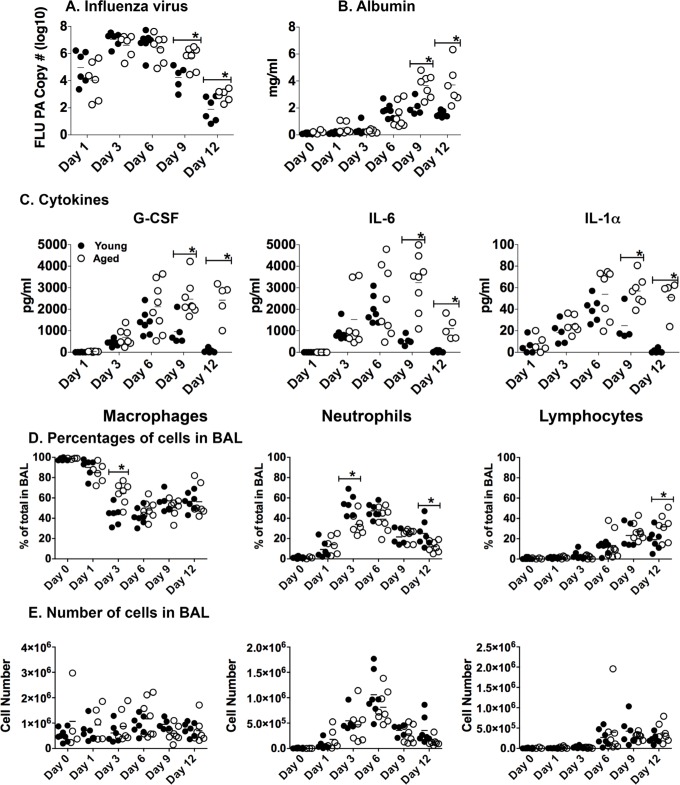
Figure 1
Figure 1. Lingering inflammatory cytokines and lung damage in aged lungs during influenza infection
Young (2-3 mos.) and aged (19-22 mos.) C57BL/6 mice were infected intranasally with 400 EID50 of PR8 influenza. On 1, 3, 6, 9 and 12 dpi, BAL fluid and cells and lung tissue was harvested; mRNA was isolated from lung tissue. A. The total number of copies of influenza PA was determined by real-time PCR of mRNA from lung tissue. B. Albumin in the BAL was determined by ELISA and C. Cytokines in the BAL were determined by multiplex analysis. The percentage D. and number E. of macrophages, neutrophils and lymphocytes in the BAL was determined by differential staining. For all experiments, data shown is combined from 2 independent experiments and each symbol represents a single animal; line shows the mean. *p < 0.05 by 2 way ANOVA with Bonferroni posthoc correction.
Figure 2
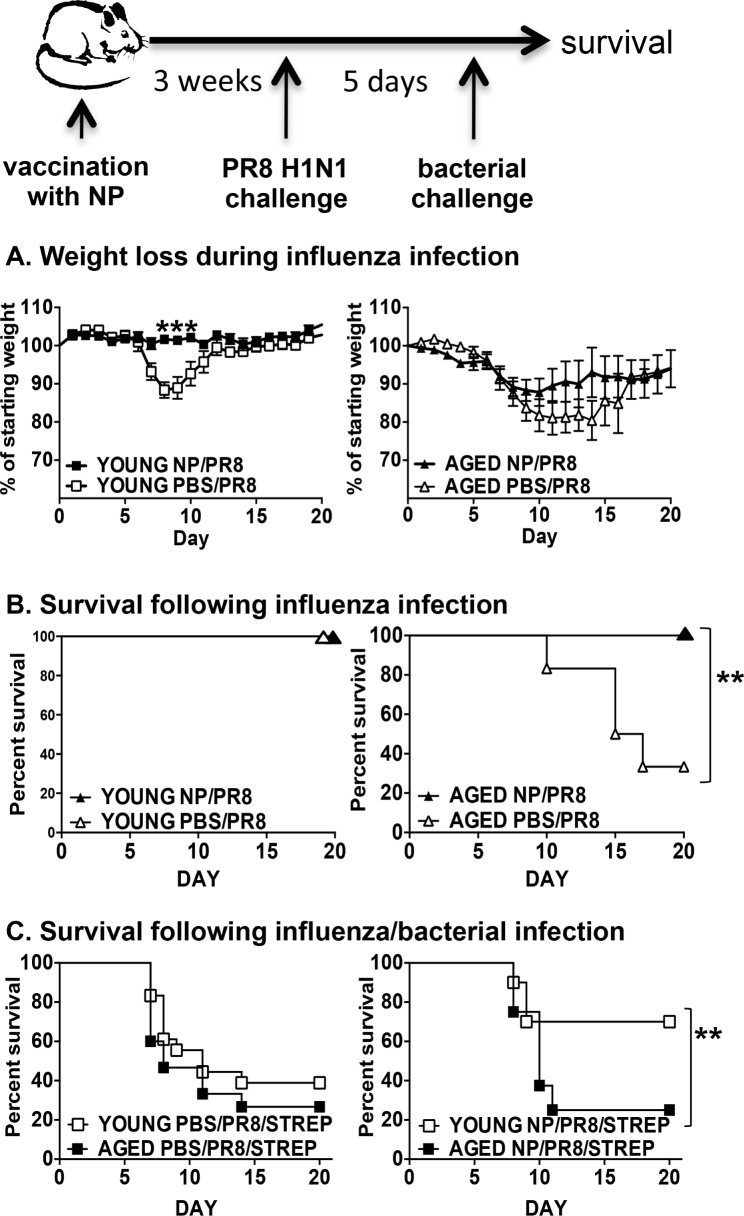
Figure 2. Protection from influenza and secondary bacterial infection by NP vaccination
Young (2-3 mos.) and aged (19-22 mos.) C57BL/6 mice were vaccinated with NP or PBS on days −31 and -21. On day 0, they were infected intranasally with 400 EID50 of PR8 influenza. A. Weight loss and B. survival were monitored following infection. C. On day 0, NP (right graph) or PBS (left graph) vaccinated young and aged mice were infected intranasally with 400 EID50 of PR8 influenza and then 5 dpi, infected with 250 CFU of Streptococcus pneumoniae and survival was monitored. Data shown is combined from 2 independent experiments with a total of 8 to 10 mice per group. *p < 0.05 by Student's t test comparing vaccinated and control groups; **p < 0.05 by Log rank test.
Figure 3
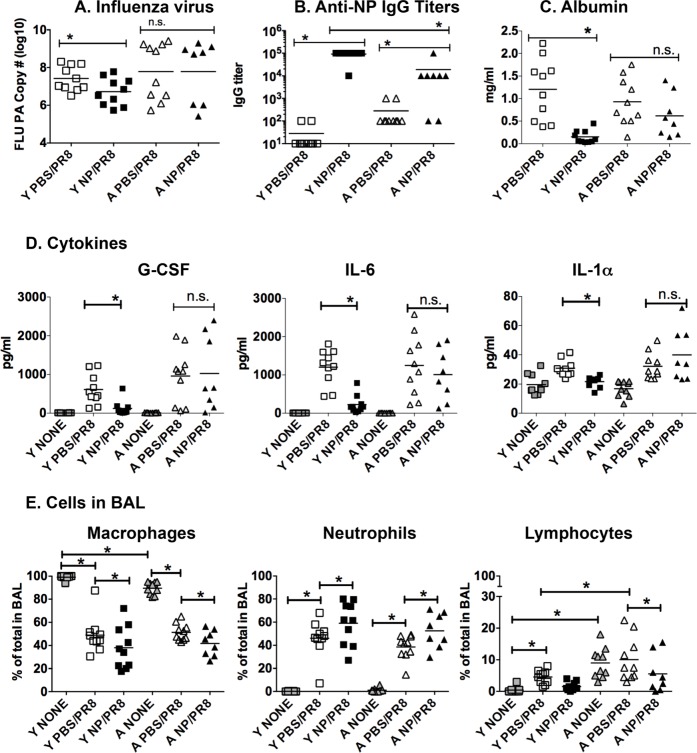
Figure 3. NP vaccination reduces lung inflammatory mediators and damage in influenza infected young but not aged mice
Young [Y] (2-3 mos.) and aged [A] (19-22 mos.) C57BL/6 mice were vaccinated with NP or PBS on days -31 and -21. On day 0, they were infected intranasally with 400 EID50 of PR8 influenza. On 5 dpi, A. lungs were harvested and mRNA was isolated to quantitate influenza PA by real-time PCR. B. Anti-NP IgG titers in serum were determined by ELISA. Albumin C. and cytokines D. in the BAL were determined by ELISA and multiplex analysis, respectively. E. The percentage of macrophages, neutrophils and lymphocytes in the BAL was determined by differential staining. Groups labeled “none” represent BAL harvested from young or aged naive mice. Data shown is combined from 2 independent experiments and each symbol represents a single animal; line shows the mean. *p < 0.05 by 2 way ANOVA for A, B, C or 3 way ANOVA for D and E with Bonferroni posthoc correction.
Figure 4
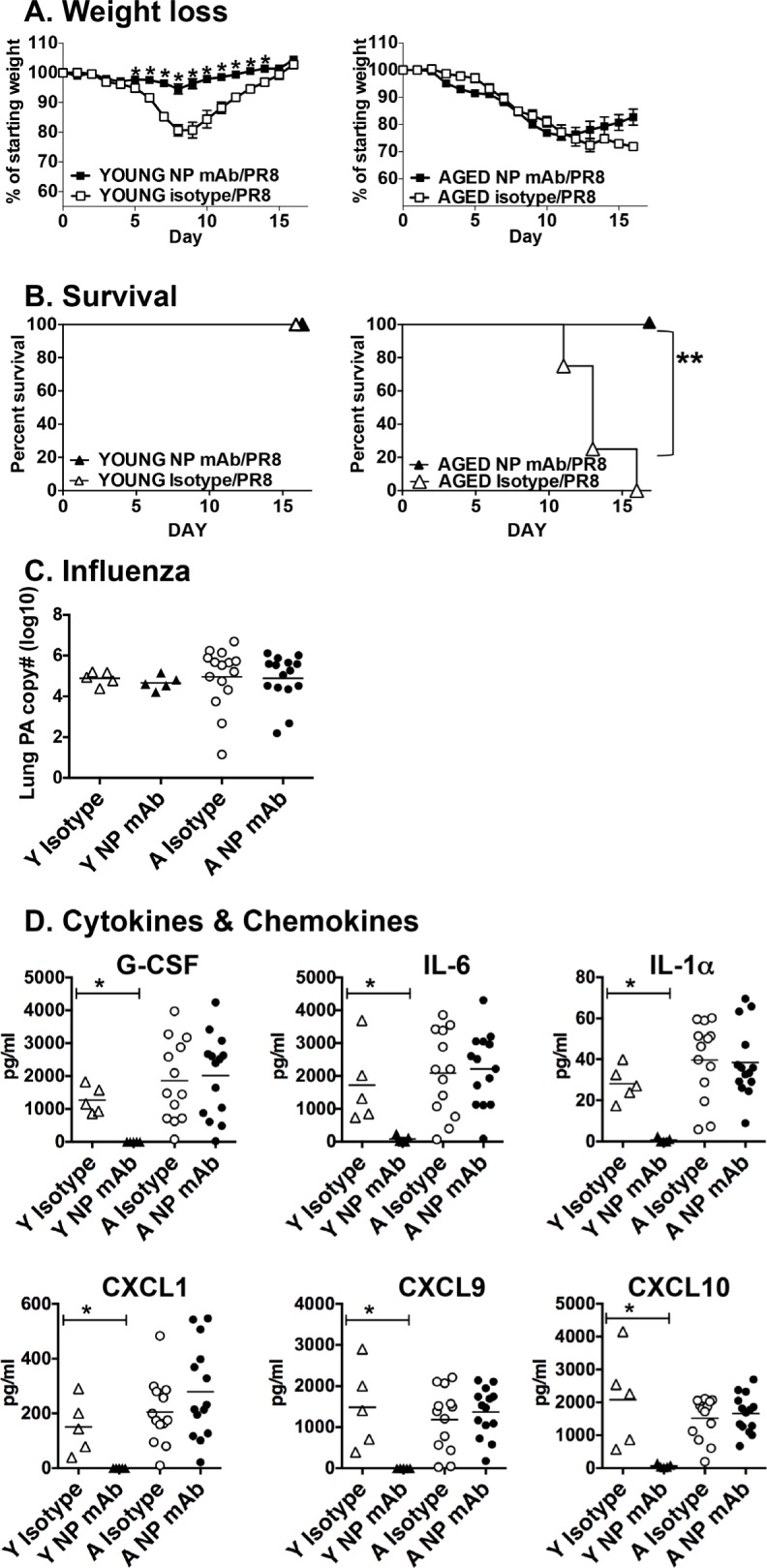
Figure 4. Impact of NP mAb transfer on influenza infection
Young (2-3 mos.) and aged (19-22 mos.) C57BL/6 mice were administered anti-NP mAb or isotype control mAb (350 ug i.p.) on days -1 and day 0. On day 0, they were infected intranasally with 400 EID50 of PR8 influenza. A. Weight loss and B. survival were monitored following infection. C. On 5 dpi infection, mRNA was prepared from lung tissue from young and aged mice to quantitate influenza PA by real-time PCR. D. BAL was also harvested from young and aged mice on day 5 and cytokine and chemokine levels were determined by multiplex assay. *p < 0.05 by Student's t test comparing vaccinated and control groups; **p < 0.05 by Log rank test.
Figure 5
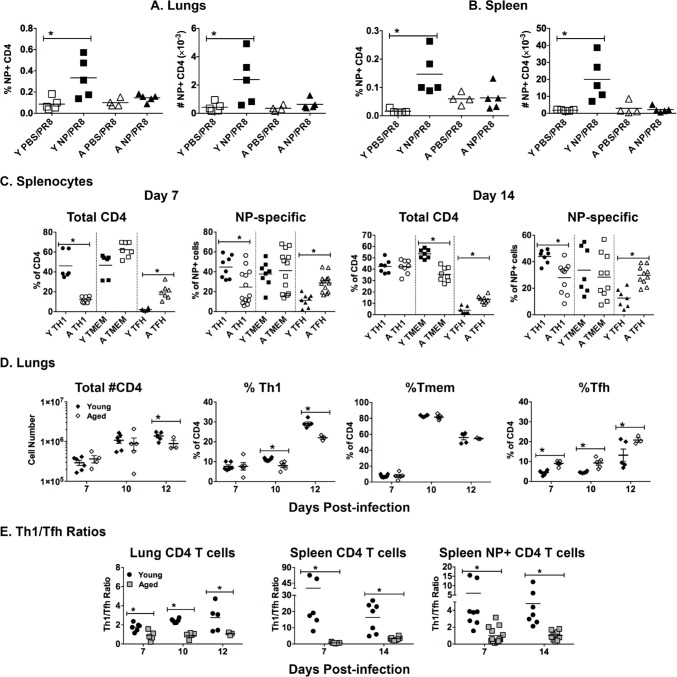
Figure 5. Age-related differences in T cells during influenza infection
Young [Y] (2-3 mos.) and aged [A] (19-22 mos.) C57BL/6 mice were vaccinated with NP or PBS on days -31 and -21 and then infected with intranasally with 400 EID50 of PR8 influenza on day 0. On 5 dpi lungs and spleens were harvested. NP-specific CD4 T cells in the A. lungs and B. spleen were enumerated with a NP311-325/IAb MHC Class II tetramer. C. On day 0, young and aged unvaccinated mice were infected intranasally with 400 EID50 of PR8 influenza. On 7 and 14 dpi, the CD4 T cell population was further broken down phenotypically into subsets based on PSGL1 (CD162) and Ly6C expression to indicate T helper type 1 (Th1, PSGL1hi Ly6Chi), T memory (Tmem, PSGL1hi Ly6Clo) and T follicular helper (Tfh, PSGL1lo Ly6Clo) according to the scheme developed by Marshall and colleagues [38]. The percent of each subset within the total CD4 and NP-specific CD4 T cell populations is shown. D. On day 0, young and aged unvaccinated mice were infected intranasally with 400 EID50 of PR8 influenza. On 7, 10 and 12 dpi, lungs were harvested to generate single cell suspensions, which were then stained as in C.. Total CD4 numbers and percentages within Th1, Tmem and Tfh subpopulations are shown. E. Ratio of Th1/Tfh percentages from results shown in C. and D.. For all, data is representative of 2 independent experiments and each symbol represents a single animal; line shows the mean; *p < 0.05 by 2 way ANOVA with Bonferroni posthoc correction for A, B and D or Student's t test comparing young vs aged groups for C and E

References

    1. Grohskopf L, Shay D, Shimabukuro T, Sokolow L, Keitel W, Bresee J. Prevention and control of seasonal influenza with vaccines: Recommendations of the advisory committee on immunization practices- United States, 2013-2014. MMWR Recomm Rep. 2013;62:1–43. - PubMed
    1. Gomez CR, Boehmer ED, Kovacs EJ. The aging innate immune system. Curr Opin Immunol. 2005;17:457–462. - PubMed
    1. Plowden J, Renshaw-Hoelscher M, Engleman C, Katz J, Sambhara S. Innate immunity in aging: impact on macrophage function. Aging Cell. 2004;3:161–167. - PubMed
    1. Shaw AC, Goldstein DR, Montgomery RR. Age-dependent dysregulation of innate immunity. Nat Rev Immunol. 2013;13:875–887. - PMC - PubMed
    1. Shaw AC, Joshi S, Greenwood H, Panda A, Lord JM. Aging of the innate immune system. Curr Opin Immunol. 2010;22:507–513. - PMC - PubMed

MeSH terms