Review
. 2016 Aug 2;7(31):50666-50681.
doi: 10.18632/oncotarget.9308.

Long non-coding RNAs in normal and malignant hematopoiesis

Affiliations
Review

Long non-coding RNAs in normal and malignant hematopoiesis

Lucia Nobili et al. Oncotarget. .

Abstract

Long non-coding RNAs (lncRNAs) are defined as ncRNAs of more than 200 nt in length. They are involved in a large spectrum of biological processes, such as maintenance of genome integrity, genomic imprinting, cell differentiation, and development by means of mechanisms that remain to be fully elucidated. Besides their role in normal cellular physiology, accumulating evidence has linked lncRNA expression and functions to cancer development and progression. In this review, we summarize and discuss what is known about their expression and roles in hematopoiesis with a particular focus on their cell-type specificity, functional interactions, and involvement in the pathobiology of hematological malignancies.

Keywords: hematological malignancies; hematopoiesis; long non-coding RNAs; transcriptional regulation; translation regulation.


Conflict of interest statement

The authors declare that they have no conflict of interest.

Figures
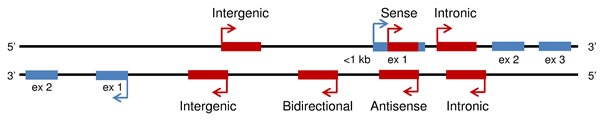
Figure 1
Figure 1. Categories of long non-coding RNA
Overview of five broad categories of lncRNAs (sense, antisense, bidirectional, intronic, intergenic; depicted in red) based on their location relative to nearby protein-coding genes (depicted in blue).
Figure 2
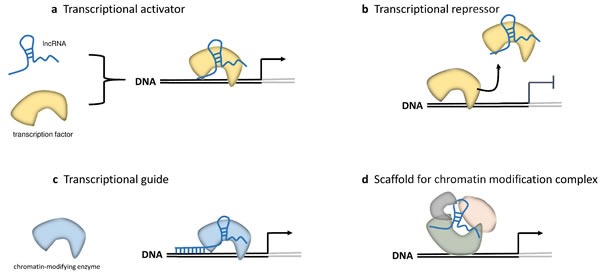
Figure 2. LncRNAs in epigenetic and transcriptional regulation
Four mechanisms of epigenetic and transcriptional regulation by lncRNAs are shown [18]. a. Direct interaction of lncRNAs with transcription factors (TFs) induces the allosteric change of the TFs towards activation. b. LncRNAs act as decoy for TFs by keeping them away from their targets on chromatin. c. LncRNAs act as a transcriptional guide by recruiting chromatin-modifying enzymes to target genes, either in cis or in trans to distant target genes. d. LncRNAs act as a scaffold, bringing together multiple proteins to form ribonucleoprotein complexes.
Figure 3
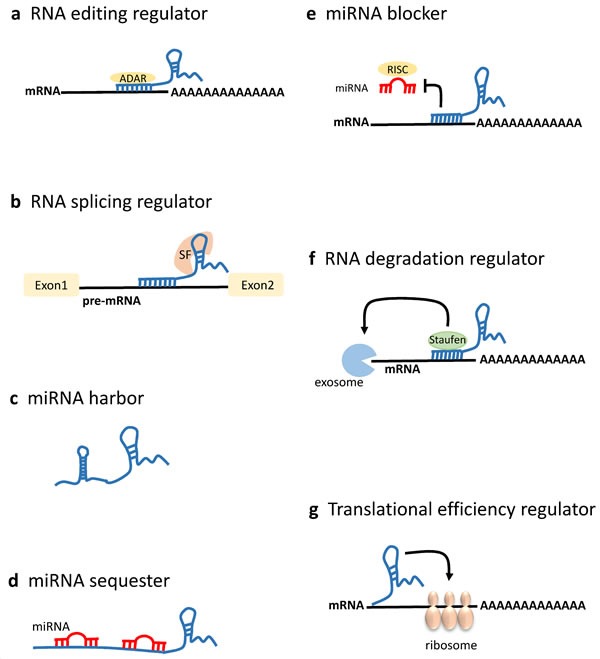
Figure 3. LncRNAs in mRNA processing and post-transcriptional regulation
LncRNAs can act post-transcriptionally modulating mRNA processing at multiple levels [19]. a. Antisense lncRNAs associate with the sense mRNA, and the resultant RNA:RNA duplex might direct mRNA editing recruiting ADAR (adenosine deaminase acting on RNA) enzymes that catalyze adenosine to inosine conversion in double-stranded RNA. b. LncRNAs can prevent the alternative splicing of a pre-mRNA by binding the boundary site between its intron and exon. LncRNAs can also regulate RNA splicing by associating with splicing factors. c. LncRNAs may harbor the hairpin structure, which can give rise to the pre-miRNA. d. LncRNAs harboring the recognition site for functional miRNAs can function as miRNA decoys to sequester miRNAs from their mRNA targets. Furthermore, lncRNAs themselves can be the targets of miRNAs. e. LncRNAs can compete with miRNAs for binding on target mRNAs thus blocking miRNA-induced silencing through the RNA-induced silencing complex (RISC) and increasing mRNA translation. f. LncRNAs can regulate mRNA stability forming lncRNAs:mRNA double-stranded structures that can direct exosome mediated RNA degradation. For instance, Alu repeat-containing lncRNAs can associate with the Alu elements in the 3′ untranslated region (UTR) of an mRNA, and the resultant double-stranded structure can direct Staufen-mediated decay, thus destabilizing the target mRNA. g. LncRNAs association with the mRNA can positively or negatively modulate the translation efficiency, depending on the mRNA and lncRNA structures.
Figure 4
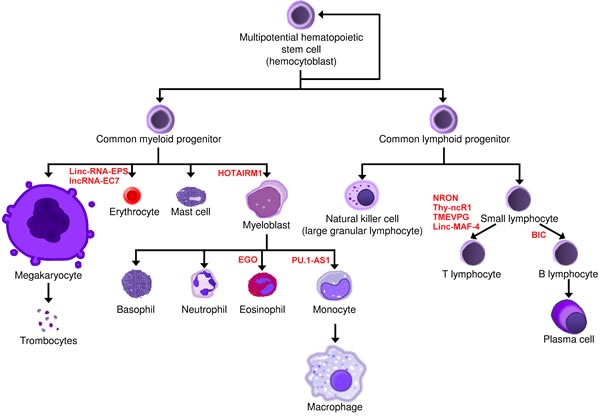
Figure 4. Involvement of lncRNAs in normal hematopoiesis
LncRNAs that regulate blood cell development are shown next to the cellular stage at which they act.

References

    1. Birney E, Stamatoyannopoulos JA, Dutta A, Guigo R, Gingeras TR, Margulies EH, Weng Z, Snyder M, Dermitzakis ET, Thurman RE, Kuehn MS, Taylor CM, Neph S, et al. Identification and analysis of functional elements in 1% of the human genome by the ENCODE pilot project. Nature. 2007;447:799–816. - PMC - PubMed
    1. Djebali S, Davis CA, Merkel A, Dobin A, Lassmann T, Mortazavi A, Tanzer A, Lagarde J, Lin W, Schlesinger F, Xue C, Marinov GK, Khatun J, et al. Landscape of transcription in human cells. Nature. 2012;489:101–108. - PMC - PubMed
    1. Fabian MR, Sonenberg N. The mechanics of miRNA-mediated gene silencing: a look under the hood of miRISC. Nature structural & molecular biology. 2012;19:586–593. - PubMed
    1. Kong YW, Ferland-McCollough D, Jackson TJ, Bushell M. microRNAs in cancer management. The Lancet Oncology. 2012;13:e249–258. - PubMed
    1. Berindan-Neagoe I, Monroig Pdel C, Pasculli B, Calin GA. MicroRNAome genome: a treasure for cancer diagnosis and therapy. CA Cancer J Clin. 2014;64:311–336. - PMC - PubMed