


Impact of Goal Setting and Goal Attainment Methods on Asthma Outcomes
- PMID: 27179290
- PMCID: PMC6004531
- DOI: 10.1177/1090198116637858
Impact of Goal Setting and Goal Attainment Methods on Asthma Outcomes
Abstract
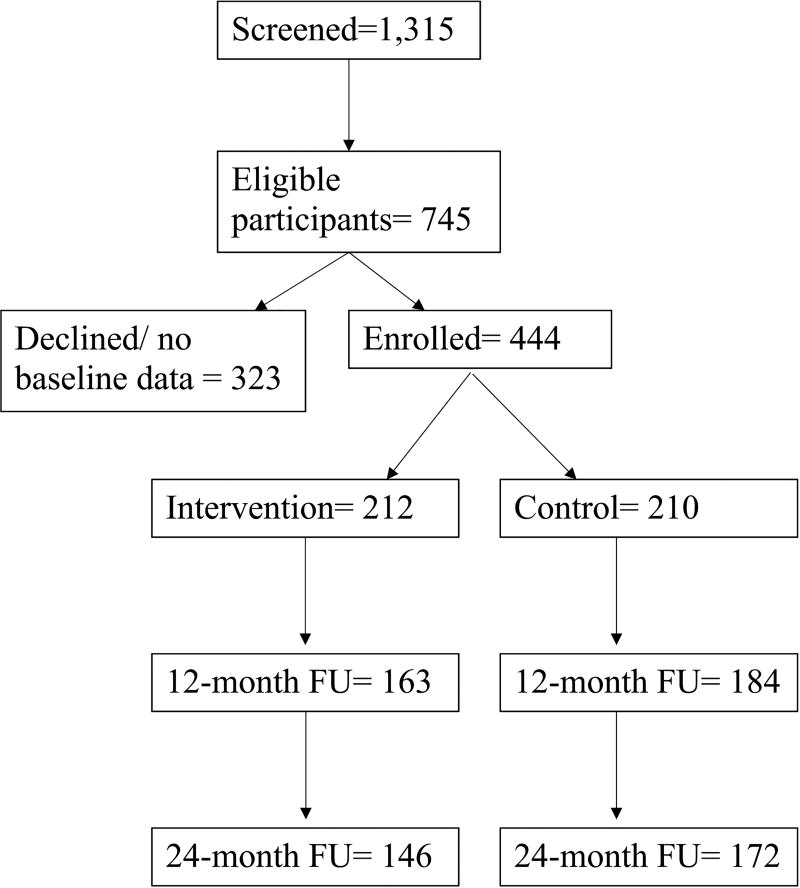
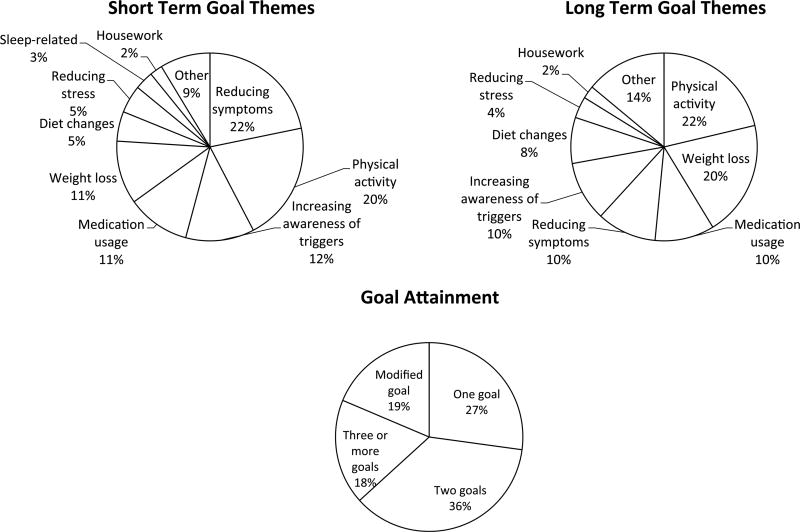
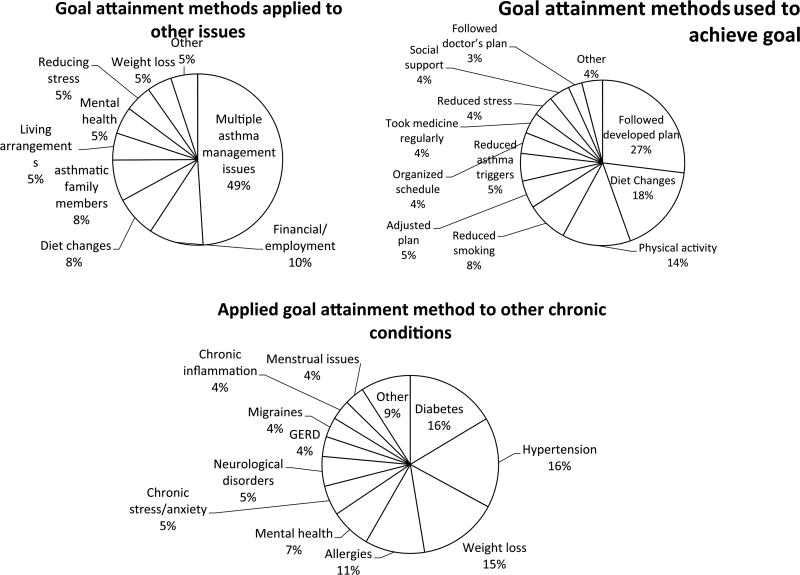
Optimal use of goal-setting strategies in self-management efforts with high-risk individuals with asthma is not well understood. This study aimed to describe factors associated with goal attainment in an asthma self-management intervention for African American women with asthma and determine whether goal attainment methods proved beneficial to goal achievement and improved asthma outcomes. Data came from 212 African American women in the intervention arm of a randomized clinical trial evaluating a telephone-based asthma self-management program. Telephone interview data were collected to assess goals and goal attainment methods identified, asthma symptoms, asthma control, and asthma-related quality of life at baseline and 2-year follow-up. Generalized estimating equations were used to assess the long-term impact of goal setting and goal attainment methods on outcomes. The average age of the sample was 42.1 years ( SD = 14.8). Factors associated with goal attainment included higher education ( p < .01) and fewer depressive symptoms ( p < .01). Using a goal attainment method also resulted in more goals being achieved over the course of the intervention (Estimate [ SE] = 1.25 [0.18]; p < .001) when adjusted for clinical and demographic factors. Use of and types of goal attainment methods and goals were not found to significantly affect asthma control, quality of life, or frequency of nighttime asthma symptoms at follow-up. Using a method to achieve goals led to greater goal attainment. Goal attainment alone did not translate into improved asthma outcomes in our study sample. Further studies are warranted to assess the challenges of self-management in chronic disease patients with complex health needs and how goal setting and goal attainment methods can be strategically integrated into self-management efforts to improve health endpoints.
Keywords: asthma; behavior change; goals; intervention; outcomes; self-management.
Conflict of interest statement
The authors declared no potential conflicts of interest with respect to the research, authorship, and/or publication of this article.
Figures
References
-
- Butler L, Furber S, Phongsavan P, Mark A, Bauman A. Effects of a pedometer-based intervention on physical activity levels after cardiac rehabilitation: A randomized controlled trial. Journal of Cardiopulmonary Rehabilitation and Prevention. 2009;29:105–114. - PubMed
-
- Centers for Disease Control and Prevention. Vital signs: Asthma prevalence, disease characteristics, and self-management education: United states, 2001–2009. Morbidity and Mortality Weekly Report. 2011;60:547–552. - PubMed
-
- Centers for Disease Control and Prevention. Asthma’s impact on the nation. 2012 Retrieved from http://www.cdc.gov/asthma/impacts_nation/asthmafactsheet.pdf.
-
- Clark NM, Gong M, Kaciroti N. A model of self-regulation for control of chronic disease. Health Education & Behavior. 2014;41:499–508. - PubMed
Publication types
MeSH terms
Grants and funding
LinkOut - more resources
Full Text Sources
Other Literature Sources
Medical
