


Structural and functional changes within the gut microbiota and susceptibility to Clostridium difficile infection
- PMID: 27180006
- PMCID: PMC5050078
- DOI: 10.1016/j.anaerobe.2016.05.006
Structural and functional changes within the gut microbiota and susceptibility to Clostridium difficile infection
Abstract
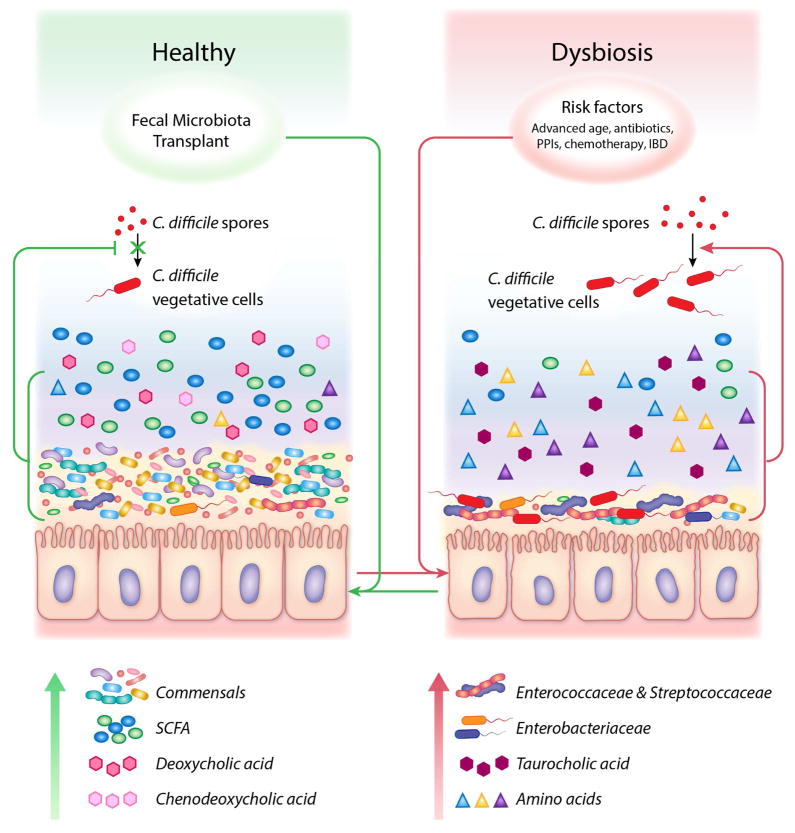
Alteration of the gut microbial community structure and function through antibiotic use increases susceptibility to colonization by Clostridium difficile and other enteric pathogens. However, the mechanisms that mediate colonization resistance remain elusive. As the leading definable cause of infectious diarrhea, toxigenic C. difficile represents a burden for patients and health care systems, underscoring the need for better diagnostics and treatment strategies. Next-generation sequence data has increased our understanding of how the gut microbiota is influenced by many factors including diet, disease, aging and drugs. However, a microbial-based biomarker differentiating C. difficile infection from antibiotic-associated diarrhea has not been identified. Metabolomics profiling, which is highly responsive to changes in physiological conditions, have shown promise in differentiating subtle disease phenotypes that exhibit a nearly identical microbiome community structure, suggesting metabolite-based biomarkers may be an ideal diagnostic for identifying patients with CDI. This review focuses on the current understanding of structural and functional changes to the gut microbiota during C. difficile infection obtained from studies assessing the microbiome and metabolome of samples from patients and murine models.
Keywords: CDI; Clostridium difficile; Metabolome; Microbiome.
Published by Elsevier Ltd.
Figures
References
Publication types
MeSH terms
Grants and funding
LinkOut - more resources
Full Text Sources
Other Literature Sources
Medical
Research Materials
