. 2016 Jul;7(4):485-96.
doi: 10.1111/jdi.12452. Epub 2015 Dec 31.

Transplantation of dental pulp stem cells suppressed inflammation in sciatic nerves by promoting macrophage polarization towards anti-inflammation phenotypes and ameliorated diabetic polyneuropathy

Affiliations

Transplantation of dental pulp stem cells suppressed inflammation in sciatic nerves by promoting macrophage polarization towards anti-inflammation phenotypes and ameliorated diabetic polyneuropathy

Maiko Omi et al. J Diabetes Investig. 2016 Jul.

Abstract

Aims/introduction: Dental pulp stem cells (DPSCs) are thought to be an attractive candidate for cell therapy. We recently reported that the transplantation of DPSCs increased nerve conduction velocity and nerve blood flow in diabetic rats. In the present study, we investigated the immunomodulatory effects of DPSC transplantation on diabetic peripheral nerves.

Materials and methods: DPSCs were isolated from the dental pulp of Sprague-Dawley rats and expanded in culture. Eight weeks after the streptozotocin injection, DPSCs were transplanted into the unilateral hindlimb skeletal muscles. Four weeks after DPSC transplantation, neurophysiological measurements, inflammatory gene expressions and the number of CD68-positive cells in sciatic nerves were assessed. To confirm the immunomodulatory effects of DPSCs, the effects of DPSC-conditioned media on lipopolysaccharide-stimulated murine macrophage RAW264.7 cells were investigated.

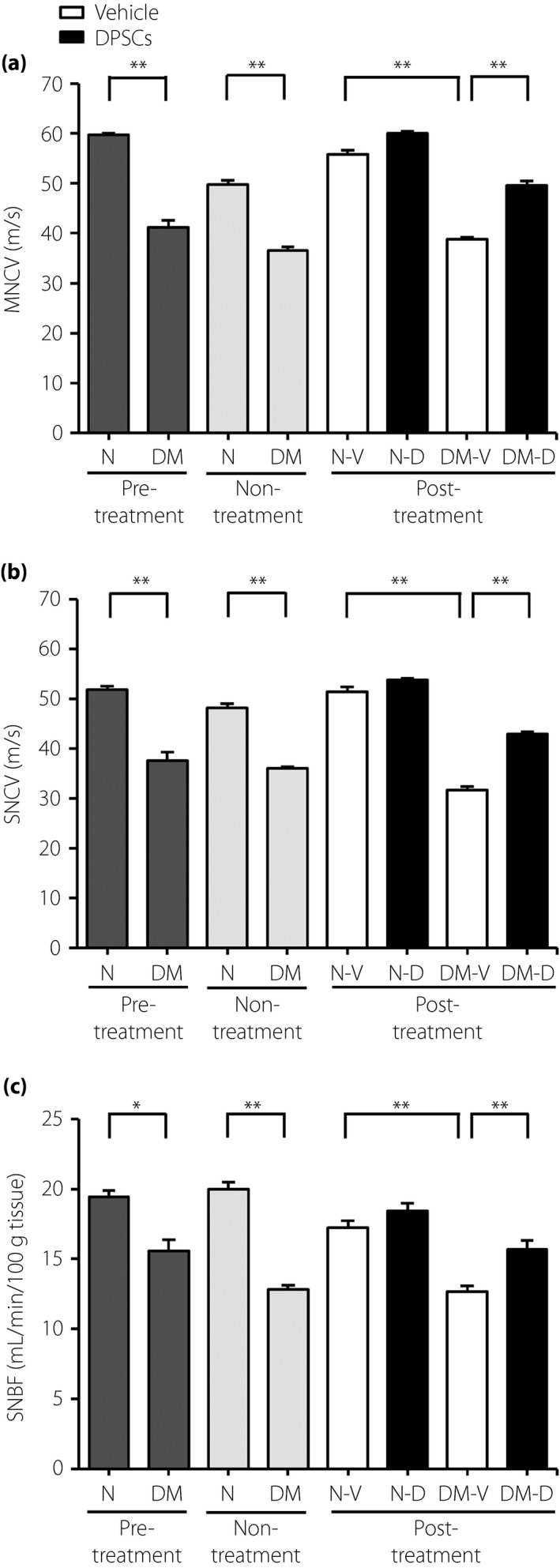
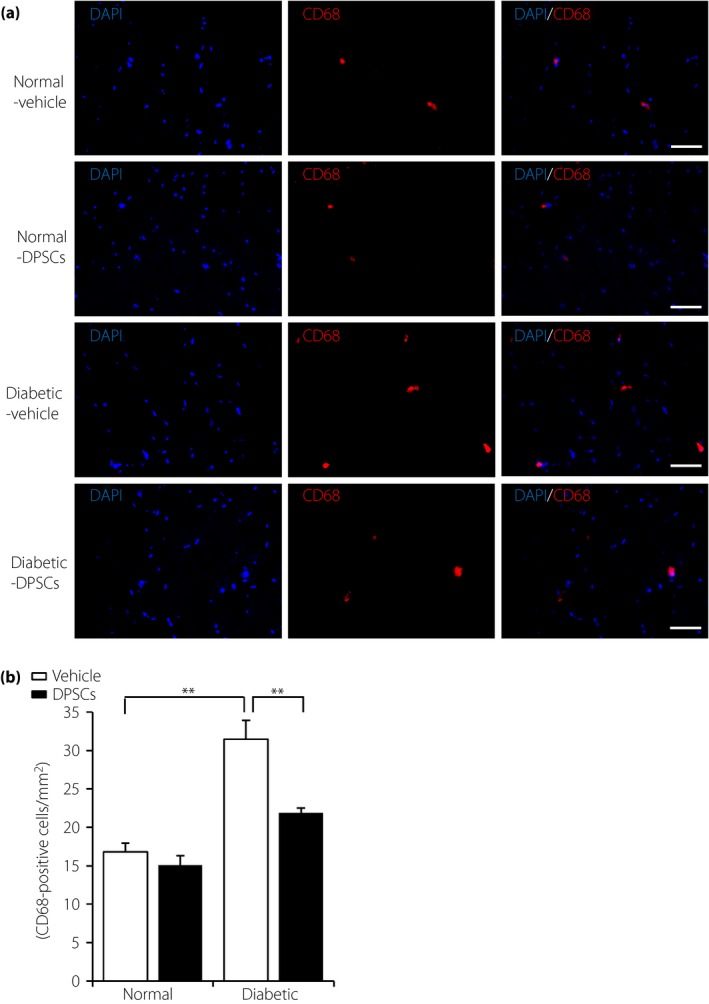
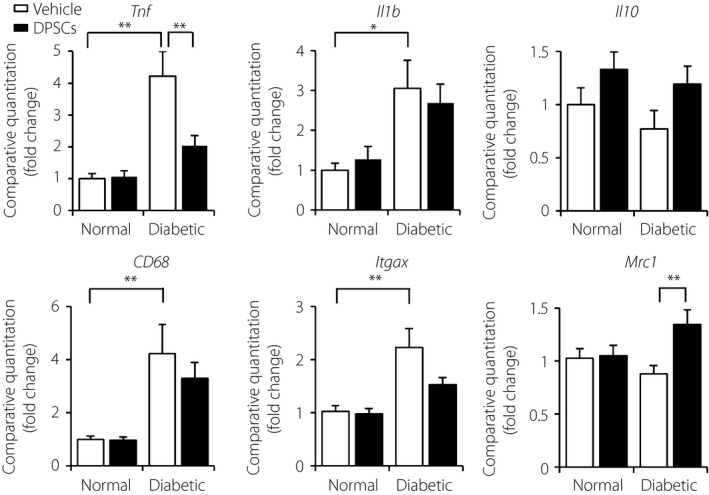
Results: Diabetic rats showed significant delays in sciatic nerve conduction velocities and decreased sciatic nerve blood flow, all of which were ameliorated by DPSC transplantation. The number of CD68-positive monocytes/macrophages and the gene expressions of M1 macrophage-expressed cytokines, tumor necrosis factor-α and interleukin-1β, were increased in the sciatic nerves of the diabetic rats. DPSC transplantation significantly decreased monocytes/macrophages and tumor necrosis factor-α messenger ribonucleic acid expression, and increased the gene expression of the M2 macrophage marker, CD206, in the sciatic nerves of the diabetic rats. The in vitro study showed that DPSC-conditioned media significantly increased the gene expressions of interleukin-10 and CD206 in lipopolysaccharide-stimulated RAW264.7 cells.

Conclusions: These results suggest that DPSC transplantation promoted macrophages polarization towards anti-inflammatory M2 phenotypes, which might be one of the therapeutic mechanisms for diabetic polyneuropathy.

Keywords: Cell transplantation; Dental pulp stem cells; Diabetic polyneuropathy.


Figures

Figure 1
Figure 1
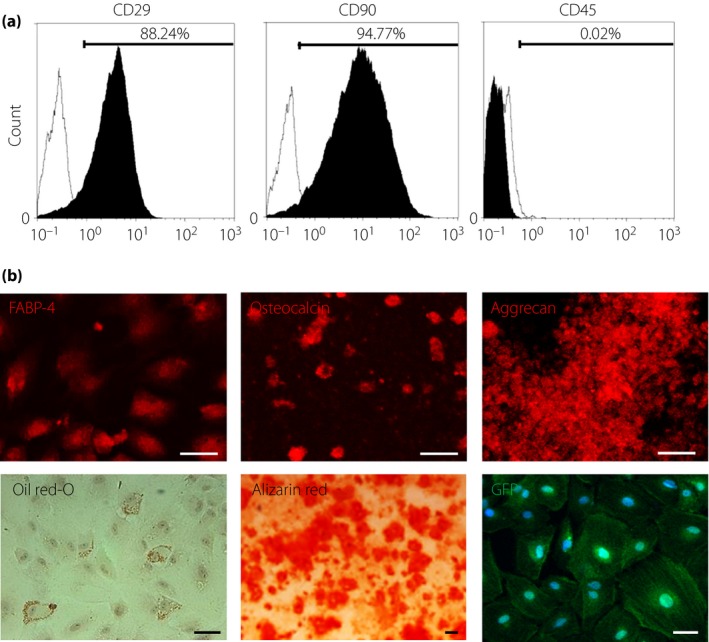
Characterization and differentiation of green fluorescent protein (GFP)‐expressing dental pulp stem cells (GFPDPSCs). (a) GFPDPSCs derived from 6‐week‐old Sprague–Dawley rats were positive for mesenchymal stem cell markers (CD29, CD90) and negative for the hematopoietic marker CD45 (black area). Isotype‐identical antibodies served as the controls (white area). (b) GFPDPSCs could differentiate into adipogenic, osteogenic and chondrogenic lineages in vitro. For discrimination, oil red O and fatty acid‐binding protein‐4 were used for adipocytes, Alizarin Red and osteocalcin for osteocytes, and aggrecan for chondrocytes. Scale bar, 50 μm.
Figure 2
Figure 2
Dental pulp stem cell (DPSC) transplantation improved the delay in sciatic nerve conduction velocities and the decrease in sciatic nerve blood flow in the diabetic rats. (a) Sciatic nerve motor nerve conduction velocities (MNCV). (b) Sciatic nerve sensory nerve conduction velocities (SNCV). (c) Sciatic nerve blood flow (SNBF; n = 5). Results are mean ± standard error of the mean. **P < 0.01, *P < 0.05. DM, diabetic rats; DM‐D, dental pulp stem cell‐transplanted diabetic rats; DM‐V, vehicle‐injected diabetic rats; N, normal rat; Non‐treatment, measurements at the time of 4 weeks after the transplantation in rats without having transplantation; N‐V, vehicle‐injected normal rats; N‐D, dental pulp stem cell‐transplanted normal rats; Post‐treatment, measurements at the time of 4 weeks after the transplantation in dental pulp stem cell‐transplanted rats; Pre‐treatment, measurements at the time of transplantation in normal and diabetic rats.
Figure 3
Figure 3
Dental pulp stem cell (DPSC) transplantation suppressed the number of CD68‐positive monocytes/macrophages in the sciatic nerves of the diabetic rats. (a) Representative photomicrographs of histological sections in the vehicle‐injected and the DPSCs‐transplanted sides of the sciatic nerves in the normal and diabetic rats. Monocytes/macrophages were detected by immunostaining for CD68. Scale bar, 50 μm. (b) Quantitative analyses for CD68‐positive cells/mm2 in the sciatic nerves of the normal and the diabetic rats (n = 5). Results are means ± standard error of the mean. **P < 0.01.
Figure 4
Figure 4
Effects of dental pulp stem cell (DPSC) transplantation on the inflammatory messenger ribonucleic acid expressions in sciatic nerves. Four weeks after the transplantation of DPSCs, messenger ribonucleic acid expressions of tumor necrosis factor‐α (TNF‐α; Tnf), interleukin (IL)‐1β (Il1b), IL‐10 (Il10), CD68 (CD68), CD11c (Itgax) and CD206 (Mrc1) in the sciatic nerves were evaluated by real‐time quantitative polymerase chain reaction (n = 8). Results are means ± standard error of the mean. **P < 0.01, *P < 0.05.
Figure 5
Figure 5
Effects of dental pulp stem cell (DPSC)‐conditioned media (DPSCCM) on macrophage cell line, RAW264.7 cells. (a) Messenger ribonucleic acid expressions of undifferentiated RAW264.7 cells by DPSCCM pretreatment followed by lipopolysaccharide (LPS). After 12 h, the RAW264.7 cells were replaced with the serum‐free medium and pretreated with DPSCCM for 1 h. Cells were incubated with LPS for 4 h, messenger ribonucleic acid expressions of tumor necrosis factor‐α (TNF‐α; Tnf), interleukin (IL)‐1β (Il1b), IL‐10 (Il10), CD11c (Itgax) and CD206 (Mrc1) were investigated by real‐time quantitative polymerase chain reaction (n = 4). **P < 0.01. (b) RAW264.7 cells were pre‐exposed to 50 ng/mL LPS to differentiate into M1 macrophage. After 48 h, DPSCCM was added and the cells were incubated for 4 h. Messenger ribonucleic acid expressions were investigated by real‐time quantitative polymerase chain reaction (n = 6). **P < 0.01. (c) The effect of DPSCCM on the proliferation/viability of RAW264.7 cells was assessed by 3‐(4,5)‐dimethylthiahiazo(‐z‐y1)‐3,5‐di‐phenytetrazoliumromide and Cell Counting Kit‐8 assay. After cells were seeded in 96‐well plates and cultured for 12 h, the cells were incubated with DPSCCM for 3 days (n = 6). Results are means ± standard error of the mean. a.u., arbitrary unit.

References

    1. Tesfaye S. Recent advances in the management of diabetic symmetrical polyneuropathy. J Diabetes Investig 2010; 2: 33–42. - PMC - PubMed
    1. Naruse K, Hamada Y, Nakashima E, et al Therapeutic neovascularization using cord blood‐derived endothelial progenitor cells for diabetic neuropathy. Diabetes 2005; 54: 1823–1828. - PubMed
    1. Naruse K, Sato J, Funakubo M, et al Transplantation of bone marrow‐derived mononuclear cells improves mechanical hyperalgesia, cold allodynia and nerve function in diabetic neuropathy. PLoS One 2011; 6: e27458. - PMC - PubMed
    1. Shibata T, Naruse K, Kamiya H, et al Transplantation of bone marrow‐derived mesenchymal stem cells improves diabetic polyneuropathy in rats. Diabetes 2008; 57: 3099–3107. - PMC - PubMed
    1. Himeno T, Kamiya H, Naruse K, et al Angioblast derived from ES cells construct blood vessels and ameliorate diabetic polyneuropathy in mice. J Diabetes Res 2015; 2015: 257230. - PMC - PubMed

MeSH terms