


Knowledge about electronic cigarettes and its perception: a community survey, Egypt
- PMID: 27183972
- PMCID: PMC4869382
- DOI: 10.1186/s12931-016-0365-0
Knowledge about electronic cigarettes and its perception: a community survey, Egypt
Abstract
Background: Electronic cigarettes are promoted as safer products than traditional cigarettes and as smoking cessation devices. Awareness and perception are key elements for the adoption of new habits. Little is known about electronic cigarettes and public opinions towards it. This study aims to identify the prevalence of knowledge about electronic cigarettes, its perception, and use among Egyptian population.
Methods: An observational cross-sectional study using self-administered questionnaire in Arabic language was conducted between March and April 2015 among a sample of Egyptian population aged 15-75 years (N = 1239). We compared between respondent's who know e-cigarettes and those who do not know it.
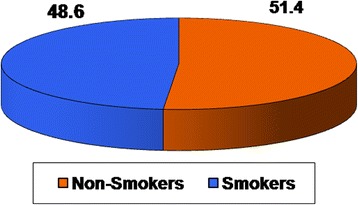
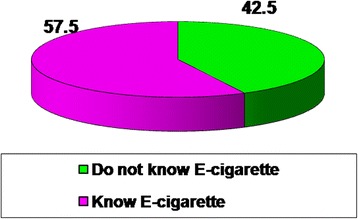
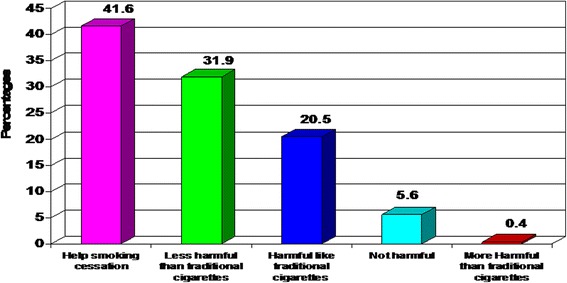
Results: More than half (57.5 %) of the respondents had heard about e-cigarettes, 51.8 % were non-smokers and nobody of them reported use of e-cigarettes. There were statistically significant differences between those who know and those who do not know e-cigarettes regarding age, educational levels and history of smoking. Among those who know e-cigarettes, 41.6 % believed that e-cigarettes help smoking cessation and 31.9 % believed it is less harmful than traditional cigarettes.
Conclusions: A considerable level of knowledge about e-cigarettes is found among young people aged 15-39 years. E-cigarettes were perceived as less harmful than traditional cigarettes or a smoking cessation aid. None of the respondents reported use of e-cigarettes.
Keywords: Community survey; Electronic cigarettes; Knowledge; Perception; Smoking.
Figures
References
Publication types
MeSH terms
LinkOut - more resources
Full Text Sources
Other Literature Sources
Medical
Miscellaneous
