Review
. 2016 Apr;7 Suppl 1(Suppl 1):102-9.
doi: 10.1111/jdi.12490. Epub 2016 Apr 18.

Incretin-based drugs for type 2 diabetes: Focus on East Asian perspectives

Affiliations
Review

Incretin-based drugs for type 2 diabetes: Focus on East Asian perspectives

Yutaka Seino et al. J Diabetes Investig. 2016 Apr.

Abstract

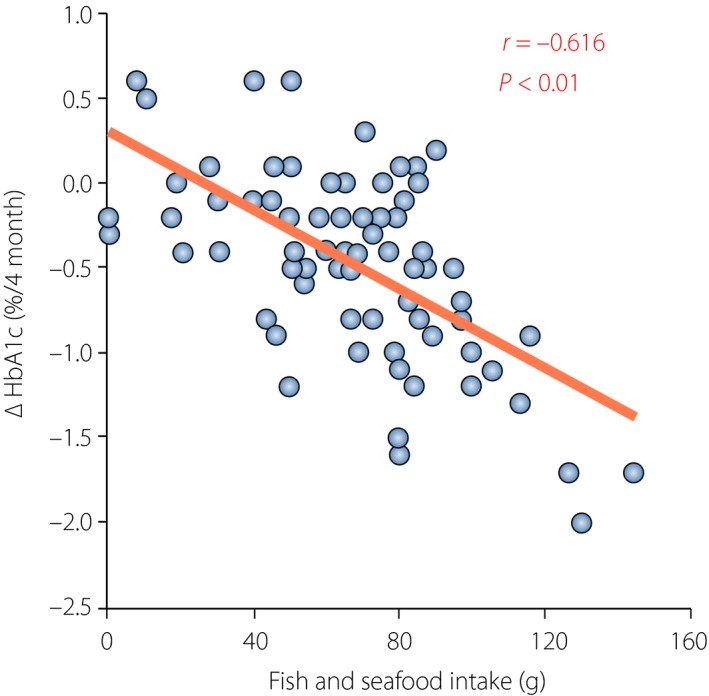
Type 2 diabetes in East Asians is characterized primarily by β-cell dysfunction, and with less adiposity and less insulin resistance compared with that in Caucasians. Such pathophysiological differences can determine the appropriate therapeutics for the disease. Incretins, glucose-dependent insulinotropic polypeptide and glucagon-like peptide-1, are secreted in response to meal ingestion, and enhance insulin secretion glucose-dependently. Incretin-based drugs, dipeptidyl peptidase-4 inhibitors (DPP-4i) and glucagon-like peptide-1 receptor agonists, that ameliorate β-cell dysfunction with limited hypoglycemia risk are now widely used in type 2 diabetes management. Recent meta-analyses of clinical trials on DPP-4i and glucagon-like peptide-1 receptor agonists found that the drugs were more effective in Asians, most likely because of amelioration of β-cell dysfunction. In addition, we found increased glycated hemoglobin-lowering effects of DPP-4i to be associated with intake of fish in type 2 diabetes, which suggests that dietary customs of East Asians might also underlie the greater efficacy of DPP-4i. Despite the limited risk, cases of severe hypoglycemia were reported for DPP-4i/sulfonylureas combinations. Importantly, hypoglycemia was more frequent in patients also receiving glibenclamide or glimepiride, which activate exchange protein directly activated by cyclic adenosine monophosphate 2, a critical mediator of incretin signaling, and was less frequent in patients receiving gliclazide, which does not activate exchange protein directly activated by cyclic adenosine monophosphate 2. Prevention of insulin-associated hypoglycemia by DPP-4i has gained attention with regard to the enhancement of hypoglycemia-induced glucagon secretion by insulinotropic polypeptide, but remains to be investigated in East Asians. Despite the safety issues, which are paramount and must be carefully monitored, the incretin-based drugs could have potential as a first choice therapy in East Asian type 2 diabetes patients.

Keywords: Dipeptidyl peptidase‐4 inhibitors; East Asian; Glucagon‐like peptide‐1 receptor agonists.


Figures
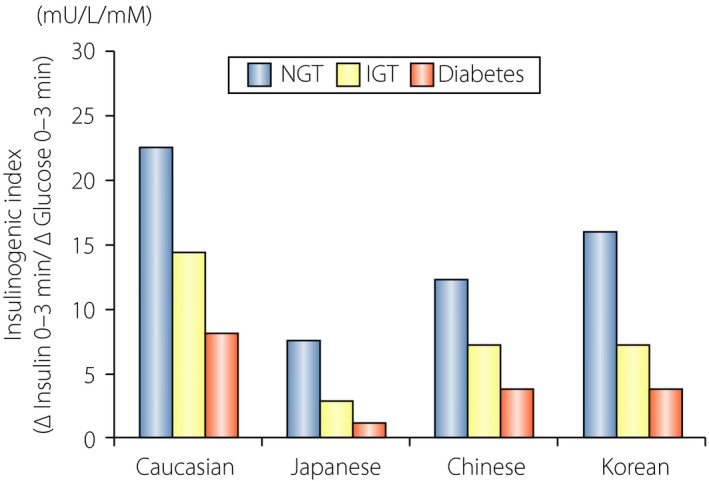
Figure 1
Figure 1
Reduced early‐phase insulin secretion in East Asian individuals compared with Caucasian individuals. Insulinogenic index (ΔInsulin 0–30 min/ΔGlucose 0–30 min) was indirectly compared between East Asians and Caucasians with or without type 2 diabetes. Blue bars, participants with normal glucose tolerance (NGT). Orange bars, participants with isolated impaired glucose tolerance (IGT). Red bars, participants with type 2 diabetes (Diabetes). Reproduced from Yabe et al.50 with permission.
Figure 2
Figure 2
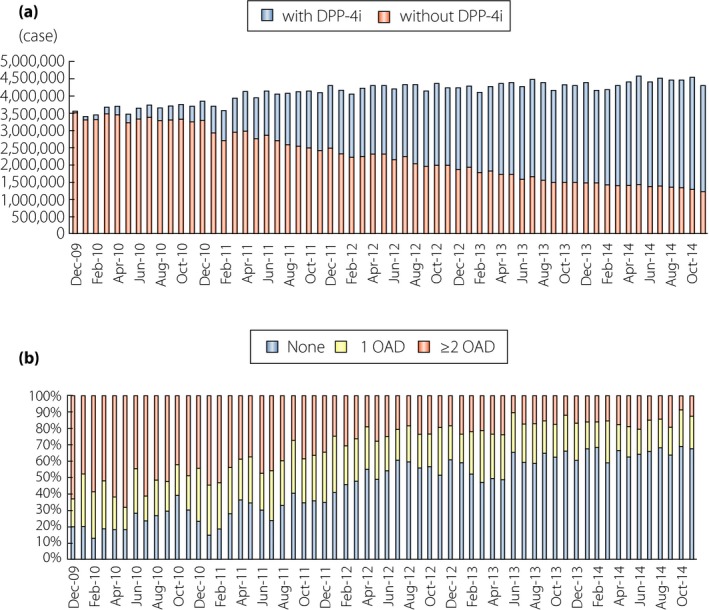
Wide use of dipeptidyl peptidase‐4 inhibitors (DPP‐4i) as a first choice therapy in Japan. (a) The number of individuals receiving DPP‐4i among those treated with oral antidiabetic drugs (OAD). Those treated with insulin and/or glucagon‐like peptide‐1 are not included. Note that more than 70% of individuals with OAD receive DPP‐4i in Japan today. (b) Profiles of antidiabetic drug use before initiating DPP‐4i. Note that approximately 60% of individuals receive DPP‐4i as a first choice therapy in Japan. Data were derived from the Japan Medical Data Centre Claims Database (Japan Medical Data Centre Co., Ltd, Tokyo, Japan), which contains the following information on individuals aged <75 years in employment‐based health insurance programs: age and sex of patient; diagnosis of disease using International Classification of Diseases‐10 code; and prescribed drugs. Reproduced from Yabe et al.29 with permission.
Figure 3
Figure 3
Association of glycated hemoglobin (HbA1c) reduction by dipeptidyl peptidase‐4 inhibitors and estimated intake of fish. Correlation between estimated intake of fish and seafood (fish intake) with HbA1c reduction (ΔHbA1c). Among fish and seafood (i.e., shellfish, squid and octopus, and crustaceans), only estimated intake of fish showed a significant association with HbA1c reduction by single regression analysis (r = −0.62, P < 0.01). Reproduced from Iwasaki et al.32 with permission.
Figure 4
Figure 4
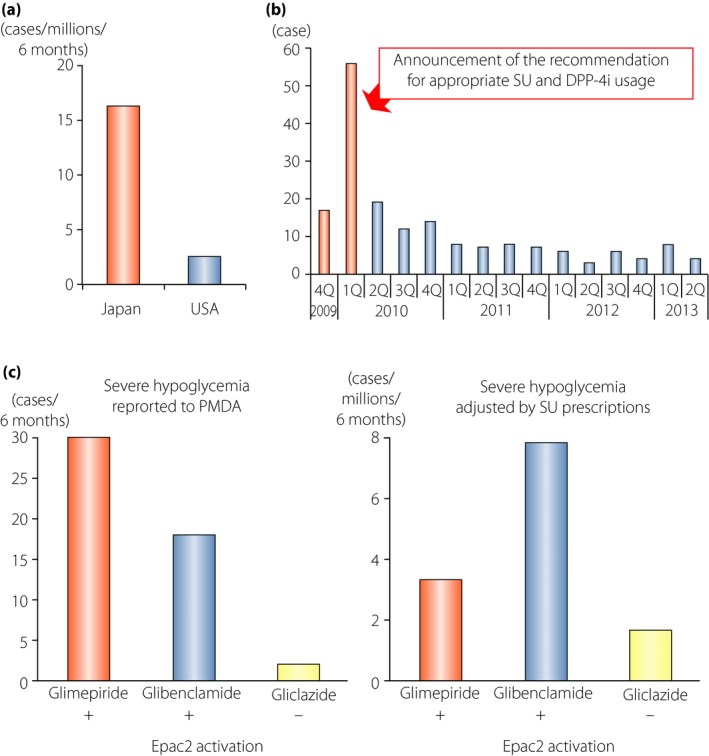
Severe hypoglycemia in individuals receiving dipeptidyl peptidase‐4 inhibitors (DPP‐4i) as add‐on to sulfonylureas (SUs). (a) Comparison of the incidence rate of severe hypoglycemia in individuals receiving the DPP‐4i, sitagliptin, in Japan and the USA. The incidence of hypoglycemic coma with sitagliptin was 16.3 per million patients who received sitagliptin during the first 6 months after its launch in Japan, and was approximately 6.4‐fold higher than that of USA in the corresponding period. (b) Transition in cases of severe hypoglycemia in individuals treated with sitagliptin in each quarter. The number was drastically reduced on announcement of the recommendation from the committee for appropriate use of incretin‐related drugs (glucagon‐like peptide‐1 receptor agonists and DPP‐4 inhibitors). (c) Comparison of the numbers of severe hypoglycemia cases in individuals receiving sitagliptin as add‐on to indicated SUs. Left, the numbers of cases reported to the Japanese Pharmaceuticals and Medical Devices Agency. Right, estimated incidence rates calculated by dividing the numbers of cases reported to the Japanese Pharmaceuticals and Medical Devices Agency by the numbers of individual prescriptions of indicated SUs combination with sitagliptin in the same period. EPAC2, exchange protein directly activated by cyclic adenosine monophosphate 2. Reproduced from Yabe and Seino39 with permission.

References

    1. IDF Diabetes Atlas, 6th edn Brussels, Belgium: IDF, 2015.
    1. Yabe D, Seino Y, Fukushima M, et al Beta cell dysfunction versus insulin resistance in the pathogenesis of type 2 diabetes in East Asians. Curr Diab Rep 2015; 15: 602. - PMC - PubMed
    1. Seino Y, Kurahachi H, Goto Y, et al Comparative insulinogenic effects of glucose, arginine and glucagon in patients with diabetes mellitus, endocrine disorders and liver disease. Acta Diabetol Lat 1975; 12: 89–99. - PubMed
    1. Kodama K, Tojjar D, Yamada S, et al Ethnic differences in the relationship between insulin sensitivity and insulin response: a systematic review and meta‐analysis. Diabetes Care 2013; 36: 1789–1796. - PMC - PubMed
    1. Moller JB, Dalla Man C, Overgaard RV, et al Ethnic differences in insulin sensitivity, beta‐cell function, and hepatic extraction between Japanese and Caucasians: a minimal model analysis. J Clin Endocrinol Metab 2014; 99: 4273–4280. - PubMed

MeSH terms