


Protein Intake and Muscle Health in Old Age: From Biological Plausibility to Clinical Evidence
- PMID: 27187465
- PMCID: PMC4882708
- DOI: 10.3390/nu8050295
Protein Intake and Muscle Health in Old Age: From Biological Plausibility to Clinical Evidence
Abstract
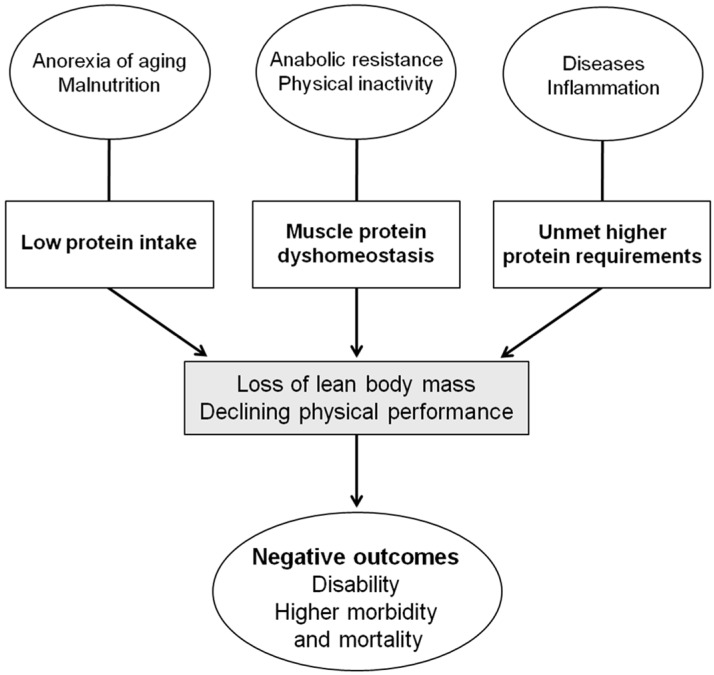
The provision of sufficient amounts of dietary proteins is central to muscle health as it ensures the supply of essential amino acids and stimulates protein synthesis. Older persons, in particular, are at high risk of insufficient protein ingestion. Furthermore, the current recommended dietary allowance for protein (0.8 g/kg/day) might be inadequate for maintaining muscle health in older adults, probably as a consequence of "anabolic resistance" in aged muscle. Older individuals therefore need to ingest a greater quantity of protein to maintain muscle function. The quality of protein ingested is also essential to promoting muscle health. Given the role of leucine as the master dietary regulator of muscle protein turnover, the ingestion of protein sources enriched with this essential amino acid, or its metabolite β-hydroxy β-methylbutyrate, is thought to offer the greatest benefit in terms of preservation of muscle mass and function in old age.
Keywords: amino acid; anorexia; frailty; leucine; malnutrition; sarcopenia; supplementation.
Figures
References
-
- Botella-Carretero J.I., Iglesias B., Balsa J.A., Arrieta F., Zamarrón I., Vázquez C. Perioperative oral nutritional supplements in normally or mildly undernourished geriatric patients submitted to surgery for hip fracture: A randomized clinical trial. Clin. Nutr. 2010;29:574–579. doi: 10.1016/j.clnu.2010.01.012. - DOI - PubMed
-
- Schürch M.A., Rizzoli R., Slosman D., Vadas L., Vergnaud P., Bonjour J.P. Protein supplements increase serum insulin-like growth factor-I levels and attenuate proximal femur bone loss in patients with recent hip fracture. A randomized, double-blind, placebo-controlled trial. Ann. Intern. Med. 1998;128:801–819. doi: 10.7326/0003-4819-128-10-199805150-00002. - DOI - PubMed
Publication types
MeSH terms
Substances
LinkOut - more resources
Full Text Sources
Other Literature Sources
Medical
