


Systemic inflammation and liver damage in HIV/hepatitis C virus coinfection
- PMID: 27187749
- PMCID: PMC4987156
- DOI: 10.1111/hiv.12357
Systemic inflammation and liver damage in HIV/hepatitis C virus coinfection
Abstract
Objectives: Chronic hepatitis C virus (HCV) and HIV viral infections are characterized by systemic inflammation. Yet the relative levels, drivers and correlates of inflammation in these settings are not well defined.
Methods: Seventy-nine HIV-infected patients who had been receiving antiretroviral therapy (ART) for more than 2 years and who had suppressed plasma HIV levels (< 50 HIV-1 RNA copies/mL) were included in the study. Two patient groups, HCV-positive/HIV-positive and HCV-negative/HIV-positive, and a control group comprised of healthy volunteers (n = 20) were examined. Markers of systemic inflammation [interleukin (IL)-6, interferon gamma-induced protein (IP)-10, soluble tumour necrosis factor receptor-I (sTNF-RI) and sTNF-RII], monocyte/macrophage activation [soluble CD163 (sCD163), soluble CD14 and neopterin], intestinal epithelial barrier loss [intestinal fatty acid binding protein (I-FABP) and lipopolysaccharide (LPS)] and coagulation (d-dimers) were analysed. CD4 naïve T cells and CD4 recent thymic emigrants (RTEs) were enumerated.
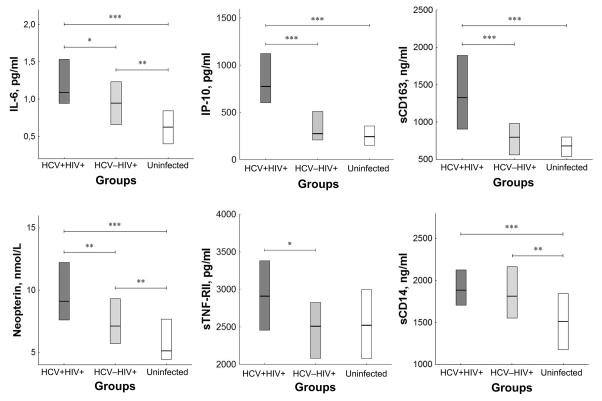
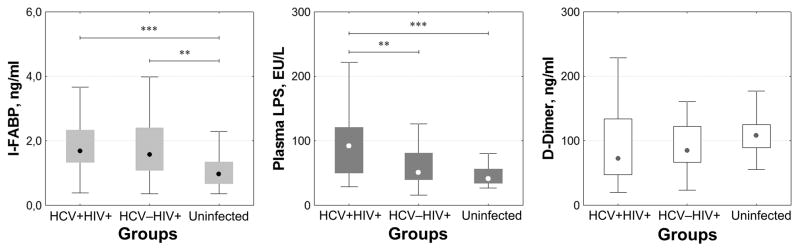
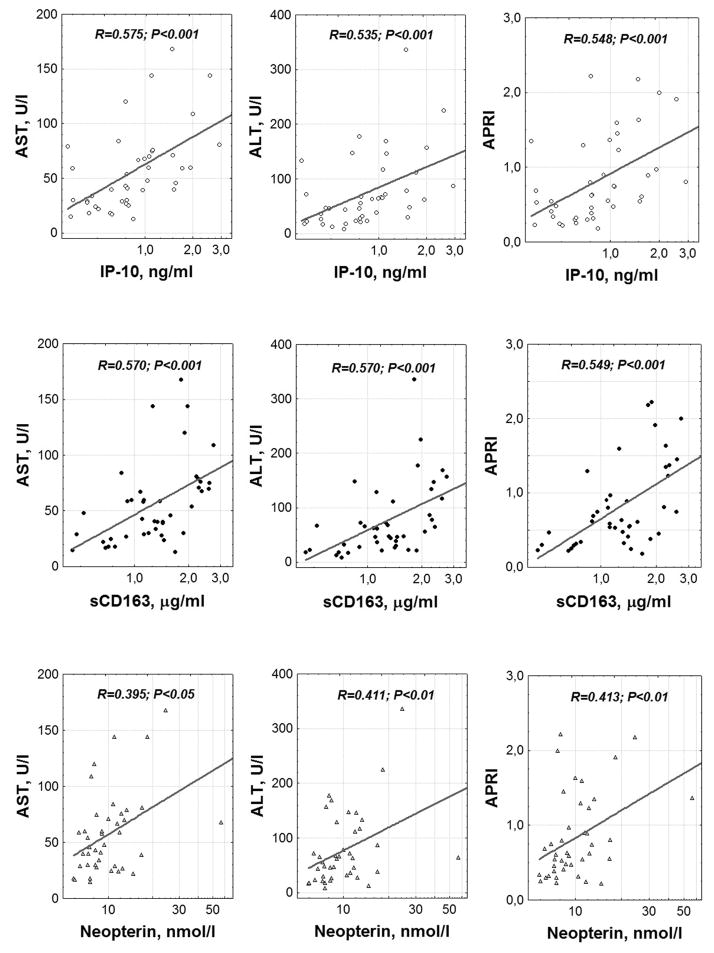
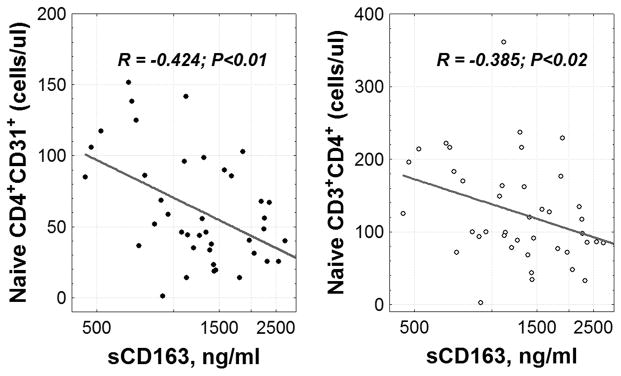
Results: Plasma levels of IP-10, neopterin and sCD163 were higher in HCV/HIV coinfection than in HIV monoinfection and were positively correlated with indices of hepatic damage [aspartate aminotransferase (AST), alanine aminotransferase (ALT) and the AST to platelet ratio index (APRI)]. Levels of I-FABP were comparably increased in HIV monoinfection and HIV/HCV coinfection but LPS concentrations were highest in HCV/HIV coinfection, suggesting impaired hepatic clearance of LPS. Plasma HCV levels were not related to any inflammatory indices except sCD163. In coinfected subjects, a previously recognized relationship of CD4 naïve T-cell and RTE counts to hepatocellular injury was defined more mechanistically by an inverse relationship to sCD163.
Conclusions: Hepatocellular injury in HCV/HIV coinfection is linked to elevated levels of certain inflammatory cytokines and an apparent failure to clear systemically translocated microbial products. A related decrease in CD4 naïve T cells and RTEs also merits further exploration.
Keywords: CD31; HIV infections; antigens; hepatitis C; highly active antiretroviral therapy; inflammation mediators.
© 2016 British HIV Association.
Conflict of interest statement
The authors have no conflict of interests.
Figures
References
-
- Barreiro P, Fernandez-Montero JV, de Mendoza C, Labarga P, Soriano V. Towards hepatitis C eradication from the HIV-infected population. Antiviral Res. 2014;105:1–7. - PubMed
-
- Bourcier V, Winnock M, Ait Ahmed M, Sogni P, Pambrun E, Poizot-Martin I, et al. Primary liver cancer is more aggressive in HIV-HCV coinfection than in HCV infection. A prospective study (ANRS CO13 Hepavih and CO12 Cirvir) Clin Res Hepatol Gastroenterol. 2012;36:214–221. - PubMed
-
- Curry MP. HIV and hepatitis C virus: special concerns for patients with cirrhosis. J Infect Dis. 2013;207(Suppl1):S40–44. - PubMed
Publication types
MeSH terms
Substances
Grants and funding
LinkOut - more resources
Full Text Sources
Other Literature Sources
Medical
Research Materials
