Review
. 2016 Feb 4:2:16003.
doi: 10.1038/nrdp.2016.3.

Erectile dysfunction

Affiliations
Review

Erectile dysfunction

Faysal A Yafi et al. Nat Rev Dis Primers. .

Abstract

Erectile dysfunction is a multidimensional but common male sexual dysfunction that involves an alteration in any of the components of the erectile response, including organic, relational and psychological. Roles for nonendocrine (neurogenic, vasculogenic and iatrogenic) and endocrine pathways have been proposed. Owing to its strong association with metabolic syndrome and cardiovascular disease, cardiac assessment may be warranted in men with symptoms of erectile dysfunction. Minimally invasive interventions to relieve the symptoms of erectile dysfunction include lifestyle modifications, oral drugs, injected vasodilator agents and vacuum erection devices. Surgical therapies are reserved for the subset of patients who have contraindications to these nonsurgical interventions, those who experience adverse effects from (or are refractory to) medical therapy and those who also have penile fibrosis or penile vascular insufficiency. Erectile dysfunction can have deleterious effects on a man's quality of life; most patients have symptoms of depression and anxiety related to sexual performance. These symptoms, in turn, affect his partner's sexual experience and the couple's quality of life. This Primer highlights numerous aspects of erectile dysfunction, summarizes new treatment targets and ongoing preclinical studies that evaluate new pharmacotherapies, and covers the topic of regenerative medicine, which represents the future of sexual medicine.


Conflict of interest statement

The other authors declare no competing interests.

Figures
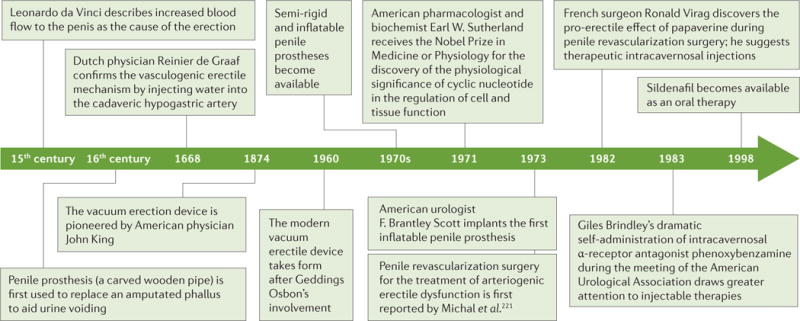
Figure 1
Figure 1. Timeline of the understanding and treatment of erectile dysfunction
As it became understood that an erection is a predominantly vasculogenic process, filling the cavernosal bodies with blood became one of the key features of different modalities of treatment of erectile dysfunction. For example, the vacuum erection device of today took form when tyre technician Geddings Osbon invented the youth equivalency device in 1960, which combines the effect of a vacuum that draws blood into the penis and the penile ring placed at the base of the penis to occlude venous return. Injectable therapies became prominent following the infamous Brindley lecture ‘Cavernosal α-blockade: a technique for treating erectile impotence’ at the American Urological Association Meeting in Las Vegas, Nevada, USA, in 1983 (REF. 222).
Figure 2
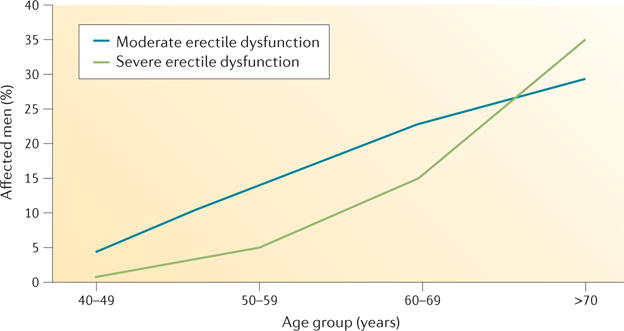
Figure 2. Increasing prevalence of erectile dysfunction with age
Data from the European Male Ageing Study show that erectile dysfunction increases with age. Importantly, the prevalence of severe erectile dysfunction (defined as an international index of erectile function score of 1–7) increases at a steeper rate than that of moderate erectile dysfunction (score of 8–11) in men over 60 years of age.
Figure 3
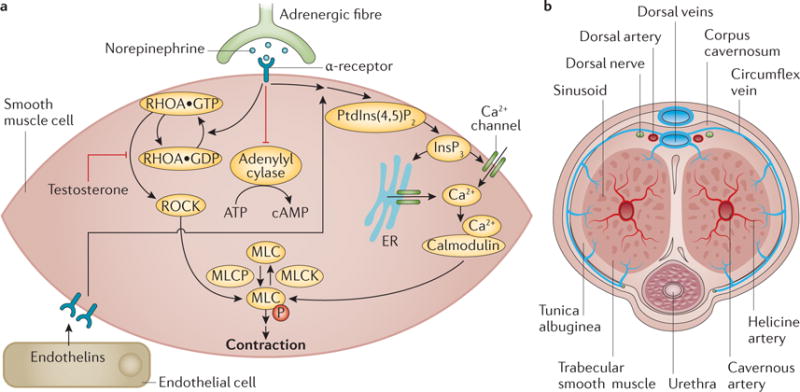
Figure 3. Penile smooth muscle contraction — the flaccid state
a | Ca2+ influx into cells is regulated by noradrenaline signalling and levels of inositol-1,4,5-trisphosphate (Ins(1,4,5)P3, which is produced from phosphatidylinositol-4,5-bisphosphate (PtdIns(4,5)P2) by phospholipase C) in the cells; increased intracellular Ca2+ binds to calmodulin, facilitating the formation of the calmodulin–myosin light chain kinase (MLCK) complex. This leads to the phosphorylation of MLC, resulting in smooth muscle contraction and a flaccid penis. Noradrenaline signalling also inhibits adenylyl cyclase and modulates the RHO-associated protein kinase (ROCK) pathway, which increases the sensitivity of MLC to Ca2+, a process negatively regulated by testosterone. Endothelins and prostaglandins from the endothelium also trigger an increase in intracellular Ca2+ to promote smooth muscle contraction. b | When the smooth muscle is contracted, inflow of blood through the cavernous artery is minimal, and blood outflows freely through the subtunical venular plexus. ER, endoplasmic reticulum; MLCP, myosin light chain phosphatase.
Figure 4
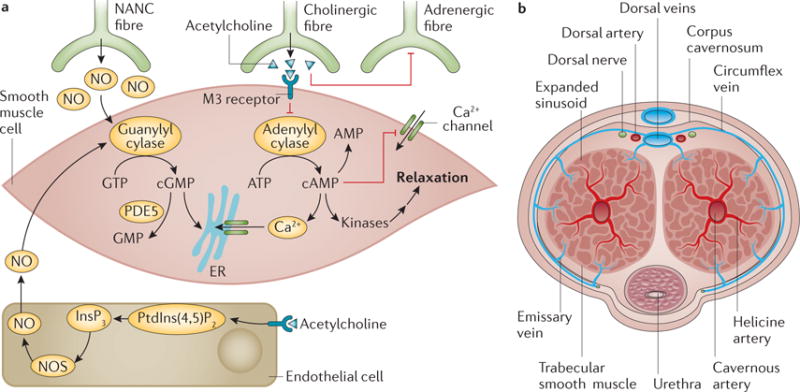
Figure 4. Penile smooth muscle relaxation — the erect state
a | Upon sexual stimulation, normal erection occurs after nitric oxide (NO) release from non-adrenergic non-cholinergic (NANC) nerve fibres causes the activation of guanylyl cyclase, which raises the concentration of cyclic GMP, and after parasympathetic cholinergic nerve fibres release acetylcholine, which activates adenylyl cyclase to increase the levels of cyclic AMP. Signalling pathways that are triggered decrease intracellular Ca2+ levels and lead to smooth muscle cell relaxation. b | As the smooth muscle relaxes, blood is able to fill the lacunar spaces in the cavernosa, leading to compression of the subtunical venules, thereby blocking the venous outflow. The process is reversed as cGMP is hydrolysed by phosphodiesterase type 5 (PDE5). ER, endoplasmic reticulum; InsP3, inositol trisphosphate; NOS, NO synthase; PtdIns(4,5)P2, phosphatidylinositol 4,5 bisphosphate.
Figure 5
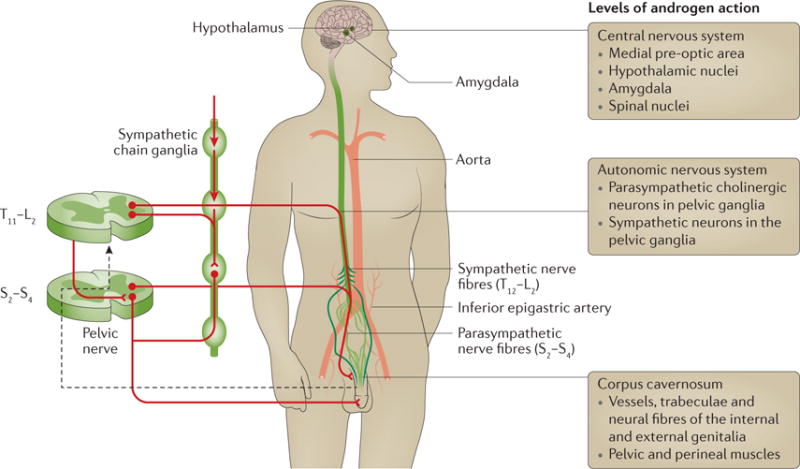
Figure 5. Levels of androgen action in the control of sexual response
Physiological effects of testosterone have been described in the regions of the brain that control sexual arousal at the spinal cord level (affecting neuronal firing from the pelvic ganglia) and within the penis (regulating endothelial and smooth muscle cell function). Testosterone has been shown to modulate the release of nitric oxide from non-adrenergic non-cholinergic fibres, and the functioning of nitric oxide synthase in endothelial cells. In the smooth muscle, testosterone modulates the activity of phosphodiesterase type 5, the kinase that regulates Ca2+ and K+ levels, and adrenergic receptor sensitivity. Figure modified with permission from REF. , Elsevier.
Figure 6
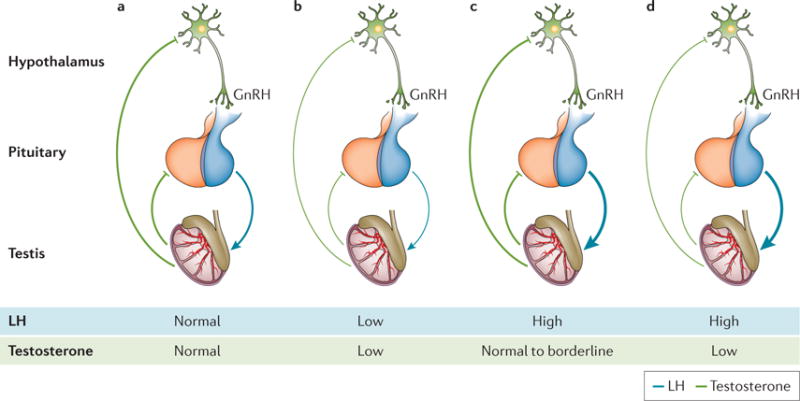
Figure 6. Schematic representation of different types of hypogonadism
a| The normal pituitary–testicular axis. Gonadotropin-releasing hormone (GnRH) stimulates the release of luteinizing hormone (LH). This triggers the testes to respond by producing adequate levels of testosterone, which, in turn, exerts negative feedback control on the hypothalamus and pituitary gland. Both circulating LH and testosterone are in the normal range. b | Secondary hypogonadism. The pituitary release of LH is impaired, the testes are no longer stimulated and testosterone production drops; both circulating LH and testosterone are reduced. c | Subclinical or compensated hypogonadism. The testicular responsiveness to LH is impaired, testosterone production is maintained owing to overstimulation by LH; circulating testosterone is normal or borderline, whereas LH is increased. In this case, the system is driven to its maximal capacity and no further adjustment can be achieved. d | Primary hypogonadism. In testicular failure, increases in LH can no longer sustain testosterone levels: circulating testosterone is low and LH is high.
Figure 7
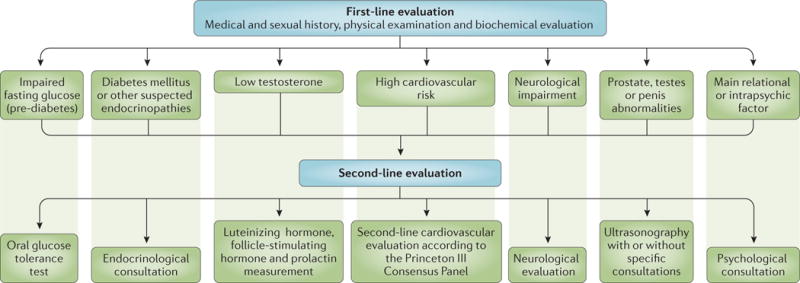
Figure 7. Suggested diagnostic work-up for patients with erectile dysfunction
The basic work-up of patients seeking medical care for erectile dysfunction should include an accurate medical and sexual history, a careful general and andrological physical examination, hormonal evaluation (total testosterone and sex hormone-binding globulin in all men, prolactin and thyroid hormone evaluation in some men) and routine biochemical exams (total and high-density lipoprotein cholesterol, triglycerides, fasting glucose and glycosylated haemoglobin). Second-line evaluation should be limited to those with abnormal first-line results.
Figure 8
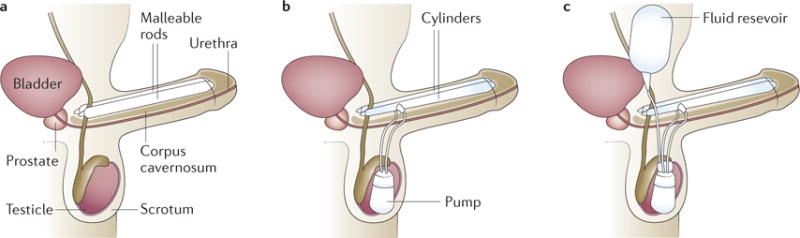
Figure 8. Penile prostheses
a | The malleable penile prosthesis involves two semi-rigid rods that are placed in the corpora cavernosa. The implant does change in size; it is bent upwards before intercourse. b | The two-piece inflatable penile prosthesis (IPP) involves placement of two inflatable cylinders in the corpora cavernosa and a pump in the scrotum. As the pump is used, fluid is transferred between the pump and the cylinders. c | The three-piece IPP involves the placement of two inflatable cylinders (in the corpora cavernosa), a pump in the scrotum and a fluid reservoir in the lower abdomen alongside the bladder. Pressure applied to the pump causes a transfer of fluid from the reservoir to the cylinders, leading to penile rigidity. The pump has a release valve or button to transfer the fluid back from the cylinders to the reservoir at the end of intercourse.
Figure 9
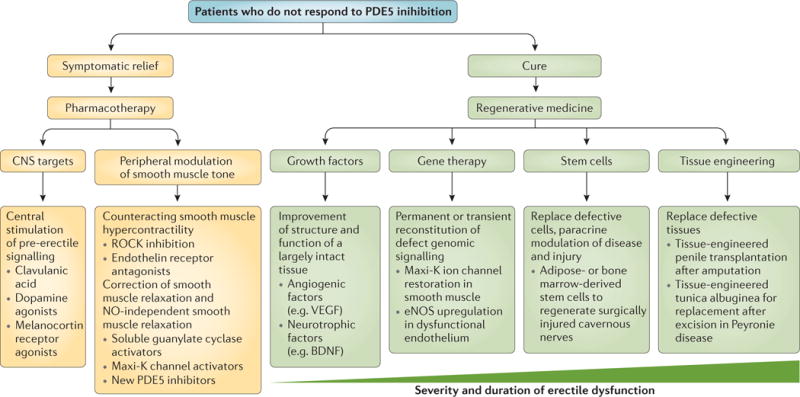
Figure 9. Potential future treatment options for erectile dysfunction
Current treatments provide temporary symptomatic relief, but do not interfere with the progress of the disease itself. The first-line treatment of phosphodiesterase type 5 (PDE5) inhibition depends on bioavailable nitric oxide (NO) to exert any effect. Accordingly, future pharmacological therapies will need to be efficacious in patients who do not respond to PDE5 inhibition (thereby providing treatment to men with neurogenic erectile dysfunction) and provide temporary relief or ‘erections on demand’. The site of action may be the central nervous system (CNS), or a variety of peripheral pathways that control the balance between vasoconstriction and vasorelaxation. By contrast, the aim of regenerative medicine is definitive symptomatic relief (cure) by reversing or halting the progression of degeneration in erectile dysfunction. Regenerative medicine intends to change the course of the disease and in many instances will regenerate failing cells, tissues or whole organ systems. Depending on the severity of tissue damage or the severity of the clinical presentation, various tools, such as growth factors, gene transfer, (stem) cells and tissue engineering could be used to achieve this goal. eNOS, endothelial nitric oxide synthase; Maxi-K channel, calcium-activated potassium channels; ROCK, RHO-associated protein kinase.

References

    1. Virag R, Zwang G, Dermange H, Legman M. Vasculogenic impotence: a review of 92 cases with 54 surgical operations. Vasc Surg. 1981;15:9–17.
    1. Glina S, Shindel A, Eardley I, Ghanem H. Cavernosal α-blockade: a new technique for investigating and treating erectile impotence by GS Brindley. J Sex Med. 2008;5:1791–1794. - PubMed
    1. Scott FB, Bradley WE, Timm GW. Management of erectile impotence. Use of implantable inflatable prosthesis. Urology. 1973;2:80–82. - PubMed
    1. Blumenthal SA. Earl Sutherland (1915–1974) [corrected] and the discovery of cyclic AMP. Perspect Biol Med. 2012;55:236–249. - PubMed
    1. Ballard SA, et al. Effects of sildenafil on the relaxation of human corpus cavernosum tissue in vitro and on the activities of cyclic nucleotide phosphodiesterase isozymes. J Urol. 1998;159:2164–2171. - PubMed